First, decide what matters for your advent calendar: the lowest possible sugar content according to the nutrition table, or a biscuit carrying a claim such as ‘less sugar’ compared with another product. Then compare sugars per 100 g and check that the portions will fit in the calendar compartments. Also read the ingredients, allergens and any warnings about polyols. Less sugar doesn’t automatically mean fewer calories or less carbohydrate.
Which choice suits you?
For shoppers comparing sugar content
If you want to keep an eye on the sugars in each biscuit or for each calendar day, compare the nutrition information per 100 g and look separately at claims about added sugars. That way, the front of the pack won’t make the decision for you.
For shoppers planning calendar portions
If you’re looking for something that will fit in the compartments, small biscuits or packs containing a few pieces can be handy. Just decide whether you want to give one biscuit or the whole portion each day; size says nothing about sugar content.
For shoppers who need to check ingredients
If sweeteners, polyols or allergens affect your choice, read the label on the exact product. Some biscuits containing sweeteners carry a warning about a possible laxative effect if eaten in excess.
What should you look for when choosing?
First, decide which feature matters most to the recipient. Then compare the labels and portion sizes of biscuits that meet that need.
| What to consider |
What to check before buying |
Who it matters most to |
| Sugars and claims |
Compare ‘of which sugars’ per 100 g and check what a claim such as ‘less sugar’ refers to. |
If my main aim is to limit sugars, I want to know the figure on the label rather than just read the claim. This would be the first consideration for around 36% of shoppers. |
| Size and portions |
Check how many biscuits are in the pack and whether the portion you want will fit in a calendar compartment. |
If I’m spreading treats across the calendar days, I want to know in advance what I’ll put in each compartment. Portioning would be the main consideration for around 29% of shoppers. |
| Ingredients and allergens |
Read the current ingredients and allergen information, along with any warnings about polyols. |
If the calendar is for someone who needs to avoid certain ingredients, I need to be able to check the exact biscuit. This would be the main consideration for around 21% of shoppers. |
| Flavour and festive feel |
Check the flavour and compare its sugars per 100 g, too. |
For a familiar biscuit treat, I might choose the flavour first, as long as the label still fits my sugar goals. Flavour would matter most to around 14% of shoppers. |
Common mistakes
-
Reading ‘less sugar’ as ‘sugar-free’
A comparative claim doesn’t mean a biscuit contains hardly any sugars. According to Albert Heijn’s product information, Sultana Banana Fruit Biscuit contains at least 30% less sugar than Fruit Biscuit, but still has 23 g of sugars per 100 g.
Compare the ‘of which sugars’ figure per 100 g and check which product it is being compared with.
-
Assuming a low-sugar biscuit is automatically low in calories
Sugars and energy are different measures. Albert Heijn’s product information lists AH Digestive 0% Sugar as containing 0.3 g of sugars and 465 kcal per 100 g.
As well as sugars, check the energy per 100 g and decide how many biscuits you want to put in each compartment.
-
Overlooking warnings about sweeteners
The product pages for certain biscuits from AH, Verkade and Céréal mention a possible laxative effect if eaten in excess.
Read the ingredients and warnings for your chosen product before filling several compartments with it.
-
Checking the size but not the allergens
Biscuits that fit in the compartments may still contain ingredients that matter to the recipient, such as wheat, milk, soya or egg. This varies from product to product.
Check the allergen information on the current pack of the exact variant, especially if you’re putting the calendar together for someone else.
Brands and product ranges to consider
Albert Heijn
AH Digestive 0% Sugar is worth considering if the stated sugar content is your main priority.
- Albert Heijn’s product information lists 0.3 g of sugars per 100 g and 0 g of added sugars.
- The same product contains wheat and polyols, and carries a warning about a possible laxative effect if eaten in excess.
Verkade
San Francisco Zero offers the familiar shape of a tea biscuit and a claim about added sugar.
- According to Albert Heijn’s product information, this variant contains 0% added sugar and 1.7 g of sugars per 100 g.
- The product information lists maltitol, wheat, milk and soya, as well as a warning about a possible laxative effect if eaten in excess.
Sultana
Banana Fruit Biscuit is an option to compare with other calendar treats if you’re looking for a fruit biscuit in a pack of three.
- Albert Heijn states that this variant contains at least 30% less sugar than Fruit Biscuit.
- The same product information lists 23 g of sugars per 100 g. A pack of three isn’t the same as one biscuit per calendar day.
Céréal
The Chocolate Chip Cookie is worth considering if you’re looking for a cocoa-flavoured option with a ‘sugar-free’ claim.
- Albert Heijn’s product page describes this variant as a biscuit with cocoa and sweetener.
- The same page warns of a possible laxative effect if eaten in excess. Check the allergens on the current pack, too.
Lotus Biscoff
The regular speculoos range is most relevant if familiar flavour and a small portion matter more than reducing sugar.
- Lotus Bakeries offers packs with two biscuits, among other options, which can make it easier to divide them across calendar days.
- Biscoff Original is listed as containing 38.1 g of sugars per 100 g. Check whether that suits your sugar goals.
Biscuits and biscuit bars at Joybuy
This selection includes oat biscuits, animal biscuits and biscuit bars for anyone comparing sugar claims and calendar portions. Before choosing, check the current nutrition information for each product and measure your calendar compartments.
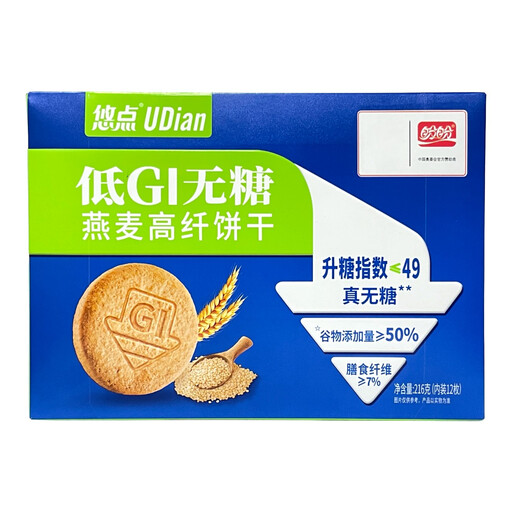 Image unavailable
Panpan Oat Biscuits 216 g
For anyone considering oat biscuits and wanting to compare sugars per 100 g. The product title uses the claim ‘Sugar-Free’; check the current nutrition table rather than taking the claim as proof that it contains no sugars. Also check the ingredients and whether you can divide the pack into suitable portions for the calendar.
View at Joybuy
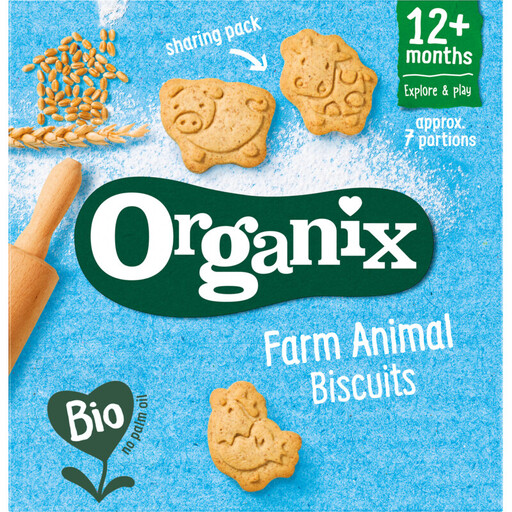 Image unavailable
Organix Bio Farm Animal Biscuits 100 g
For anyone considering animal biscuits as a calendar treat. Check the sugars per 100 g, the ingredients and the age guidance on the pack. Also see whether the portion you want will fit in a compartment.
View at Joybuy
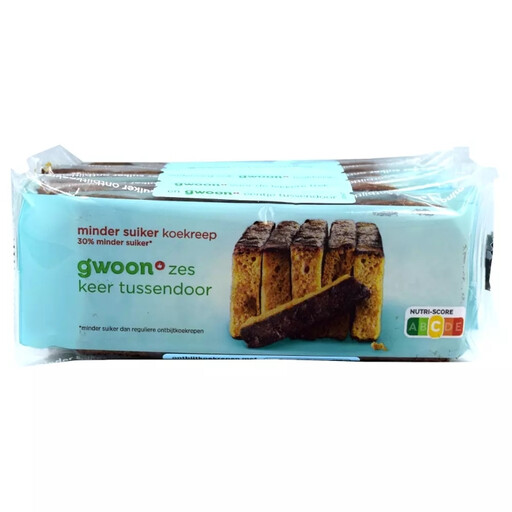 Image unavailable
g'woon Cookie Bars Less Sugar, 6 pieces
For anyone considering a biscuit bar for a calendar treat; the pack contains six. ‘Less Sugar’ is a comparative claim, not a figure for the total sugar content. Compare the nutrition information per 100 g, check what the claim refers to and make sure a bar will fit in the compartment.
View at Joybuy
Frequently asked questions
Should I look at the claim or the nutrition table first?
Use the nutrition table as your starting point and compare similar biscuits per 100 g. The Netherlands Nutrition Centre recommends this basis for comparison. Then check the ingredients, allergens and the portion you want to put in the calendar.
Does ‘no added sugar’ mean a biscuit contains no sugars?
No. A biscuit with no added sugar may still contain sugars. Read the ‘of which sugars’ figure per 100 g to assess the total amount shown on the label.
Can I give several zero-sugar biscuits per calendar day?
First, check the ingredients and warnings for the exact product. The product pages for certain biscuits containing sweeteners mention a possible laxative effect if eaten in excess; a ‘zero’ claim doesn’t tell you what portion is suitable.
What should I check if carbohydrates matter, too?
As well as ‘of which sugars’, check the total carbohydrates in the nutrition table and the portion you plan to give. A claim about less sugar doesn’t, by itself, tell you how many carbohydrates are in each portion.


