
Parents looking for a reduced-fat claim
You want to pick up paprika crisps with a clear claim about having less fat. Check what the product is being compared with rather than relying on the front of the pack alone.


When shopping for lower-fat paprika crisps, first decide whether you want a small pack for one snack break or a bag to share. We Care Paprika Flavour Chips in a 25 g pack claims to contain 75% less fat; Lay’s Oven Baked Paprika in a 150 g bag claims to contain 50% less fat than regular potato crisps. These percentages are not necessarily based on the same comparison, so check the nutrition information, ingredients and allergens on the pack you choose too.
You want to pick up paprika crisps with a clear claim about having less fat. Check what the product is being compared with rather than relying on the front of the pack alone.
If you’re looking for one pack for a snack break, the pack size matters. Jumbo lists We Care Paprika Flavour Chips in a 25 g pack; a larger bag may be more practical for sharing with other adults.
You’re adding crisps to your regular shop and want to know whether the quantity is right for one person or for sharing. Check the reduced-fat claim on the exact variant you choose.
Start with the exact reduced-fat claim and the quantity you want. Then compare the nutrition information on a like-for-like basis, and check the label if ingredients or allergens matter for your purchase.
| What to consider | What to check | Who it matters most to |
|---|---|---|
| Reduced-fat claim | Check which reference product is named and compare fat and saturated fat per 100 g on the current pack. | If my main reason for choosing a different type of paprika crisps is to get less fat, I want to know exactly what the claim compares. For around 40% of consumers, this verifiable fat reduction comes first. |
| Label and nutrition information | Check the ingredients, allergens, energy and salt on the bag you buy. | When I’m shopping for someone else too, I want to check which ingredients and allergens are in the crisps I’ve chosen. For around 30% of consumers, checking the label is the top priority. |
| Bag size for your shop | Compare the net weight with the amount you want to take home on this shopping trip. | If the crisps are for sharing, I’m looking for a bag that’s suitable for that, rather than just a pack for one snack break. Around 20% of consumers prioritise finding the right bag size. |
| A set portion | Decide whether you want one small pack or would rather take a portion from a larger bag. | On a busy day, I want to set aside a snack portion without first having to portion it out from a sharing bag. For around 10% of consumers, this is the main consideration. |
A relative fat claim on its own tells you nothing about the amount of salt or energy in the portion you eat.
Check the energy, saturated fat and salt on the bag you choose too. Compare products per 100 g, then use the per-portion information for the amount you plan to eat.
The cooking method in a product name doesn’t tell you how much fat that particular paprika variant contains or what it is being compared with.
Look for an explicit fat claim on the pack and check the nutrition information for the same variant before making a comparison.
A 25 g pack and a 150 g sharing bag suit different snack occasions, even if both have a paprika flavour.
Decide whether you want one set portion or crisps to share with several adults. With a sharing bag, you can set aside the amount you want yourself.
If ingredients or allergens matter to your choice, the information on the pack you actually buy is what counts. The Netherlands Food and Consumer Product Safety Authority emphasises that allergens must be clearly listed on the label.
Before eating, check the ingredients, allergens and nutrition information on that pack, even if you’ve looked at the product online before.
These brands offer different paprika or oven-baked crisp options. A brand name or cooking method alone is no reason to assume that individual products have the same fat content.
According to Lay’s own product claim, listed by Albert Heijn, Jumbo and ALDI Nederland, Lay’s Oven Baked Paprika contains 50% less fat than regular potato crisps. The bag listed contains 150 g.
Jumbo lists We Care Paprika Flavour Chips in a 25 g pack, with its own product claim of 75% less fat.
Chio Oven Chips Paprika is a separate paprika variant listed by Albert Heijn; Jumbo includes Chio Oven Chips Paprika Flavour in its paprika range.
Jumbo lists products under its own brand, including Paprika Chips 250 g. This bag is a different choice from a small, individually portioned pack.
Lidl Nederland lists Snack Day Paprika Chips as well as Snack Day Ovengebakken Chips. The names don’t necessarily refer to the same flavour variant.
This product selection is a 150 g bag of paprika crisps to portion yourself or share, with a claim of less fat than regular crisps.
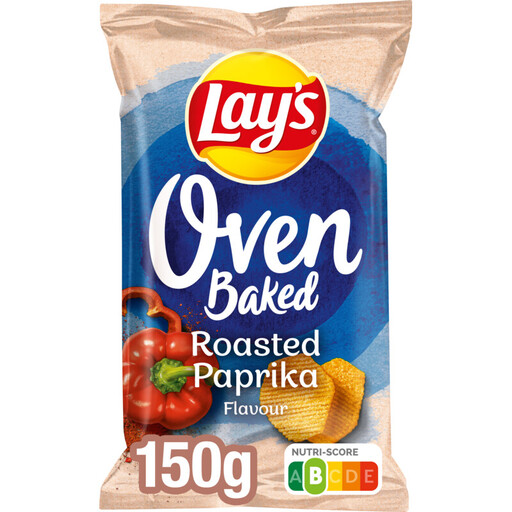 Image unavailable
A sharing bag for anyone looking for paprika crisps with an explicit fat-reduction claim. According to Lay’s own product claim, also listed by Jumbo, this variant contains 50% less fat than regular potato crisps.
Net weight: 150 g. Decide how much you want to serve yourself, and check the fat, saturated fat, salt, energy and allergens on the current pack.
No. The claim is about fat compared with a reference product, not all the nutrition values of the paprika crisps you choose. Check the energy and salt information too, and consider how much you plan to eat.
Yes. A fat claim tells you nothing about the product’s ingredients or allergens. The Netherlands Food and Consumer Product Safety Authority emphasises the importance of clear allergen information on the label, so check the pack you actually buy.
A 25 g pack is ideal for one pre-portioned snack break; a 150 g bag gives you more to share or portion out yourself. Choose the pack size based on who’ll be eating the crisps, not just the fat claim.
You can’t tell from ‘oven-baked’ in the name. Lay’s Oven Baked Paprika claims to contain 50% less fat than regular potato crisps; for any other variant, check the label and the basis for comparison for any claim separately.