
People who need to avoid milk
If you’re looking for lower-fat paprika crisps and need to avoid milk, you can rule out Lay’s Oven Baked Roasted Paprika: Jumbo and Albert Heijn list milk as an ingredient in this variety.


If you have a food allergy, first check the current ingredients list and any warning about cross-contamination. Only then compare claims about reduced fat. According to product information from Jumbo and Albert Heijn, Lay’s Oven Baked Roasted Paprika contains 50% less fat than regular potato crisps, but it contains milk, so it isn’t suitable if you need to avoid milk. For other allergens, your choice depends on the information on the packaging of the specific bag.
If you’re looking for lower-fat paprika crisps and need to avoid milk, you can rule out Lay’s Oven Baked Roasted Paprika: Jumbo and Albert Heijn list milk as an ingredient in this variety.
If the current allergen information is suitable for your needs, you can compare the amount of fat per 100 g. A claim on the front of the bag doesn’t replace checking the ingredients and allergen information.
Unless you know which ingredient you need to avoid, you can’t tell whether a paprika crisp is suitable for your allergy. Establish that first, before choosing a product based on its fat content.
If you have a food allergy, checking the current packaging comes before comparing fat content and portion sizes.
| What to consider | What to check when buying | Who it matters to |
|---|---|---|
| Your specific allergen | Read the current ingredients list and any cross-contamination warning on the bag. Look for the allergen you need to avoid. | If I need to avoid a particular allergen, I want to know whether it’s listed as an ingredient or included in a relevant warning. For around 50% of consumers, checking allergens comes first. |
| Fat content | Check what the reduced-fat claim is based on and compare the amount of fat per 100 g. | If the allergen information is suitable for my needs, I want to compare paprika crisps on a like-for-like basis. Around 30% of consumers then give fat content the highest priority. |
| Portion size and nutritional information | Compare the nutritional values per 100 g, then check what’s in a portion. | Once I’ve checked the allergens, I want to know what’s in the portion I choose. Portion size and nutritional profile matter most to around 20% of consumers. |
Jumbo and Albert Heijn state that Lay’s Oven Baked Roasted Paprika contains 50% less fat than regular potato crisps, while also listing milk as an allergen.
Check the allergen information on the bag first. Only consider the fat claim if the product may be suitable for your allergy.
A filter or text on the front of the pack doesn’t provide the same information as the full ingredients list. The Netherlands Food and Consumer Product Safety Authority notes that 14 specified allergens must be declared on the label.
Read the current ingredients list and look for the name of the allergen you need to avoid.
Jumbo lists 13 g of fat per 100 g for Lay’s Oven Baked Paprika and 3,9 g per 30 g portion. These figures refer to different amounts of crisps.
Compare products per 100 g first, then use the portion figure to check the amount you plan to eat.
An allergen doesn’t have to be an added ingredient for a warning about its possible accidental presence to be relevant.
Check any warning on the current packaging against the allergen you need to avoid. If you’re unsure, speak to your healthcare professional or dietitian about your allergy.
Lay’s Oven Baked Roasted Paprika is an oven-baked paprika crisp. Jumbo and Albert Heijn state that it contains 50% less fat than regular potato crisps.
Jumbo provides product information for Lay’s Oven Baked Paprika, including ingredients, allergens and nutritional values.
Albert Heijn provides product information for Lay’s Oven Baked Roasted Paprika, including the fat claim, nutritional values and milk as an allergen.
This Joybuy product is an oven-baked paprika crisp with a reduced-fat claim. Check the current packaging to see whether this variety is suitable for your allergy.
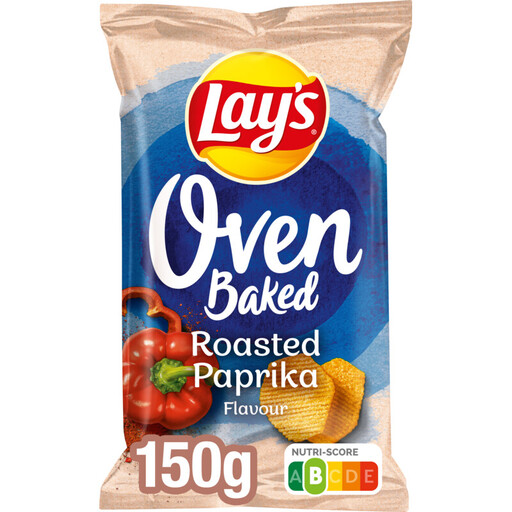 Image unavailable
This variety is only suitable for consideration if you don’t need to avoid milk and the rest of the current allergen information is appropriate for your needs.
Jumbo lists 13 g of fat per 100 g for Lay’s Oven Baked Paprika and milk as an allergen. The stated claim of 50% less fat compares these crisps with regular potato crisps.
Before eating, also check the packaging for any cross-contamination warnings that may be relevant to you.
No. A fat claim says nothing about whether a product contains allergens. Jumbo and Albert Heijn list milk in Lay’s Oven Baked Roasted Paprika, despite the claim that it contains 50% less fat than regular potato crisps.
Read the ingredients list on the packaging and look for the allergen you need to avoid. The Netherlands Food and Consumer Product Safety Authority says that 14 specified allergens must be clearly identified on the label. Also check for any cross-contamination warning.
This warning refers to the possible accidental presence of the allergen named; it doesn’t mean that it was deliberately added as an ingredient. Check whether your allergen is mentioned and, if you’re unsure what the warning means for you, speak to your healthcare professional or dietitian.
Use a product page to help you research the product, but also read the packaging on the bag you’re going to eat. Albert Heijn notes that ingredients and allergen information can change when a product is updated.