When choosing nuts, start with the allergens and ingredients that matter to you; a lower-fat claim does not change which allergens are present. For solid foods, the European Commission defines ‘low fat’ as no more than 3 g of fat per 100 g. Oven-roasted and unsalted are different product characteristics and do not, on their own, prove that the fat content is lower.
Who is this choice relevant to?
Allergen-aware snack shoppers
You’re buying for someone with a food allergy, so you check which ingredients and warnings are relevant first. Peanuts and tree nuts are different categories; Stichting Voedselallergie (the Dutch Food Allergy Foundation) therefore discusses peanuts separately.
Shoppers looking for less fat
You want a lighter snack and to distinguish between a fat claim, oven-roasting and unsalted products. Compare the details for the exact variety rather than relying on the front of the pack.
Portion-conscious nut eaters
You’re looking for a measured portion of nuts you can eat. Voedingscentrum (the Netherlands Nutrition Centre) uses a 25 g handful as a nutritional example; this isn’t a product specification for every type of nut or pack.
What should you look for when buying?
Check allergens and ingredients first, then compare the fat information and decide what portion suits the way you’ll use the product.
| What to consider |
What should you check? |
Who should pay closer attention? |
| Allergens |
Read both the ingredients and the separate allergen declaration. Assess precautionary statements in line with the avoidance advice you’ve been given. |
If I’m buying for someone with a food allergy, I check the relevant ingredients and warnings first. Around 36% of consumers put allergen avoidance first. |
| Fat claim |
Compare the fat content per 100 g and check which comparison product is named in the claim. |
If reducing fat is my main goal, I want to know exactly what the claim is comparing. Around 29% of consumers prioritise a demonstrable reduction in fat. |
| Portion |
Decide on your portion in advance and compare products using the same portion size. |
If I mainly want to keep track of how much I eat at each snack break, a measured portion helps me choose. Around 21% of consumers put portion control first. |
| Recipe |
Check the full ingredients list for the exact variety, including any oil, seasoning or coating. |
If I’m looking for a recipe without any unexpected ingredients, I read the ingredients rather than relying on ‘unsalted’ alone. Around 14% of consumers prioritise a simple recipe. |
Common mistakes
-
Confusing less fat with fewer allergens
A fat claim doesn’t mean allergenic ingredients are absent. Historical product information for Duyvis Oven Baked Smoked Paprika lists peanuts and wheat, and warns that other nuts may be present.
First check the ingredients and warnings that matter for your allergy; only then compare the nutritional claim.
-
Assuming oven-roasted or unsalted means low-fat
Cooking method and salt content don’t indicate the total fat content. For solid foods, the European Commission defines ‘low fat’ as no more than 3 g of fat per 100 g; an AH unsalted cashew variety that was reviewed lists 50 g per 100 g.
Check the nutrition table and ingredients for the exact variety separately.
-
Letting a short product name make the decision
‘Unsalted’ doesn’t mean no oil has been added: AH Unsalted Cashews contain sunflower oil. A coated variety may also contain different ingredients from a plain product.
Compare the full ingredients list and allergen information on the pack you’re buying.
Brands and varieties for reference
Duyvis
The range includes oven-baked peanuts, roasted cashews and coated snacks; assess each recipe separately.
- Duyvis describes Oven Baked Peanuts Original as made without added oil or fat.
- That preparation method doesn’t prove a lower total fat content. The manufacturer notes that wheat and other nuts may be present; check the current pack if this matters to you.
- Jumbo lists 43 g of fat per 100 g for Duyvis Oven Roasted Salted Cashews and warns that peanuts and wheat may be present.
Albert Heijn
The AH Unsalted Cashews 170 g product reviewed is a baked cashew variety whose ingredients and nutritional values can be compared.
- The product information lists 96% cashews and added sunflower oil.
- The stated nutritional value is 50 g of fat per 100 g. The warning mentions peanuts and several other tree nuts, so ‘unsalted’ doesn’t mean low-fat or free from other allergens.
Jumbo
The nut range includes nut mixes, peanuts and cashews. The product information for a specific Duyvis cashew variety gives you details to compare its ingredients and nutritional values.
- For Duyvis Oven Roasted Salted Cashews 125 g, Jumbo lists 43 g of fat per 100 g.
- This information applies to that specific variety, not all Jumbo nuts. The page lists cashews and notes that cereals containing gluten, peanuts and wheat may be present.
Lidl
The Nut Mix reviewed, item 28673, is a 200 g bag of unroasted, unsalted nuts.
- The product description identifies the mix as unroasted and unsalted.
- These characteristics don’t, on their own, show a reduced fat content or that the product is suitable for a specific allergy. Check the ingredients and allergen information on the current pack.
ALDI
The Trader Joe’s Unsalted Nut Mix reviewed contains almonds, hazelnuts, walnuts and Brazil nuts.
- The named types of nuts make it clear which ingredients you need to check against your own avoidance requirements.
- Unsalted doesn’t mean low-fat. A mix containing a nut you need to avoid won’t meet that specific avoidance requirement.
PLUS
PLUS Unsalted Unroasted Cashews 200 g is a cashew product you can compare with baked or seasoned varieties.
- The product information lists cashews as an ingredient and 46.5 g of fat per 100 g.
- The page warns that peanuts may be present. Its simple recipe doesn’t make the product low-fat or automatically suitable for someone with a peanut allergy.
Nut snacks at Joybuy
These Joybuy products provide details on ingredients, allergens and stated fat content to help you compare different nut snacks; they are not a confirmed low-fat or reduced-fat selection.
 Image unavailable
Jiazhouyuanye Original Flavour Large Cashew Nuts, 160 g
Relevant if you want to compare cashews with your own allergy information.
The product information lists 47.7 g of fat per 100 g and names cashews as an ingredient and tree nuts as an allergen.
View at Joybuy
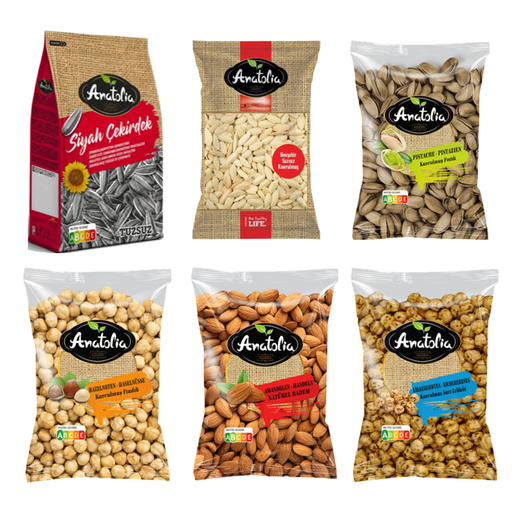 Image unavailable
NUTS Deal: seed, nut and chickpea mix
Relevant if you want to check each named ingredient against your allergy requirements.
The product name lists sunflower seeds, pumpkin seeds, pistachios, hazelnuts, almonds and chickpeas.
View at Joybuy
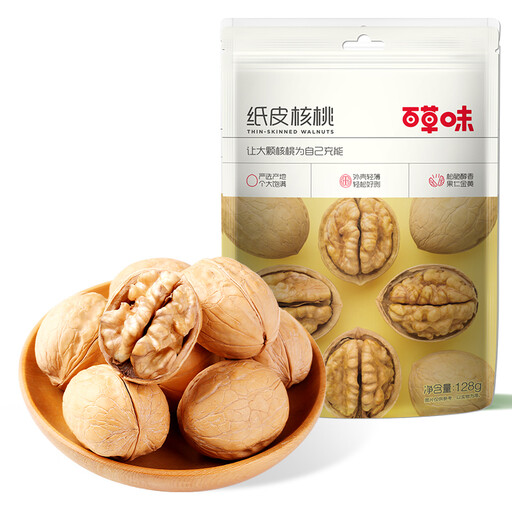 Image unavailable
Be&Cheery Paper-Shell Walnuts, 128 g
Relevant if you want to compare walnuts with your own allergy information.
The product information lists walnuts as an ingredient and tree nuts as an allergen, with 74.9 g of fat per 100 g.
View at Joybuy
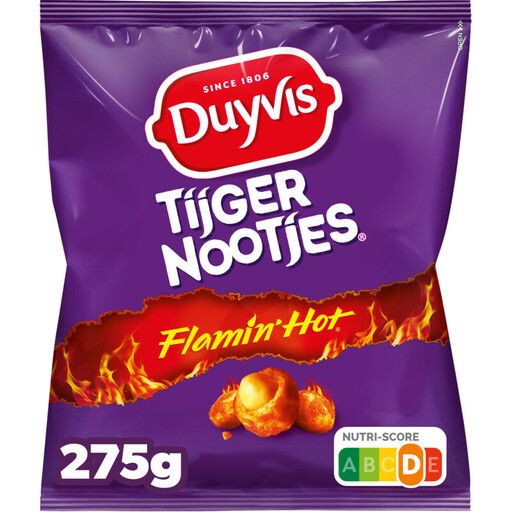 Image unavailable
Duyvis Tiger Nuts Flaming Hot, 275 g
Relevant if you’re checking the ingredients and allergens in a seasoned, coated snack.
The product information lists 33 g of fat per 100 g, peanuts and wheat, and notes that milk, nuts, soya and mustard may be present.
View at Joybuy
 Image unavailable
g'woon Unsalted Peanuts, 250 g
Relevant if you want to compare peanuts with your own allergy information while also checking the fat content.
The product information lists 50 g of fat per 100 g, peanuts and sunflower oil; the product may contain cashews.
View at Joybuy
Frequently asked questions
Does a lower-fat product make it suitable for someone with a nut or peanut allergy?
No. A fat claim says nothing about whether allergenic proteins have been removed. Check the ingredients and allergen information for your specific avoidance requirements.
What’s the difference between low-fat, reduced-fat, oven-roasted and unsalted?
For solid foods, the European Commission defines ‘low fat’ as no more than 3 g of fat per 100 g. A ‘reduced fat’ claim means you should check which product is used for comparison on the label; oven-roasted and unsalted describe a cooking method and salt content respectively, not necessarily the fat content.
What allergen information should I check on a nut snack?
Check the ingredients and allergen declaration on the exact pack. The NVWA (Netherlands Food and Consumer Product Safety Authority) states that allergen information must appear on the label of prepacked products. For unpackaged products, ask the seller how to access this information before buying.
What does the historical ‘30% less fat’ claim on Duyvis Oven Baked Smoked Paprika mean?
Albert Heijn’s historical product page compared this variety with regular Duyvis Borrelnootjes/Crac a Nut and Tijgernootjes/Tigernuts, and listed 26 g of fat per 100 g. The same page says the product has been discontinued, so it isn’t a confirmed current purchase option. The claim also didn’t make the product low-fat or free from allergens.
Have the Dutch rules on cross-contamination warnings changed?
Yes. According to the NVWA, new rules have applied since 1 January 2026 on how and when food businesses provide precautionary allergen warnings. The NVWA says the production date is the starting point; older stock may be sold as long as the food is safe.


