What should you look for when choosing?
First decide whether you’re looking for an everyday snack or crisps for an occasional treat. Only in the latter case will comparing different varieties of crisps help you choose a product.
| What to consider | What to check when buying | Who is this relevant to? |
|---|
| Everyday snack |
Decide whether you’re looking for something to serve every day. For babies and toddlers, the Netherlands Nutrition Centre lists fruit, vegetables and wholemeal bread among its suggested snacks. |
If I need a snack every day, I want to know whether crisps are the right choice. For around 50% of consumers, choosing an everyday snack is the top priority. |
| Fat and salt for an occasional treat |
Compare fat, salt and energy per 100 g, then check the serving information and what a claim such as ‘lower fat’ is based on. |
If I give my child crisps as an occasional treat, I want to weigh up the lower fat content against the rest of the nutritional information. Around 30% of consumers prioritise this comparison when choosing crisps occasionally. |
| Current packaging |
Check the ingredients, allergens and nutritional information for your chosen variety on the packaging. Use Nutri-Score only as an additional way to compare products within the same category. |
When I’m choosing between brands or flavours, I want to be able to rely on the information on the pack I’m holding. For around 20% of consumers, checking the label is the top priority. |
Crisps for an occasional comparison
These Lay's varieties are worth considering if you want to compare crisps for an occasional treat. For everyday snacks for babies and toddlers, the Netherlands Nutrition Centre recommends using products from the Wheel of Five as your starting point. Compare the nutritional information and allergens for your chosen flavour on the packaging.
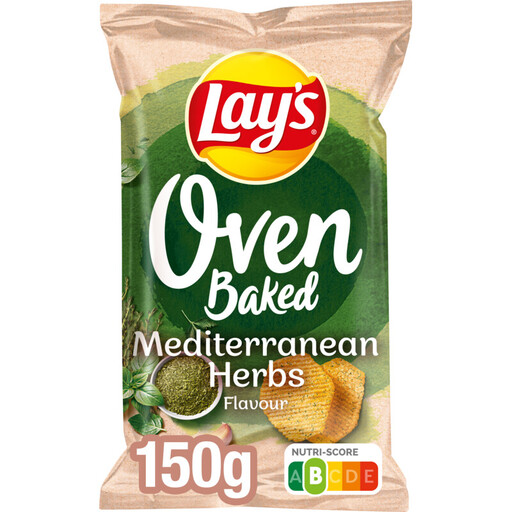 Image unavailable
Lay's Oven Baked Mediterranean Herbs, 150 g
For an occasional comparison between varieties of crisps. Compare the fat and salt per 100 g on the packaging, and check the ingredients and allergens for this flavour.
View on Joybuy
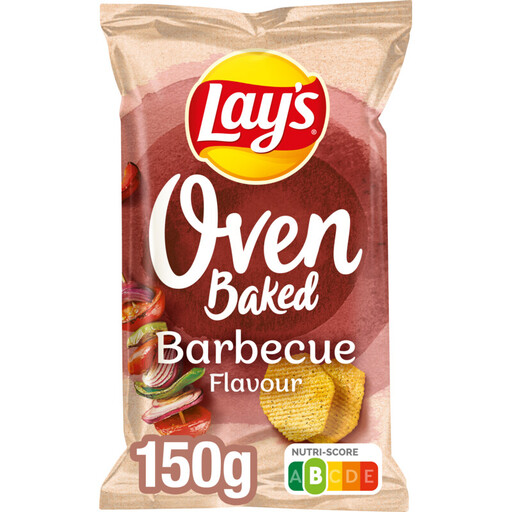 Image unavailable
Lay's Oven Baked Barbecue, 150 g
For an occasional comparison between varieties of crisps. For this barbecue flavour, check both the fat and salt per 100 g, and read the ingredients and allergens on the pack.
View on Joybuy
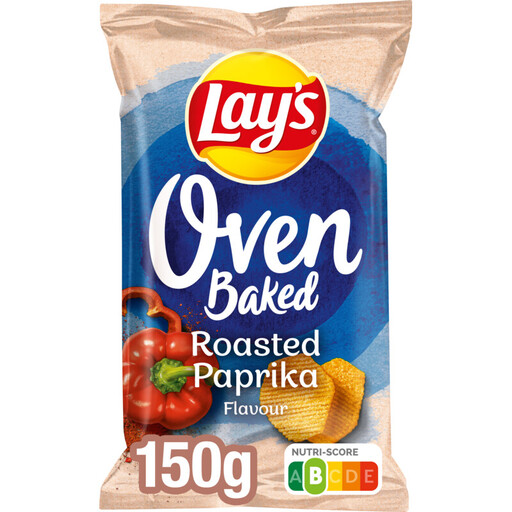 Image unavailable
Lay's Oven Baked Paprika, 150 g
For an occasional comparison between varieties of crisps. Use the nutritional values per 100 g as your basis for comparison, and check the ingredients and allergens for the paprika variety.
View on Joybuy
 Image unavailable
Lay's Oven Baked Natural, 150 g
For an occasional comparison between varieties of crisps. For this plain variety, check the fat, salt and allergens on the current packaging too; the flavour name doesn’t tell you the overall nutritional value.
View on Joybuy
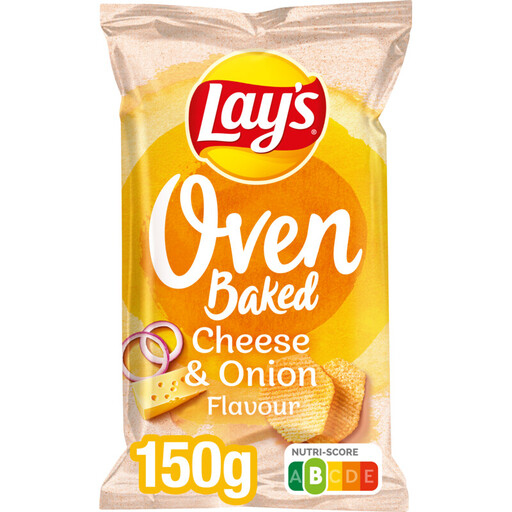 Image unavailable
Lay's Oven Cheese Onion, 150 g
For an occasional comparison between varieties of crisps. Compare the fat and salt per 100 g, and check the ingredients, allergens and stated serving size on the pack.
View on Joybuy
Frequently asked questions
Are lower-fat crisps suitable as an everyday snack for a toddler?
No, not as a substitute for their usual snacks. The Netherlands Nutrition Centre recommends snacks from the Wheel of Five for babies and toddlers, such as fruit, vegetables or wholemeal bread. ‘Lower fat’ is a comparison between different crisps products.
What should I compare if I buy crisps as an occasional treat?
Compare the fat, salt and energy per 100 g, then check the stated serving size, ingredients and allergens. For example, Albert Heijn lists 13 g of fat and 0.85 g of salt per 100 g for Lay's Oven Baked Naturel, compared with 20 g of fat and 0.9 g of salt per 100 g for AH Ribbelchips naturel minder vet. Check the current values on the packaging you choose.
Does a claim such as ‘lower fat’ make crisps suitable for my toddler?
No, the claim doesn’t assess the snack as a whole. Check the salt, energy and ingredients too, and follow the Netherlands Nutrition Centre’s advice for babies and toddlers when choosing everyday snacks.
Can I rely on an online product page for allergen information?
Check the current packaging for the variety you’ve chosen. Ingredients and allergen information can change, so Albert Heijn recommends checking the packaging, and Lidl also directs shoppers to the pack for food information.
How should I use Nutri-Score when comparing crisps?
Use Nutri-Score as an additional way to compare products within the same category, such as different varieties of crisps. Lidl says that the score doesn’t replace the Wheel of Five, so it doesn’t determine whether crisps are suitable as an everyday snack for a toddler.


