
Student mainly looking at fat content
You're looking for crisps to serve while you're unpacking, but want to compare varieties by their fat content per 100 g. The figure on the label tells you more than the claim on the front of the pack alone.


Start by comparing lower-fat crisps based on their fat content per 100 g: Albert Heijn lists 13 g for Lay's Oven Baked plain and 20 g for AH Ribbed Crisps plain, lower fat. For a shared evening of unpacking, pack size, flavour, energy and salt matter too; a lower-fat claim alone tells you nothing about these other qualities.
You're looking for crisps to serve while you're unpacking, but want to compare varieties by their fat content per 100 g. The figure on the label tells you more than the claim on the front of the pack alone.
You're choosing a pack for several people, so you consider its size, the portions and the nutritional information for the variety you've picked.
You want to check the ingredients, allergens and salt content for that exact flavour, whether you're buying for yourself or your housemates.
Start with the figures per 100 g so you can compare packs of different sizes. Then decide which flavour and pack size will suit your evening of unpacking.
| What to consider | What to check when buying | Who it's important for |
|---|---|---|
| Fat content | Compare the fat per 100 g and check what a lower-fat claim is being compared with. | If my main aim is to choose crisps with less fat, I look at the actual figure rather than just the front of the pack. This would be the first thing around 33% of consumers consider. |
| Pack size | Check how many grams the pack contains and the portion size shown on the packaging. | When I'm sharing crisps with housemates, I want to choose a pack that suits the group. Around 27% of consumers would put sharing first. |
| Flavour and shape | Check the exact flavour and whether that variety carries a lower-fat claim. | For a shared snack, I want the flavour and shape to suit the people around the table. This would be the main deciding factor for around 20% of consumers. |
| Salt and ingredients | Read the salt content per 100 g, the ingredients list and the allergen information on the current packaging. | If I'm buying for other people too, I want to be able to check what's in the chosen flavour. Salt and label information would be the first things around 20% of consumers look at. |
A fat claim doesn't automatically tell you the energy or salt content. Albert Heijn lists 0.85 g of salt per 100 g for Lay's Oven Baked plain and 0.9 g per 100 g for AH Ribbed Crisps plain, lower fat.
Compare the fat, energy and salt per 100 g on both labels before choosing a flavour.
Pringles lists 31 g of fat per 100 g for its regular Original variety. The packaging or brand name doesn't make it a variety with a lower-fat claim.
Check the full product name and nutritional information for the exact variety.
Ingredients vary by product. Pringles lists wheat and possible milk and soya among the ingredients for Original; this doesn't tell you anything about other flavours or brands.
Read the current ingredients list and allergen information for every pack you choose, especially if your housemates will be eating too.
The Oven Baked range is worth considering if you want to compare oven-baked crisps. Albert Heijn lists a 150 g pack of the plain variety, with 13 g of fat per 100 g.
AH Ribbed Crisps plain, lower fat is a 150 g own-brand variety with a claim comparing it with AH Ribbed Crisps plain.
Pringles Original is a regular tube of crisps, not a confirmed lower-fat variety in this comparison.
Jumbo has a lower-fat crisps category that includes varieties such as Lay's Oven Baked and Chio Oven Chips.
These packs of Lay's Oven Baked and Chio Oven Chips are worth considering when comparing oven-baked flavours for an evening of unpacking. Check the nutritional information and allergens for the exact variety you choose.
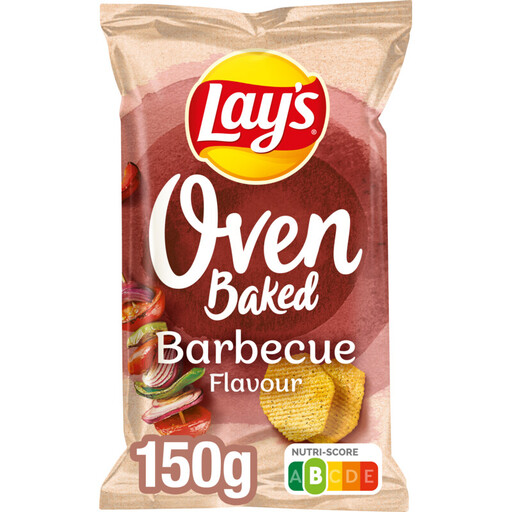 Image unavailable
An oven-baked barbecue flavour to share while you're unpacking. The pack contains 150 g; compare the nutritional information per 100 g and check the allergens if others will be eating too.
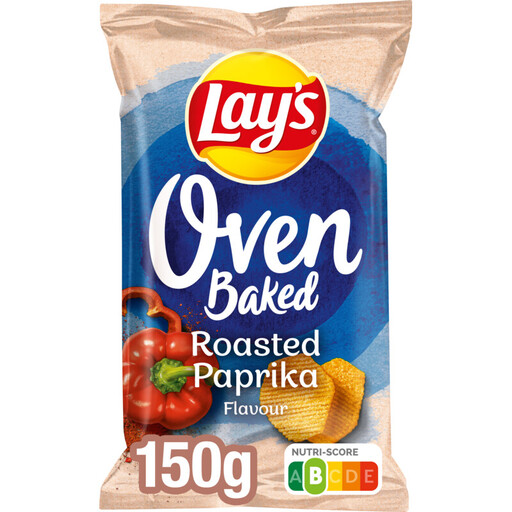 Image unavailable
An oven-baked paprika flavour to share with your housemates. The pack contains 150 g; check the latest nutritional information and ingredients for this specific flavour.
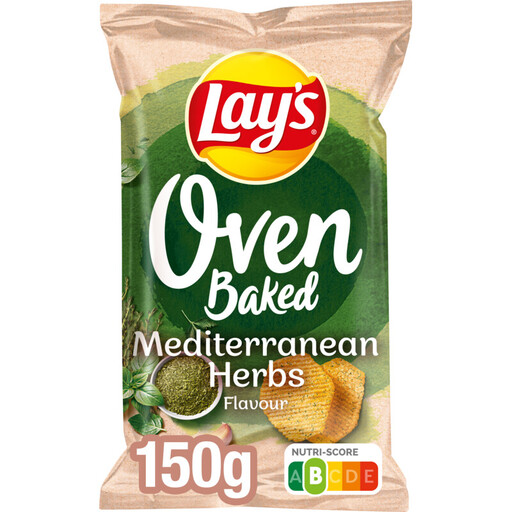 Image unavailable
An oven-baked herb flavour if you'd like something other than plain crisps to share. The pack contains 150 g; for this variety too, check the packaging for fat, energy, salt and allergen information.
 Image unavailable
A plain variety for anyone who'd rather avoid seasoned crisps while unpacking. The pack contains 150 g; use the nutritional information on the current packaging to compare products per 100 g.
 Image unavailable
An oven-baked sea salt option if you'd also like to consider a different pack size. The pack contains 125 g; compare salt as well as fat per 100 g, and check the latest allergen information.
No. A fat claim doesn't tell you the energy value of another variety. Albert Heijn lists 13 g of fat and 428 kcal per 100 g for Lay's Oven Baked plain, and 20 g of fat and 461 kcal per 100 g for AH Ribbed Crisps plain, lower fat. Compare both figures on the same basis.
Not necessarily: check the salt content separately on the packaging. Albert Heijn lists 0.85 g of salt per 100 g for Lay's Oven Baked plain and 0.9 g per 100 g for AH Ribbed Crisps plain, lower fat.
Read the ingredients list and allergen information on the current packaging for the flavour you've chosen. The Netherlands Food and Consumer Product Safety Authority explains how allergens must be listed on food labels; don't rely on the name or appearance of the crisps.
Seal the pack tightly after opening and store it in a cool, dry place. Also follow the storage instructions on the specific packaging.