When comparing lower-fat crisps for a school lunch, don’t rely solely on the claim on the front of the pack. Check the fat, salt and energy per 100 g, and decide how many crisps to pack. According to Albert Heijn’s product information, Chio Oven Chips Sea Salt contains 9.2 g of fat and 1.5 g of salt per 100 g, while Lay's Oven Baked Naturel contains 13 g of fat and 0.85 g of salt per 100 g. Which difference matters more depends on your priorities. The Netherlands Nutrition Centre lists fruit, vegetable sticks, unsalted nuts and wholemeal bread as snack options for teenagers; crisps are not a substitute for lunch.
Who are these considerations relevant to?
Students who are mainly watching fat content
Want to take crisps with you now and then, and is a lower fat content your main priority? Compare the amount of fat per 100 g. A ‘less fat’ percentage refers to a comparison product and doesn’t, on its own, tell you how much fat the crisps contain.
Parents considering the whole lunch
If you’re packing crisps, you may want to decide what else to put in the lunchbox first. The Netherlands Nutrition Centre lists fruit, vegetable sticks, unsalted nuts and wholemeal bread, among other things, as snack options for teenagers.
Shoppers checking salt or ingredients
A lower fat content says nothing about how much salt a product contains or whether it’s suitable for someone with an allergy. Compare the nutritional information and check the ingredients and allergen information on the pack of the crisps you choose.
What should you look for when choosing?
If you’re choosing crisps as an occasional addition to a school lunch, start by deciding what matters most to you. Then check the other details on the label: a lower fat content doesn’t automatically mean less salt or a suitable ingredients list.
| What to consider |
What to check when buying |
Who is this most important for? |
| Fat content |
Compare fat per 100 g and check which product a ‘less fat’ claim is compared with. |
If I take crisps with me now and then, I mainly want to know how much fat the variety I’ve chosen contains. Around 36% of consumers say this is their main priority. |
| Salt and the rest of the lunch |
Check the salt per 100 g and decide what place crisps should have alongside the other lunch items. |
I want crisps to remain an addition, so I also take the salt content and the rest of the lunch into account. This consideration is the deciding factor for around 29% of consumers. |
| Amount for the lunchbox |
Check the pack weight and stated serving size; decide for yourself how much to take. |
When I’m taking some crisps from a larger bag to school, I want to be able to portion them out in advance. This practical need is the main priority for around 21% of consumers. |
| Ingredients and allergens |
Read the current ingredients list and allergen information on the pack. |
If I need to avoid certain ingredients, the label tells me whether the crisps I’ve chosen are suitable. Around 14% of consumers give this check top priority. |
Common mistakes
-
Assuming ‘less fat’ makes a complete lunch choice
A lower-fat claim doesn’t turn crisps into a substitute for lunch. The Netherlands Nutrition Centre lists fruit, vegetable sticks, unsalted nuts and wholemeal bread, among other things, as snack options for teenagers.
Decide what else you’re packing first and, if you choose crisps, treat them as an occasional addition.
-
Comparing lower-fat percentages directly
Albert Heijn’s product information compares AH Ribbelchips naturel minder vet with AH Ribbelchips naturel, while claims for some other varieties refer to regular potato crisps. So the percentages don’t necessarily use the same basis for comparison.
Check the reference product for the claim, then compare the amount of fat per 100 g.
-
Overlooking salt and allergens
According to Albert Heijn’s product information, Chio Oven Chips Sea Salt contains 1.5 g of salt per 100 g, while BioToday Linzenchips zeezout contains 1.7 g per 100 g. Both product descriptions also mention possible allergens.
Check the nutritional information and allergen details on the pack every time you buy, especially if you need to avoid an ingredient.
Brands worth comparing
Lay's
The Oven Baked range includes a potato crisp variety marketed as having less fat.
- Albert Heijn lists 13 g of fat and 0.85 g of salt per 100 g for Lay's Oven Baked Naturel.
- The 50% less fat claim compares it with regular potato crisps; also compare the values per 100 g before choosing.
Chio
Oven Chips Sea Salt is an oven-baked potato crisp variety to compare by fat and salt per 100 g.
- Albert Heijn lists 9.2 g of fat per 100 g for Chio Oven Chips Sea Salt.
- The same product information lists 1.5 g of salt per 100 g; also check the allergen information on the pack.
Albert Heijn
AH Ribbelchips naturel minder vet uses regular AH Ribbelchips naturel as the basis for its fat claim.
- Albert Heijn lists 20 g of fat and 0.9 g of salt per 100 g for this variety.
- The stated 35% reduction is compared with AH Ribbelchips naturel, not products from other brands.
BioToday
Linzenchips zeezout is a lentil-based crisp, not a regular potato crisp.
- Albert Heijn lists 18 g of fat and 12 g of protein per 100 g.
- The product information also lists 1.7 g of salt per 100 g and possible allergens; using a different base ingredient doesn’t automatically make this variety more suitable for every lunch.
Pringles
Pringles Original is a familiar product for comparison, but it isn’t the same as a lower-fat variety.
- Pringles lists 40 g, 70 g and 165 g packs for Original.
- Use the nutritional information for the specific variety you’re considering; an Original pack doesn’t support a claim about a lower-fat variety.
Crisps for an occasional lunchbox snack
This Oven Baked Barbecue variety may suit you if you want to portion out crisps for a school lunch now and then and are specifically looking for a lower-fat claim. Check the nutritional values on the pack before deciding how much to take.
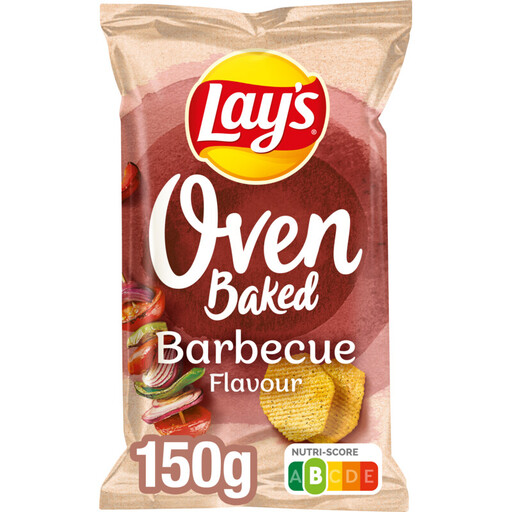 Image unavailable
Lay's Oven Baked Barbecue, 150 g
An option for portioning out an occasional amount of crisps from a larger bag for the lunchbox.
- 150 g bag; the product description says it contains around five to six servings.
- According to the product description, 50% less fat than regular potato crisps. Compare the fat and salt per 100 g on the current pack.
- The ingredients information lists soya as an allergen; check the pack if you need to avoid soya.
Joybuy
Frequently asked questions
Are lower-fat crisps automatically suitable for a school lunch?
No. A claim about less fat doesn’t mean crisps can replace lunch. The Netherlands Nutrition Centre lists fruit, vegetable sticks, unsalted nuts and wholemeal bread, among other things, as snack options for teenagers. So consider crisps an occasional addition to whatever else you’re packing.
Can I choose crisps based on the ‘less fat’ percentage?
Not on that percentage alone: check what the manufacturer is comparing the crisps with and look at the fat per 100 g. According to Albert Heijn, the claim for AH Ribbelchips naturel minder vet compares it with AH Ribbelchips naturel; a claim that uses regular potato crisps as its reference has a different basis.
How can I take crisps to school from a larger bag?
Decide at home how much you want to take and portion out the crisps in advance. A serving size on the pack can help you measure them, but it isn’t a compulsory personal limit; check the serving information for the variety you buy.
Where can I check allergens in pre-packed crisps?
Read the allergen information on the current pack of the specific variety. The Netherlands Food and Consumer Product Safety Authority says that 14 allergens must be listed on the labels of pre-packed foods. When choosing, don’t rely solely on a product page you looked at earlier.


