If you’re mainly looking for regular potato crisps with less fat, consider oven-baked crisps. If you want your snack to provide more protein, compare lentil crisps and crisps with added protein too. A lower-fat claim tells you nothing about the protein content. So check protein, fat and salt per 100 g and per portion, as well as the ingredients and allergens in your chosen flavour.
Who is this choice relevant to?
Sportspeople who want their snack to provide protein
If you want the crisps themselves to contribute to your protein intake, a lower-fat claim alone isn’t enough. Body & Fit lists 32 g of protein per 100 g for Smart Protein Chips Barbecue; according to Albert Heijn’s product information, BioToday Lentil Crisps Sea Salt contains 12 g per 100 g. Also consider how much you actually eat.
Crisp lovers who are mainly watching their fat intake
If you want to stick with potato crisps, oven-baked crisps are an alternative to lentil crisps or crisps with added protein. For Lay's Oven Baked Original, Albert Heijn lists 13 g of fat and 5.1 g of protein per 100 g, with a product claim of 50% less fat than regular potato crisps.
Consumers who read labels carefully too
If salt, ingredients or allergens are deal-breakers for you, compare the flavour you’ve chosen and check the current packaging, rather than relying on the claim on the front alone. The Netherlands Food and Consumer Product Safety Authority explains the mandatory allergen labelling requirements for prepacked foods.
What should you look for when choosing?
Oven-baked potato crisps
Choose this option: if you want potato crisps and lower fat matters more to you than the protein content.
The trade-off: Albert Heijn lists 13 g of fat for Lay's Oven Baked Original, as well as 5.1 g of protein per 100 g.
Lentil crisps
Choose this option: if a lentil base and the protein content of your snack matter more to you than sticking with potato crisps.
The trade-off: Albert Heijn lists 12 g of protein, 18 g of fat and 1.7 g of salt per 100 g for BioToday Lentil Crisps Sea Salt.
Crisps with added protein
Choose this option: if protein content is your top priority when choosing a savoury snack.
The trade-off: Body & Fit lists 32 g of protein and 2.0 g of salt per 100 g for Smart Protein Chips Barbecue; the ingredients include soya protein.
| What to consider |
What to check when buying |
Who it matters most to |
| Protein content |
Compare protein per 100 g and per portion, using the nutritional information for the exact flavour you’ve chosen. |
If I want my snack to provide protein, I need to know how much is in my usual portion. For around 39% of consumers, protein content comes first. |
| Fat content |
Check the fat content per 100 g and see what a lower-fat claim is comparing the product with. |
I want to keep eating potato crisps, but the amount of fat is my main consideration when choosing. This is the top priority for around 38% of consumers. |
| Salt and ingredients |
Check salt per 100 g and per portion, along with allergens and warnings on the packaging. |
If salt or an ingredient is the deciding factor for me, an appealing protein or fat figure won’t automatically sway my choice. Around 23% of consumers prioritise whether the label shows a product is suitable for them. |
Common mistakes
-
Assuming less fat means more protein
These are different product characteristics. Albert Heijn lists 5.1 g of protein per 100 g for Lay's Oven Baked Original; Body & Fit lists 32 g per 100 g for Smart Protein Chips Barbecue.
Decide which matters most for your snack, then compare the amount per portion too.
-
Looking only at the claim on the front of the pack
A lower-fat claim refers to a comparison product; it doesn’t tell you how much fat the crisps themselves contain. According to Albert Heijn’s product information, BioToday Lentil Crisps Sea Salt contains 18 g of fat per 100 g, while Lay's Oven Baked Original contains 13 g per 100 g. These are different types of crisps.
Check the actual fat content and what it’s being compared with before weighing products up against each other.
-
Counting a whole bag as one portion
Albert Heijn’s product information lists Lay's Oven Baked Original as containing five portions of 30 g on average per bag. If you eat more than one portion, the amount of fat and salt you consume during that snack will also increase.
Use the portion size on the pack, or decide in advance how much you want to have.
-
Overlooking allergens and salt
BioToday states that its Lentil Crisps Sea Salt may contain peanuts, soya, milk and celery. Body & Fit lists soya protein and a possible presence of gluten in Smart Protein Chips.
Check the label on the current packaging before eating, especially if you need to avoid certain ingredients, and compare the salt content of your chosen flavour too.
Brands to compare
Body & Fit
An option to compare if protein content is your top priority when choosing crisps.
- Body & Fit lists 32 g of protein and 9.1 g of fat per 100 g for Smart Protein Chips Barbecue; according to the brand, a 23 g bag contains 7.4 g of protein.
- The same flavour contains 2.0 g of salt per 100 g and includes soya protein. Check the packaging for a warning about possible gluten too.
BioToday
Lentil crisps for anyone looking to compare an alternative to potato-based crisps.
- Albert Heijn lists 43% lentil flour and 12 g of protein per 100 g for BioToday Lentil Crisps Sea Salt.
- The same product information lists 18 g of fat and 1.7 g of salt per 100 g, as well as a warning that the product may contain peanuts, soya, milk and celery.
Lay's
Oven-baked potato crisps to consider if lower fat is your priority within this type of crisp.
- Albert Heijn lists 13 g of fat per 100 g for Lay's Oven Baked Original and the product claim of 50% less fat than regular potato crisps.
- The Original flavour contains 5.1 g of protein per 100 g. Check the nutritional information for the specific flavour if you choose another one.
Chio
Oven-baked crisps in a range of flavours, which you can compare individually for their nutritional values.
- Jumbo lists Chio Oven Chips Paprika, Onion & Sour Cream and Sea Salt in its range of lower-fat crisps.
- Compare fat, protein, salt and allergens for your chosen flavour using the current packaging.
Albert Heijn
A retailer and own-brand option for comparing different types of crisps side by side.
- Its range of lower-fat or lower-salt crisps includes options such as AH Ribbelchips, Lay's Oven Baked and BioToday Lentil Crisps.
- When making your final choice, check the nutritional values and allergen information for the specific product and its current packaging.
Oven-baked crisps at Joybuy
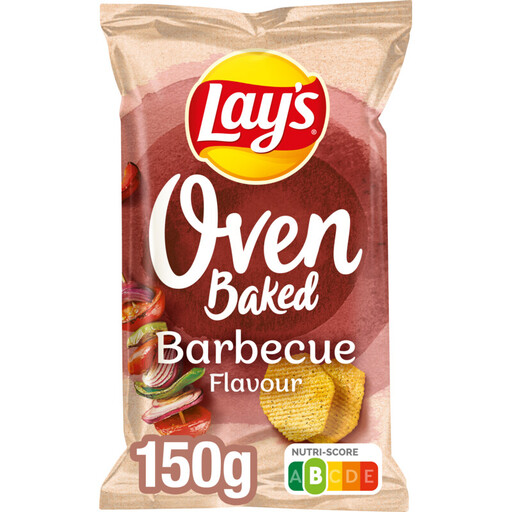
This selection features oven-baked potato crisps with a barbecue flavour: an option for anyone who wants to stick with potato crisps. If protein matters for your snack, check the protein content of this flavour separately.
 No image available
Lay's Oven Baked Barbecue, 150 g
An oven-baked potato crisp to consider if you want to stick with this type of crisp and protein isn’t the main reason for your snack.
150 g bag. For the Barbecue flavour, check the nutritional values per 100 g and per portion, and read the ingredients and allergen information on the packaging.
View at Joybuy
Frequently asked questions
Are lower-fat crisps automatically a protein-focused snack?
No. A fat claim and the protein content describe different characteristics. Albert Heijn lists 5.1 g of protein per 100 g for Lay's Oven Baked Original, while Body & Fit lists 32 g per 100 g for Smart Protein Chips Barbecue. Also compare how much protein is in the portion you plan to eat.
Should I compare nutritional values per 100 g or per portion?
Use both: comparing values per 100 g lets you weigh products up against each other, while the per-portion value reflects how much you actually eat. Albert Heijn lists an average portion of 30 g for Lay's Oven Baked Original; Body & Fit uses a 23 g bag for Smart Protein Chips. Check which portion size applies to your chosen pack.
Why should I compare the salt content too?
Because products with different protein and fat contents can also vary in their salt content. Albert Heijn lists 0.85 g of salt per 100 g for Lay's Oven Baked Original and 1.7 g for BioToday Lentil Crisps Sea Salt; Body & Fit lists 2.0 g for Smart Protein Chips Barbecue. Check the flavour you’ve chosen and your portion size.
Do I still need to read the label on crisps I’ve chosen online?
Yes. Check the packaging you receive, especially if allergens are important to you. According to the Netherlands Food and Consumer Product Safety Authority, the 14 designated allergens must be clearly listed on prepacked food labels. Also read any warnings that the product may contain an allergen.


