
Office snackers keeping an eye on total fat
You want to take crisps with you, but are looking for an option with less total fat listed than comparable regular crisps. Compare the values per 100 g, then consider how much you’ll pack.


When choosing crisps for your office lunch, first compare lower-fat crisps with regular crisps using the nutritional information per 100 g. Then check what your planned portion contains. A lower fat content alone tells you nothing about salt, energy or allergens, so check the details for your chosen flavour on the packaging.
You want to take crisps with you, but are looking for an option with less total fat listed than comparable regular crisps. Compare the values per 100 g, then consider how much you’ll pack.
Salt, saturated fat and energy matter to you as well as fat. Use any Nutri-Score only to compare similar products, such as crisps with crisps; this is also how the Dutch Government recommends using it.
If you have an allergy or dietary requirement, check the ingredients and allergen information for your chosen flavour. The Netherlands Food and Consumer Product Safety Authority stresses the importance of clear allergen information on food labels.
Start by comparing the fat content of similar crisps per 100 g. Then check the other nutritional values and decide how much you’ll actually take with you.
| What to consider | What to check before buying | Who it matters to |
|---|---|---|
| Total fat | Compare the fat content per 100 g with that of regular crisps, and check what any lower-fat claim refers to. | I want to keep taking crisps with me, but mainly choose based on a lower listed fat content for the same quantity. Around 36% of consumers choosing crisps for an office lunch put this first. |
| Other nutritional values | Check salt, saturated fat and energy per 100 g and per planned portion. Compare any Nutri-Score only within the same product category. | If I’m looking beyond fat, I want to know how much salt and energy my portion contains. For around 29% of these consumers, this broader nutritional comparison matters most. |
| Portion size and packing | Check the portion size on the label and decide how many crisps you can take in a tightly sealed container. | I’d rather take a pre-selected amount than an open bag that I keep dipping into while I work. Around 21% of consumers say choosing a portion is their main priority. |
| Ingredients and allergens | Read the ingredients and allergen information for your chosen flavour on the current packaging. | If ingredients are the deciding factor for me, I check the specific flavour before looking at its fat content. This check comes first for around 14% of consumers. |
The claim refers to fat compared with a product used for comparison, not to all nutritional values. Jumbo lists Lay's Oven Baked Original as containing 13 g of fat and 0.85 g of salt per 100 g; regular Lay's Original contains 30 g of fat and 1.1 g of salt per 100 g.
Compare saturated fat, salt and energy per 100 g too, and check what your chosen portion contains.
The Dutch Government says Nutri-Score is intended for comparing products of the same kind. It is not a substitute for the nutritional information table.
Use the score, at most, as an extra point of comparison between crisps, and check the values on the label as well.
Ingredients can vary between flavours. For example, Pringles lists milk and soya as potentially present in Original; this tells you nothing about the ingredients in other varieties.
Check the current ingredients and allergen information on the physical pack for your chosen flavour.
Nutritional values per portion are only helpful when choosing if that portion matches the amount you eat.
Decide in advance how much you want to take, then pack it separately in a tightly sealed tub or bag.
The Oven Baked range is worth considering if you want to compare the listed total fat in crisps with regular original crisps.
AH Ridged Crisps Original, Lower Fat is a supermarket own-brand option that explicitly compares itself with regular AH Ridged Crisps Original.
Jumbo includes Chio Oven Chips in its lower-fat crisp range, which features a selection of flavours.
Pringles Original is a stackable crisp in a tube, but the packaging tells you nothing about its fat content.
These oven-baked crisps are worth considering when comparing flavours and pack sizes for an office lunch. Use the nutritional information and ingredients for the specific variety on the current pack to help you choose.
 No image available
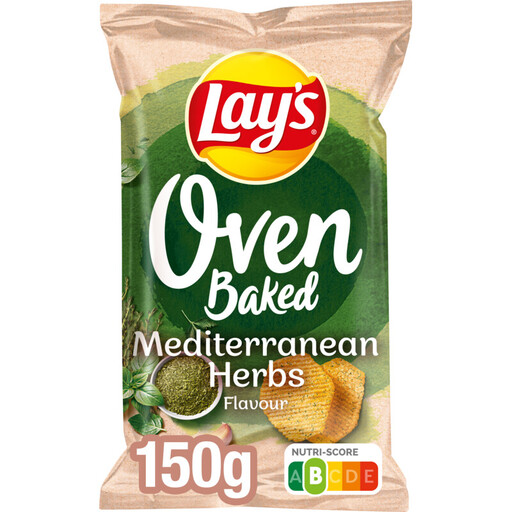
A herby flavour for anyone who wants to take a pre-measured portion from a larger bag. Compare the nutritional information for this flavour per 100 g and check the ingredients on the pack.
 No image available
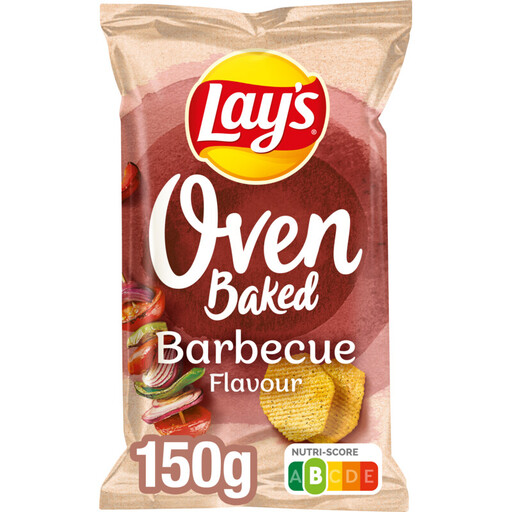
A barbecue flavour for a pre-measured lunch portion from a 150 g bag. Check the nutritional information and allergens for this flavour separately.
 No image available
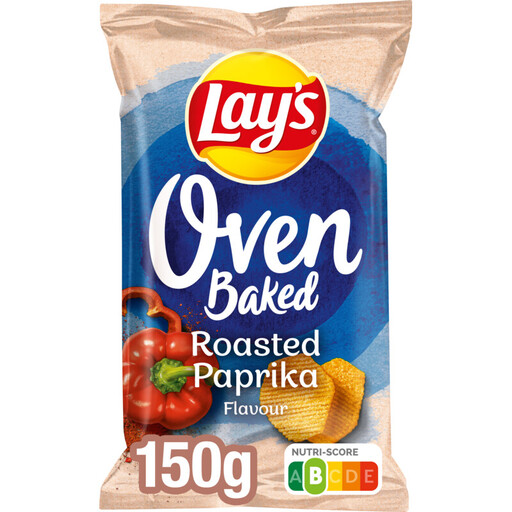
A paprika flavour for anyone who wants to take a portion from a 150 g bag. Compare the fat and salt values on the pack with those of other flavours.
 No image available
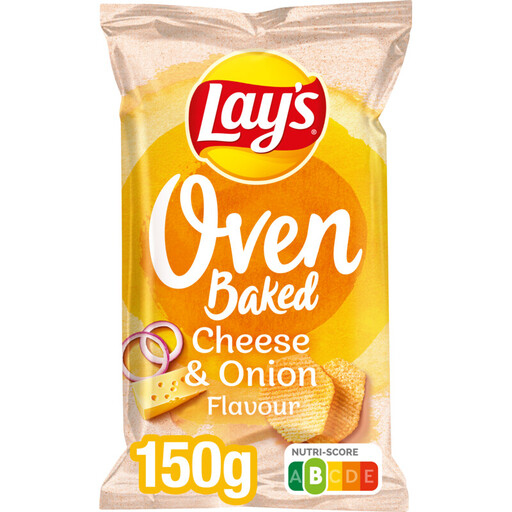
A cheese and onion flavour for anyone who wants to measure out their own portion from a 150 g bag. Check the portion guidance and ingredients on the pack before buying.
 No image available
A sea salt variety in a 125 g bag for anyone comparing flavours and pack sizes. As well as the fat content, check the salt and allergen information on the current pack.
No. The comparison is about fat relative to a particular product. Check salt, saturated fat and energy too, and decide how many crisps you’ll actually put in your lunch.
Use both: comparing products per 100 g lets you assess them side by side, while the values per planned portion show what you’ll be taking with you. The Lay's Oven Baked Original and AH Ridged Crisps Original, Lower Fat packs reviewed list portions of 30 g and 25 g respectively; choose an amount that matches your own portion.
Yes. Check the ingredients and allergen information for each flavour you choose on the current packaging. Different varieties may have different ingredients.
Measure out the portion you want in advance and pack it in a tightly sealed, dry container. Follow the storage instructions on the pack too, even if you’re keeping a larger bag after opening it.