
Shoppers who are mainly watching their fat intake
You’re adding crisps to your shopping and want to know how much less fat the chosen variety contains according to the label, and what it is being compared with.


For a quick top-up shop, start by choosing a variety with a clear lower-fat comparison, then check the nutritional information per 100 g and how much you want to take with you. Joybuy states that Chio Oven Chips Sea Salt contains 60% less fat and Lay's Oven Baked Natural 50% less fat than regular potato crisps. These claims alone tell you nothing about the salt content, ingredients or suitability for people with allergies.
You’re adding crisps to your shopping and want to know how much less fat the chosen variety contains according to the label, and what it is being compared with.
You’re looking for one bag for a snack and want to match its weight to the amount you need.
You look beyond the fat claim and check the nutritional information and, if relevant to you, the ingredients and allergens for the flavour you’ve chosen.
Start with the fat claim and what it is compared with. Then use the nutritional information and bag size to decide which variety suits your snack.
| What to consider | What to check when buying | Who it matters to |
|---|---|---|
| Fat reduction | Read the claimed percentage, what it is compared with and the amount of fat per 100 g. | If I mainly want to choose crisps with less fat, it needs to be clear what they’re being compared with. For around 36% of shoppers, this fat comparison is the most important factor. |
| Amount for a top-up shop | Compare the bag weight with how much you want to take for your snack. | I want to pick up one bag quickly, without buying more than I intend to use. For around 29% of shoppers, this practical amount comes first. |
| Salt and nutritional information | Compare fat, salt and energy per 100 g, then consider the portion you expect to eat. | Less fat doesn’t tell me how much salt a portion contains. That’s why around 21% of shoppers prioritise the broader nutritional information. |
| Ingredients and allergens | Read the ingredients and allergen information for the exact flavour and pack you’re choosing. | If certain ingredients matter to me, I can’t rely on information about the product range as a whole. For around 14% of shoppers, checking the specific product is the main concern. |
A fat claim doesn’t automatically tell you about the amount of salt, energy or ingredients. For example, Albert Heijn lists 0.85 g of salt per 100 g for Lay's Oven Baked Natural and 1.7 g per 100 g for BioToday sea salt lentil crisps.
Compare the nutritional information per 100 g before choosing based on the fat claim.
A 75 g bag and a 150 g bag won’t necessarily suit the same snack occasion.
Check the bag weight and decide how much you want to take with you or share.
Ingredients and allergens can vary by product and flavour. The term ‘lower-fat crisps’ doesn’t tell you anything about them.
Check the ingredients and allergen information for the exact variety.
Albert Heijn warns in its product information that ingredients and nutritional values, among other details, may change when a product is updated.
When you buy, check the information on the current packaging too.
Oven Baked is the relevant range if you’re looking for oven-baked potato crisps with an explicit fat comparison.
Oven Chips offers an oven-baked variety with an explicit lower-fat comparison.
AH lower-fat natural ridged crisps are a supermarket own-brand option if you’re considering ridged crisps for a top-up shop.
Sea salt lentil crisps are a different type of product for anyone specifically looking for a lentil-based option.
This combined order prioritises the stated fat reduction, then takes bag weight and product-specific considerations for a quick top-up shop into account. It isn’t a sales ranking or a product test; the percentages also relate to the comparison stated for each product.
| Position | Product | Features | Notes | Retailer |
|---|---|---|---|---|
| 1 | Chio Oven Chips Sea Salt, 125 g | 60% less fat than regular potato crisps. | Joybuy states this fat claim for Sea Salt. Compare the nutritional information for this flavour too; the percentage alone doesn’t tell you what that is. | Joybuy |
| 2 | Lay's Oven Baked Natural, 150 g | 50% less fat than regular crisps; 13 g of fat per 100 g. | Albert Heijn lists both the claim and the absolute fat value for this Natural variety. Check the information for your chosen flavour separately. | Albert Heijn |
| 3 | AH lower-fat natural ridged crisps, 150 g | 35% less fat than AH natural ridged crisps; 20 g of fat per 100 g. | The comparison on Albert Heijn’s product page uses the regular AH Natural variety as its reference. | Albert Heijn |
| 4 | BioToday sea salt lentil crisps, 75 g | Lentil crisps; 30% less fat than regular potato crisps. | Alongside the fat claim, Albert Heijn lists 1.7 g of salt per 100 g. Don’t choose based only on the lentil base or the fat comparison. | Albert Heijn |
These two oven-baked crisp varieties are worth considering if you’re looking for an explicit fat comparison. Compare their bag weights and check the nutritional information for the variety you want to order.
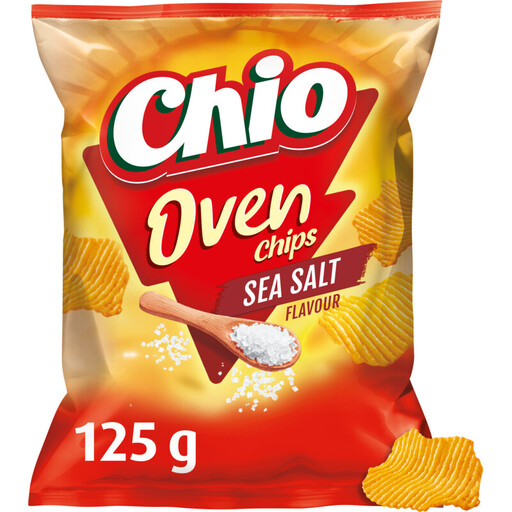 No image available
If you’re making a small top-up shop and mainly want an explicit fat comparison, Joybuy states that Sea Salt contains 60% less fat than regular potato crisps. Check the nutritional information and allergens on the current packaging too.
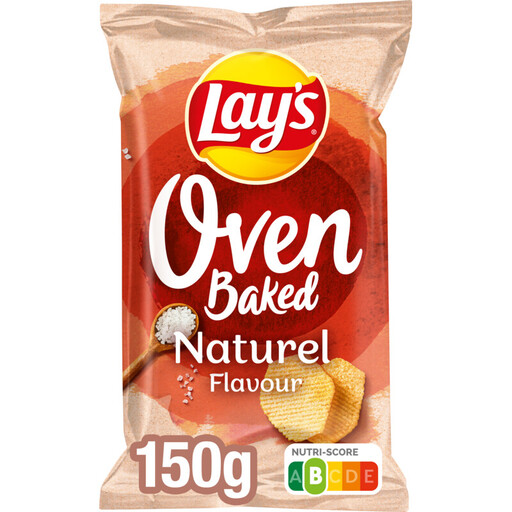 No image available
If you’d like to take home a 150 g bag of oven-baked potato crisps, Joybuy states that this variety contains 50% less fat than regular potato crisps. Check the other nutritional values on the packaging before choosing too.
No. A fat comparison alone tells you nothing about salt or energy. Compare those values separately per 100 g, then consider the portion you want to eat.
First check whether the fat claim applies to the flavour you’ve chosen and what the product is being compared with. Then look at the bag weight, nutritional information and any ingredients that matter to you.
The current packaging helps you check the information for the exact variety you’re buying. Albert Heijn points out that product information, including ingredients, nutritional values and allergens, may change when a product is updated.