
If lower fat is your main priority
You’re looking for crisps to share, with a fat reduction you can check. You also want to compare salt and energy per 100 g and per serving.


For your main bowl, choose crisps whose fat reduction and comparison basis you can check on the label. Compare salt and energy per 100 g and per planned serving too. If you’re adding a flavour for variety, check its ingredients and allergens separately.
You’re looking for crisps to share, with a fat reduction you can check. You also want to compare salt and energy per 100 g and per serving.
You’re looking for a base option for several guests, with the option to add other flavours without assuming they all have the same fat reduction.
If guests need to avoid certain ingredients or allergens, you’ll want to check the current packaging of every bag or tube.
Start with the fat content and the basis used to compare any claim. Then consider whether the salt, portion sizes and ingredients in any extra flavours suit what you want to serve.
| What to consider | What to check when buying | Who it matters to |
|---|---|---|
| Lower fat | Compare fat and saturates per 100 g, and check which regular crisps the fat reduction is compared with. | I want to see what the ‘lower fat’ claim is based on for the main bowl. Around 50% of consumers give the highest priority to a fat reduction they can verify. |
| Salt, energy and portion size | Check the salt and energy per 100 g, then work out the amounts for the portion you plan to serve. | If I’m putting out several snacks, I don’t want to focus on fat alone. For around 30% of consumers, salt, energy and portion size are the most important factors in their choice. |
| Flavours and ingredients | Check the ingredients and allergens on each pack you plan to serve. | I want to offer guests a choice without assuming that different flavours have the same ingredients. For around 20% of consumers, catering to their guests’ needs comes first. |
On its own, this wording doesn’t tell you how much salt or energy the crisps contain, or what a fat reduction is compared with.
Compare the nutrition information per 100 g and check what the claim is based on.
The Netherlands Nutrition Centre uses a 40 g bowl of crisps as a reference serving in its nutrition information. If you’re putting out several bowls, guests may take a different amount.
Decide how much you want to serve and work out the label values for that amount.
Plain crisps and flavours containing herbs or cheese may have different ingredients and allergens.
Check each pack separately and keep it available for guests who want to read the ingredients.
Oven Baked is worth considering if you’re looking for oven-baked potato crisps with a stated fat reduction.
AH Ribbelchips naturel minder vet compares with regular crinkle-cut crisps from the same supermarket’s own brand.
Jumbo lists Chio Oven Chips in its lower-fat crisps category, including several flavours.
The Dutch Pringles product page features stackable crisps in a range of flavours and shapes.
These products are Lay's oven-baked crisps in 150 g bags. Choose a flavour for your bowl and compare the nutrition information and ingredients on each pack.
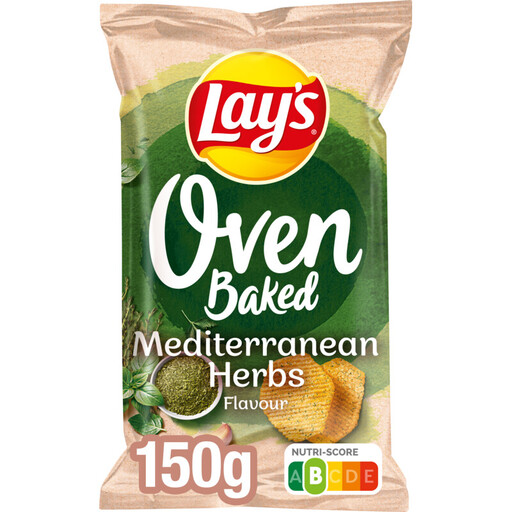 Image unavailable
A herby option if you’d like to put out an extra bowl alongside other flavours. The bag contains 150 g; check the ingredients and nutrition information on the pack.
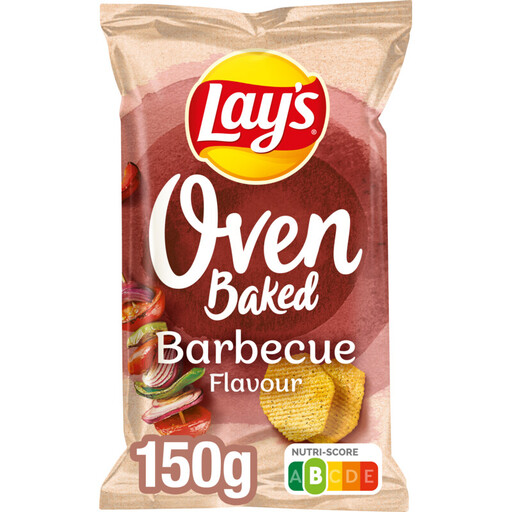 Image unavailable
A barbecue flavour for anyone who wants to serve something with a bold taste alongside the main bowl. The bag contains 150 g; check the ingredients for this flavour separately.
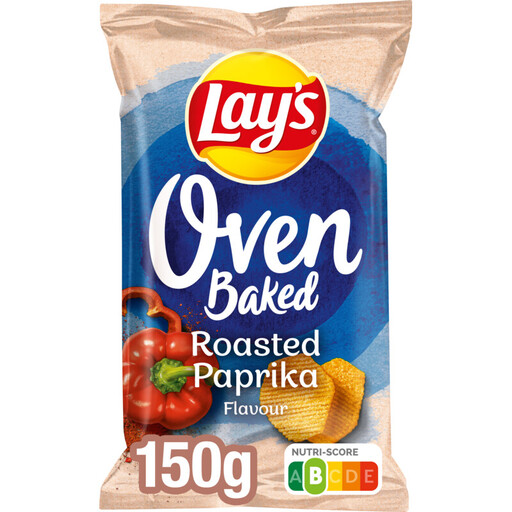 Image unavailable
A paprika flavour if you’d like to offer something different from plain crisps. The bag contains 150 g; compare the fat and salt on the label with the other flavours.
 Image unavailable
The plain option for a bowl without an added flavour such as paprika or barbecue. The bag contains 150 g; be sure to check the current ingredients and nutrition information for this flavour too.
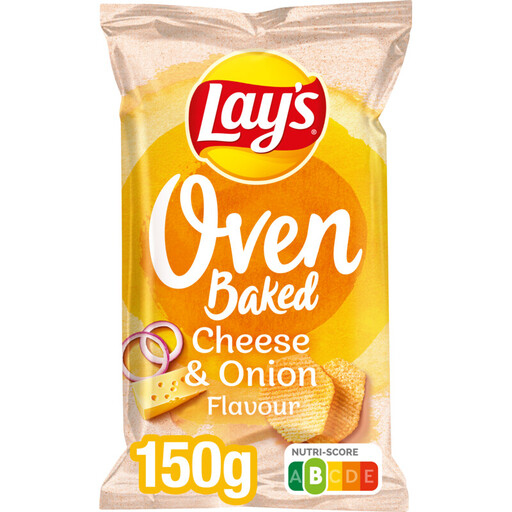 Image unavailable
A cheese and onion flavour to add variety to your snack table. The bag contains 150 g; check the pack for ingredients, allergens and serving information.
No. A fat reduction doesn’t tell you anything about the salt content on its own. The Netherlands Nutrition Centre gives an average of 0,57 g of salt for a 40 g bowl of plain light crisps; Jumbo lists 0,85 g per 100 g for Lay's Oven Baked Natural. Convert the values to the same amount before comparing products.
Check the salt content of the amount of crisps you plan to serve alongside that of the other snacks. The Netherlands Nutrition Centre advises adults to have no more than 6 g of salt a day, so a label value per 100 g isn’t automatically the amount in a bowl.
Yes, check the current packaging for every flavour. According to the Netherlands Food and Consumer Product Safety Authority, 14 specified allergens must be clearly listed in the ingredients. Keep the packs to hand so guests can check them for themselves.
Use online nutrition information to compare products in advance, but also check the pack you’re actually serving. Albert Heijn notes that ingredients, nutritional values and allergen information can change.