
Shoppers who prioritise a lower-fat claim
You want to take a savoury snack with you and are looking for crisps whose packaging clearly states how much less fat they contain than the comparison product named.


If you’re looking for lower-fat crisps to take with you, choose a variety with a clear comparison against regular crisps, and check the nutritional information per 100 g as well as the stated serving size. A reduction in fat doesn’t, by itself, tell you anything about the salt content or whether crisps are suitable as a breakfast on their own.
You want to take a savoury snack with you and are looking for crisps whose packaging clearly states how much less fat they contain than the comparison product named.
You want to compare more than just fat, so you also check the salt, energy, ingredients and any allergens in your chosen flavour.
You check the pack size and stated serving size to work out how many crisps to take for an occasion on the go.
When choosing lower-fat crisps, the comparative fat claim, the rest of the nutritional information and the pack size for taking them with you are separate factors to consider.
| What to consider | What to check when buying | Who it matters to |
|---|---|---|
| Fat reduction | Check what the fat claim is being compared with, and look at the fat content per 100 g. | If I’m mainly looking for lower-fat crisps, I want to know what the claim is based on. Around 44% of consumers would put a verifiable reduction in fat at the top of their list. |
| Other information on the label | Compare energy and salt per 100 g. If you have an allergy, check the current ingredients and allergen information too. | A fat claim isn’t enough for me if I also need to watch my salt intake or check the ingredients. For around 33% of consumers, the full label would be their first priority. |
| Pack size and serving | Check the pack size and stated serving size, if one is given on the packaging. | When I’m on the go, I want to work out how much to take without treating a whole bag as one serving. This practical pack size would matter most to around 23% of consumers. |
A comparative claim doesn’t tell you how much salt the crisps contain. The Albert Heijn and Jumbo product pages list 0.85 g of salt per 100 g for Lay’s Oven Baked Naturel and 1.5 g per 100 g for Chio Oven Chips Sea Salt, despite their claims of 50% and 60% less fat than regular crisps respectively.
Compare the fat and salt content of your chosen varieties on the same 100 g basis, then check the serving size.
Nutritional tables and ingredients lists apply to a specific variety. Lay’s Light Paprika and Lay’s Oven Baked Naturel, for example, are different products.
Read the label for the exact flavour you’re taking with you.
A fat claim tells you nothing about allergens. Jumbo’s product information for Chio Oven Chips Sea Salt states that the product may contain barley, milk, sesame, soya and wheat.
If you have an allergy or intolerance, check the current packaging for your chosen variety.
Lay’s offers both an Oven Baked and a Light variety with a comparative fat claim.
The AH own-brand range includes a ridged crisp variety with an explicit fat-reduction claim.
Chio Oven Chips are available in several flavours, including Sea Salt and Paprika.
Jumbo groups products such as Lay’s Oven Baked and Chio Oven Chips in a lower-fat crisps category.
Pringles is a regular option if shape and flavour matter more to you than a lower-fat claim.
These are oven-baked crisps from Lay’s and Chio, available in different flavours and pack sizes. Choose the flavour you want to take with you, then use the label to compare fat, salt and serving sizes. The product name alone can’t tell you whether the crisps are enough for breakfast.
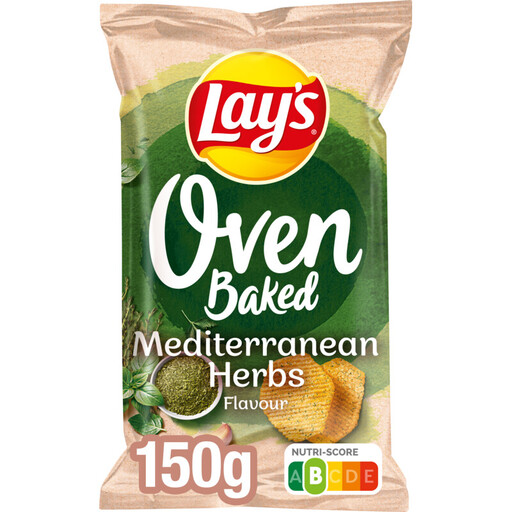 Image unavailable
For anyone who wants to take oven-baked crisps with a Mediterranean Herbs flavour along; the bag contains 150 g. Check the packaging for the nutritional information and ingredients for this flavour.
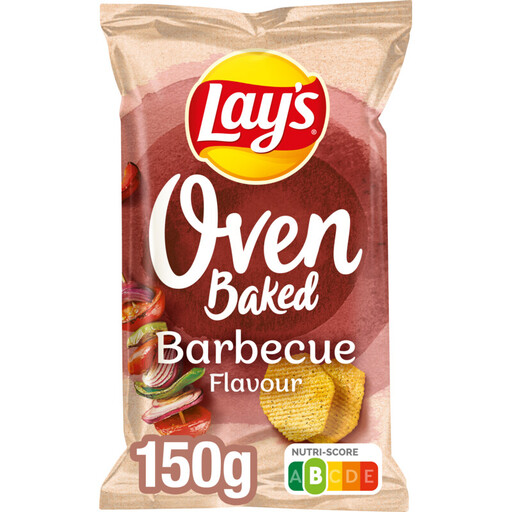 Image unavailable
For anyone looking for barbecue-flavoured oven-baked crisps; the bag contains 150 g. Check the label for this variety if salt or ingredients are important to your choice.
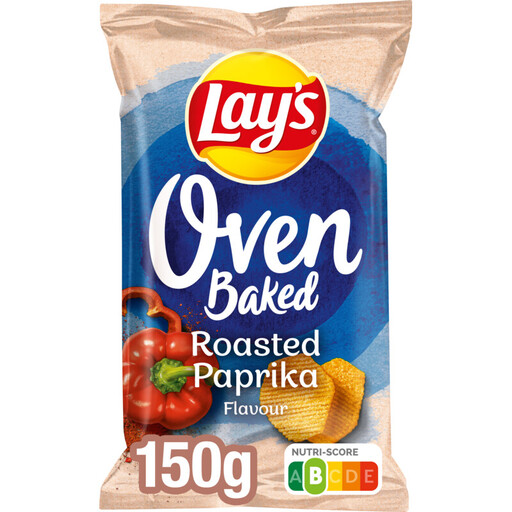 Image unavailable
For anyone who wants to take oven-baked paprika crisps along; the bag contains 150 g. Compare the nutritional information for this flavour with that of other varieties.
 Image unavailable
For anyone looking for Lay’s Oven Baked Natural to take on the go; the bag contains 150 g. Read the nutritional table on this pack before comparing it with other flavours.
 Image unavailable
For anyone who wants to take a bag of Sea Salt-flavoured oven-baked crisps along; this pack contains 125 g. As well as the fat claim, compare the salt content and check the current allergen information.
A lower-fat claim doesn’t mean crisps make a complete breakfast. It compares the fat content with another product; check the rest of the nutritional information and consider what else you’ll have at that meal.
No. You can’t work out the salt content from the cooking method or a fat claim. Albert Heijn lists 0.85 g of salt per 100 g for Lay’s Oven Baked Naturel, while Jumbo lists 1.5 g per 100 g for Chio Oven Chips Sea Salt. Compare your chosen varieties individually.
Check the fat claim and nutritional information per 100 g, followed by the pack size and stated serving size. This lets you compare products on the same basis and decide how much to take with you.
Read the current packaging for the exact flavour you choose. If you have an allergy, check the ingredients and allergen information before eating the product; this information can vary between varieties.