
Fans of classic potato crisps
You want to choose familiar potato crisps for back to school, but compare flavours by their fat content rather than relying on the claim on the front of the pack.


Looking for lower-fat crisps for a back-to-school snack? Start by comparing the fat content per 100 g of the flavours you’re considering. A lower-fat claim has its own basis for comparison and doesn’t tell you how much salt or energy a product contains. If you’re sharing crisps at home or taking them with you, also check the pack weight, portion size and, where relevant, the ingredients and allergens.
You want to choose familiar potato crisps for back to school, but compare flavours by their fat content rather than relying on the claim on the front of the pack.
You consider salt, energy, ingredients and any allergens alongside fat. Nutritional values per 100 g make packs of different sizes easier to compare.
You’re looking for crisps to share after school or take with you, and want to know how much is in the pack and how to work out a suitable amount for snack time.
Start with what matters most for your snack: lower fat, other nutritional information or a practical pack. Then compare the products you’ve chosen on the same basis: per 100 g.
| What to consider | What to check before buying | Who it matters to |
|---|---|---|
| Fat content and basis for comparison | Check the grams of fat per 100 g and see which crisps a lower-fat claim is comparing the product with. | If I want to keep eating potato crisps, I look for a flavour whose lower fat content I can check. This is the top priority for around 50% of consumers. |
| Nutritional information and allergens | Compare salt and energy per 100 g as well as fat. If you have a relevant allergy, read the ingredients and allergen information on the pack. | When choosing, I also want to know how much salt the crisps contain and what ingredients they include. Around 30% of consumers prioritise these checks. |
| Pack and portion | Check the pack weight and stated portion size. To compare products, use the values per 100 g. | For an after-school snack, I want to be able to decide how much to take with me or share from a pack. This practical consideration comes first for around 20% of consumers. |
A fat claim doesn’t tell you how much salt the product contains. For example, Albert Heijn lists 1.7 g of salt per 100 g for BioToday Lentil Crisps Sea Salt and 0.85 g for Lay's Oven Baked Original.
For the flavours you’re considering, check the fat, salt and energy per 100 g.
Lay's says that Oven Baked contains 50% less fat than regular potato crisps. Albert Heijn compares its lower-fat plain ridged crisps with its own regular ridged crisps. So these claims don’t necessarily use the same product as a reference.
Read the basis for comparison on the pack, then use the fat content per 100 g to compare your chosen products side by side.
A portion size can help with planning, but it varies between products. That means comparing nutritional values per portion tells you less about the difference between two packs.
Compare the products per 100 g first, then decide how much you want to serve or take with you for snack time.
Ingredients and allergen information can change. That makes the packaging important when you’re choosing for someone with an allergy.
Before eating, check the ingredients list, allergen information and best-before date on the pack.
The Oven Baked range offers oven-baked potato crisps in a variety of flavours.
AH lower-fat plain ridged crisps are a supermarket own-brand potato crisp.
Sea Salt Lentil Crisps offer a legume-based option to consider alongside potato crisps.
Jumbo lists Chio Oven Chips in its lower-fat crisps category, including paprika and sea salt flavours.
Pringles comes in a range of flavours and tube sizes, which may be useful if pack size and sharing matter to you.
These products are oven-baked potato crisps for anyone looking to share a pack at back-to-school time or take a smaller pack with them. The Lay's flavours list 13 g of fat per 100 g. For the smaller O-Potao pack, use the nutritional table as your guide and don’t assume the same fat reduction.
 No image available
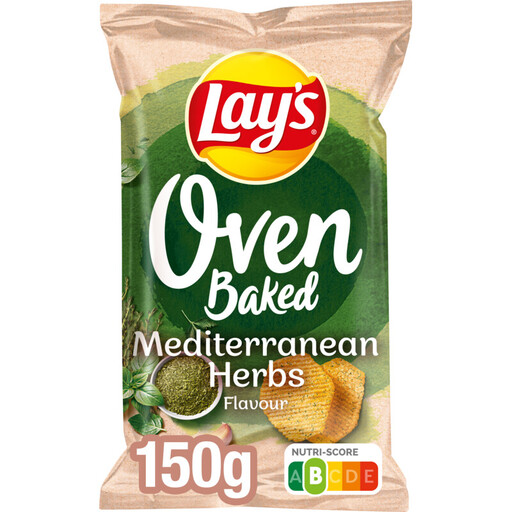
Oven-baked potato crisps in a pack you can share after school or divide up in advance.
The product information lists 13 g of fat, 0.83 g of salt and 440 kcal per 100 g. The pack contains 150 g; the stated portion size is 30 g.
The ingredients information lists milk as an allergen. If you have an allergy, check the current packaging.
 No image available
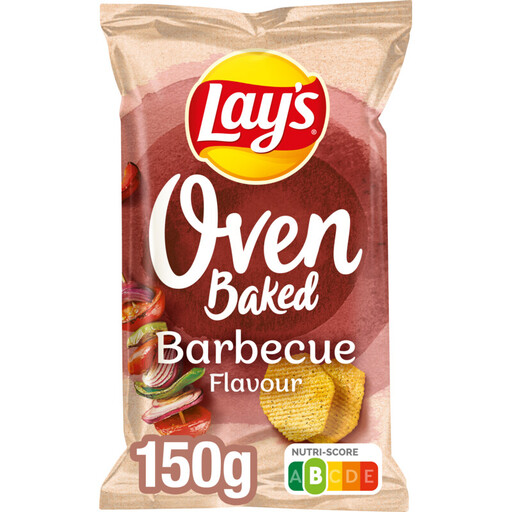
Barbecue-flavoured oven-baked potato crisps in a pack that’s made for sharing.
The product information lists 13 g of fat and 0.77 g of salt per 100 g. The pack contains 150 g.
The allergen information lists soya; if you have an allergy, check the current packaging.
 No image available
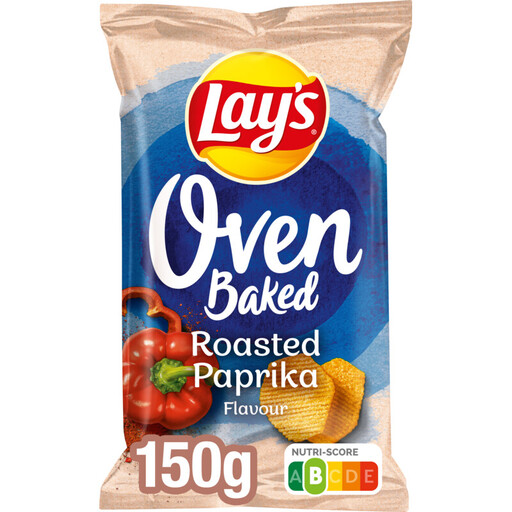
Oven-baked paprika-flavoured potato crisps for anyone who wants to share a larger pack across snack times.
The product information lists 13 g of fat, 0.81 g of salt and 440 kcal per 100 g. The pack contains 150 g.
The allergen information lists milk; if you have an allergy, check the current packaging.
 No image available
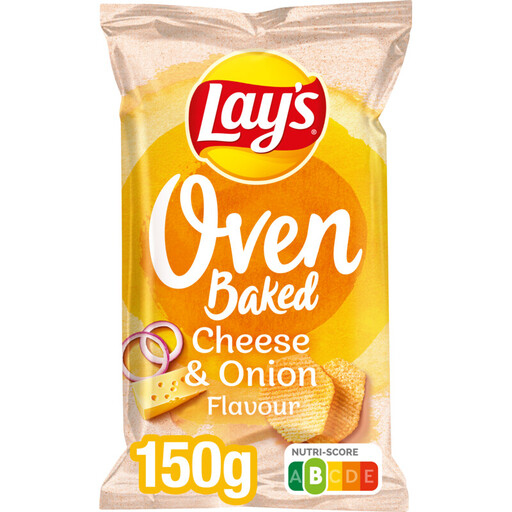
Oven-baked cheese and onion-flavoured potato crisps for anyone who wants to serve themselves from a pack.
The product information lists 13 g of fat, 0.83 g of salt and 443 kcal per 100 g. The pack contains 150 g; decide for yourself how much to serve when planning portions.
The ingredients information lists milk. If you have an allergy, check the current packaging.
 No image available
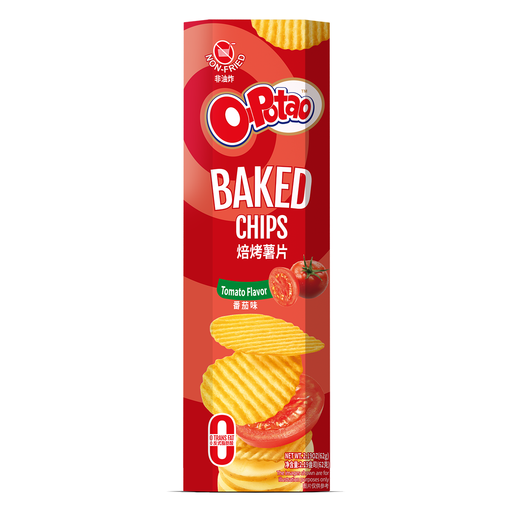
A smaller pack of tomato-flavoured baked potato crisps for anyone who’s mainly considering pack size.
The product information lists 24 g of fat per 100 g. Compare this with the other crisps you’re considering; the baking process alone doesn’t mean there’s a specific fat reduction.
The allergen information states that the product may contain traces of soya and milk. If you have an allergy, check the packaging.
No. A lower fat content doesn’t tell you everything about a product’s nutritional value. The Netherlands Nutrition Centre points out that many snacks are high in calories or salt, so compare the energy and salt per 100 g too, and consider the snack alongside what else you eat.
Compare the nutritional values per 100 g, then use the stated portion to plan your snack. The Netherlands Nutrition Centre says that nutritional values on pre-packed foods are listed per 100 g, making it possible to compare different packs on the same basis.
Read the current ingredients and allergen information on the pack of the flavour you’ve chosen. For example, Albert Heijn states that BioToday Sea Salt Lentil Crisps may contain peanuts, soya, milk and celery. A vegan label doesn’t replace these checks.
Seal the pack tightly and follow the storage advice on the packaging. Albert Heijn says that Lay's Oven Baked Original should be stored in a cool, dry place; for other flavours, check the instructions on the pack.