Who is this buying guide for?

You’re looking for genuinely lower-fat cashews

You want the cashews themselves to have a lower fat content, and need to distinguish a nutrition claim from a description of how they’re prepared. Check the claim and the nutritional information for the exact product.

You want to limit your snack portion

You want to keep eating cashews but decide for yourself how much to have at snack time. Weighing out a portion is a different choice from buying a product with a different composition.

You’re stocking up on snacks

You’re comparing pack sizes and want to store and use the contents appropriately once opened.

What should you look for when buying?

What to consider What should you check? Who is this most important to?
Fat content of the product Check the claim, grams of fat per 100 g and the reference product used for comparison. If I’m looking for less fat in the nuts themselves, I want to see a claim and a comparable nutritional basis. Around 36% of consumers prioritise the product’s fat content.
Amount per snack occasion Weigh out your portion and check the nutritional information for that amount. If I mainly want to decide how much to have at snack time, portion size matters more than the preparation description. Around 29% of consumers give limiting portion size top priority.
Preparation and salt Read the preparation description, ingredients and salt content for the exact product. If I prefer, for example, roasted, unsalted or no-added-oil cashews, I want to be able to assess each of these qualities separately. Around 14% of consumers prioritise preparation or flavour.
Stock and storage Compare the net weight and follow the storage advice on the packaging. Also check the best-before date and any batch warnings. When choosing snacks to keep in stock, I want a pack that suits how I use them and can be stored properly once opened. Around 21% of consumers give managing their supplies top priority.

Common buying mistakes

  • Assuming no added oil means low fat

    A preparation description doesn’t prove that the total fat content is low. Duyvis describes Cashews Original as oven-roasted with no added oil; this alone isn’t proof of fat reduction.

    Check the claim and nutritional table for the exact product. Treat ‘no added oil’ as a separate preparation characteristic.

  • Applying a claim about peanuts to cashews

    The 30% claim by Duyvis cited by Albert Heijn is about peanuts in a crunchy coating, compared with regular peanuts in the same type of coating. The claim says nothing about cashews.

    Always check the product type and the reference product mentioned before using a fat-reduction claim to compare products.

  • Comparing a small portion with 100 g

    A difference in portion size can be mistaken for a difference in the product’s composition.

    First compare the nutritional information for the same amount, then consider the portion you want to have.

  • Buying more than you can use

    Nuts can go rancid, turn chewy or become mouldy. A larger pack therefore needs to be stored in a way that suits how you use them.

    Choose a pack size that matches how quickly you’ll use the contents, and follow the storage advice on the packaging.

Brands and product ranges compared

Duyvis

Duyvis Cashews Original is worth considering if you’re looking for cashews roasted without added oil.

  • Duyvis describes this product as oven-roasted with no added oil.
  • This preparation description alone doesn’t substantiate a lower fat content or a fat-reduction claim.

Albert Heijn

The supermarket’s own unsalted cashews are an option if you’re looking for an unsalted variety.

  • Albert Heijn’s product page describes the variety as unsalted.
  • Unsalted doesn’t mean lower in fat. Check the current product information on the packaging.

Jumbo

Jumbo’s range information distinguishes between different preparation methods and pack sizes.

  • The range includes, among other options, unsalted and dry-roasted varieties in different pack sizes.
  • The range page doesn’t prove that any product has a reduced fat content.

Lidl

Lidl’s Dutch product listing describes unsalted cashews.

  • The product name is useful if you’re looking for an unsalted variety.
  • The unsalted label doesn’t substantiate fat reduction; check the fat content of the exact product.

ALDI

ALDI Netherlands describes Trader Joe’s roasted unsalted cashews in a 250 g pack.

  • The product description states both how this variety is prepared and its pack size.
  • Roasted and unsalted don’t substantiate a lower fat content.

PLUS

PLUS describes its own unsalted, unroasted cashews in a 200 g bag.

  • The product description specifies both the salt level and the preparation method.
  • These qualities don’t prove fat reduction. Check the current ingredients and product information.

Cashews at Joybuy

These Joybuy picks are regular cashews for people choosing by portion size or preparation preference; don’t treat them as products with a substantiated fat-reduction claim. If you’re looking for a lower-fat claim, check the information for the exact product and its basis for comparison.

Jiazhouyuanye Original Flavour Large Cashew Nuts, 160 g

Jiazhouyuanye Original Flavour Large Cashew Nuts, 160 g

A regular cashew variety you can weigh out yourself; the product description states that it contains 100% cashew kernels.

Fat: 47.7 g per 100 g according to the product description.

View at Joybuy
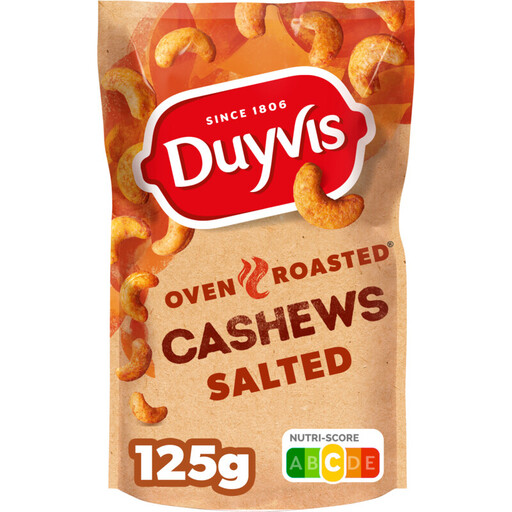
Duyvis Dry Roasted Cashews, 125 g

Duyvis Dry Roasted Cashews, 125 g

A good fit if you’re looking for cashews prepared without added oil; Duyvis describes these as oven-roasted without added fats or oil.

Fat: 43 g per 100 g according to the product description. This describes how they’re prepared; it isn’t a fat-reduction claim.

View at Joybuy
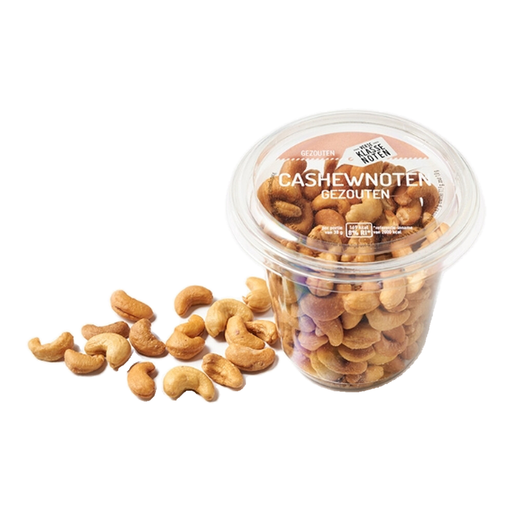
Verse Klassenoten Salted Cashew Nuts, 150 g

Verse Klassenoten Salted Cashew Nuts, 150 g

A salted option if that’s your preferred flavour; the product description mentions individually wrapped portions.

View at Joybuy

g'woon Cashew Nuts Roasted & Unsalted, 200 g

g'woon Cashew Nuts Roasted & Unsalted, 200 g

A good fit if you’re looking for a roasted, unsalted variety; the product description advises storing it in a cool, dry place and resealing the pack after opening.

Fat: 46.67 g per 100 g according to the product description.

View at Joybuy
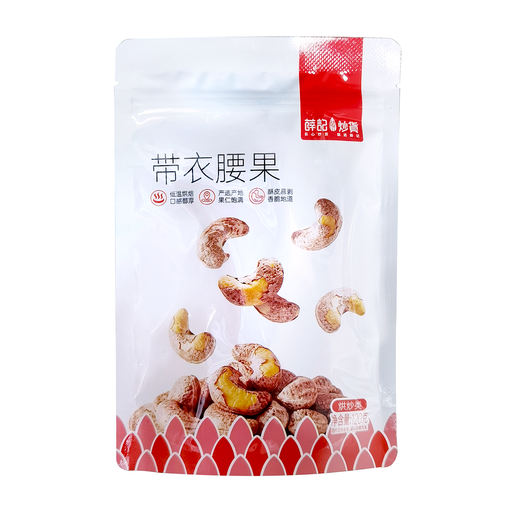
Xue Ji Chaohuo Salted Cashews with Skin, 120 g

Xue Ji Chaohuo Salted Cashews with Skin, 120 g

The product name specifies salted cashews with their skins on; check the nutritional table and portion size on the packaging.

View at Joybuy

Frequently asked questions

Are cashews with no added oil the same as lower-fat cashews?

No. ‘No added oil’ describes a preparation characteristic and doesn’t prove a lower total fat content. For a fat-reduction claim, check the nutritional information and comparison for the exact product.

When can a product be labelled ‘low fat’ in the Netherlands?

For solid foods, the European Commission sets a maximum of 3 g of fat per 100 g for a ‘low fat’ claim. This is a requirement for using that claim, not a general buying threshold for all cashews.

What should I check on the label for allergens?

Check the ingredients and allergen information for the exact product. The NVWA states that any allergens present must be clearly identifiable; in an ingredients list, they must be distinguishable from the other ingredients.

How should I store opened unsalted cashews?

The Netherlands Nutrition Centre’s general advice is six months in a kitchen cupboard or one year in the freezer. Also follow the storage advice on the packaging, and don’t eat nuts that are rancid, mouldy or clearly spoiled.

Does the ALDI warning apply to all cashews?

No. The NVWA warning dated 20 May 2026 concerns Trader Joe’s unsalted cashews, 170 g, with barcode 2003020120930 and best-before date 23-09-2026. Check the product, packaging and date; don’t eat a pack that matches the warning.
