
Snackers keeping an eye on calories
You want to keep buying crisps, but compare the energy per 100 g and then work out how much that means for the portion you want to eat.


To choose crisps with fewer calories, first compare the energy per 100 g, then calculate it for the portion you actually want to eat. Jumbo’s product information lists Lay's Oven Baked Naturel at 428 kcal per 100 g and Chio Oven Chips Sea Salt at 435 kcal per 100 g. Chio has less fat, but more salt. A lower energy value doesn’t automatically make crisps an everyday choice: the Netherlands Nutrition Centre says crisps are not included in the Wheel of Five.
You want to keep buying crisps, but compare the energy per 100 g and then work out how much that means for the portion you want to eat.
You’re looking at oven-baked options for their fat content, while keeping an eye on energy and salt too.
You want to know how much you’re taking from a bag or tube, rather than using the whole pack or a suggested serving as your starting point.
When comparing similar crisps, start with the nutrition information per 100 g. Then decide which factor matters most for your snack: energy, fat, salt or how much you eat.
| What to consider | What to check on the shelf | Who it matters to |
|---|---|---|
| Energy and portion | Compare kcal per 100 g, then work out the value for the amount you want to eat. | If I want to eat crisps with fewer calories, I don’t want to judge them by the front of the bag alone. Energy is said to be the top purchasing priority for around 33% of consumers. |
| Fat | Check the fat content per 100 g and see what a ‘less fat’ claim is comparing it with. | When choosing oven-baked crisps, I mainly want to know how their fat content compares with other options. This is said to be the top priority for around 27% of consumers. |
| Salt | Compare salt per 100 g and, if needed, work out how much salt is in your own portion. | If I regularly eat salty snacks, I want to take salt into account when choosing. Around 20% of consumers are said to put salt first. |
| Pack size and quantity | Check the pack weight and decide in advance how much you want to eat; use a suggested serving as a guide for your calculations. | I want to be able to take a measured amount easily from a large bag or tube. Portion planning is said to be most important for around 20% of consumers. |
Less fat doesn’t automatically mean fewer kcal or less salt. Jumbo’s product information lists Chio Oven Chips Sea Salt at 9.2 g of fat and 1.5 g of salt per 100 g, compared with 13 g of fat and 0.85 g of salt for Lay's Oven Baked Naturel.
Compare energy, fat and salt on the same basis, then decide which difference matters most to you.
The Netherlands Nutrition Centre says crisps are not included in the Wheel of Five. A difference between two types of crisps doesn’t change that.
Use the nutrition table to compare snacks with each other, then consider how a portion fits into your eating habits.
The cooking method doesn’t tell you how much salt a particular option contains. Jumbo lists Chio Oven Chips Sea Salt at 1.5 g of salt per 100 g.
If salt is an important factor for you, check that line on the label too and calculate it for the amount you eat.
A tube or bag doesn’t determine how many crisps you take out. Pringles lists Original at 528 kcal per 100 g; the total goes up if you eat a larger amount.
Decide how much you’re going to have before you start, then calculate the nutrition information for that portion.
Compare individual varieties, not just brand names: flavour and product range can make a difference to nutritional values.
As well as regular crisps, Lay's has an Oven Baked range. The specific flavour is what matters when comparing energy values.
Chio Oven Chips Sea Salt is an oven-baked option to compare with other crisps for fat, energy and salt.
Pringles Original offers a reference point if you want to compare stacked crisps with oven-baked crisps nutritionally.
The own-label range includes both regular plain crisps and stacked crisps; they’re different products.
Smiths is a name used for a range of savoury snacks. Choose a comparable type of product before comparing its nutrition information with crisps.
These oven-baked crisps are for anyone who wants to compare flavours and pack sizes while shopping. Check the nutrition information for each variety and calculate it for your own portion.
 Image unavailable
An oven-baked option to consider if you want to compare crisps for fat and salt. The pack contains 125 g; use the nutrition information on the pack to calculate your own portion.
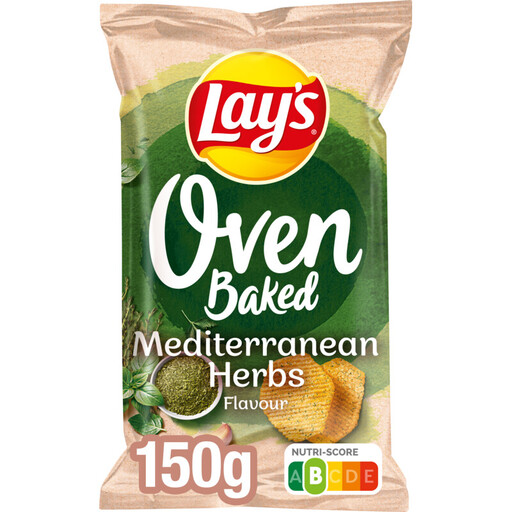 Image unavailable
An oven-baked flavour option for anyone who wants to consider taste as well as nutrition. The bag contains 150 g; calculate the values for the amount you actually eat, rather than using those for a different Lay's variety.
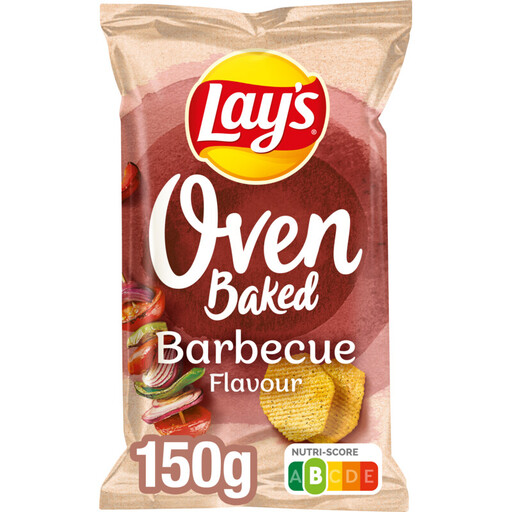 Image unavailable
This oven-baked barbecue flavour is an option if taste matters when choosing crisps. The pack contains 150 g; compare the energy and salt per 100 g for this particular variety.
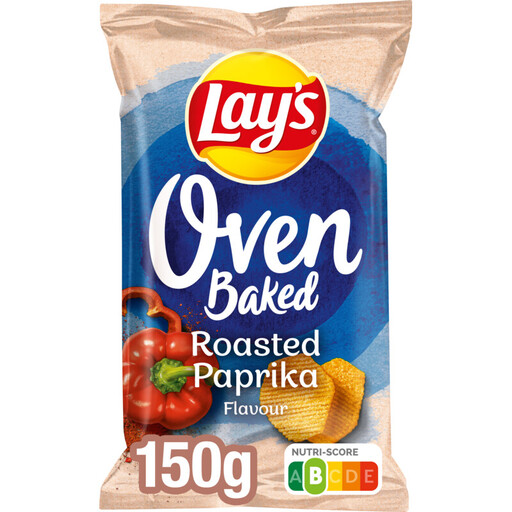 Image unavailable
An oven-baked paprika flavour for anyone comparing options within the same crisp range. The bag contains 150 g; check the ingredients and allergen information on the label for this flavour too.
 Image unavailable
This oven-baked Natural variety is a good option for comparing crisps without a strong seasoning flavour. The pack contains 150 g; use the nutrition information for this product rather than assuming it’s the same as another variety labelled Naturel.
First compare the kcal per 100 g for similar crisps, then calculate the value for your own portion. Jumbo lists Lay's Oven Baked Naturel at 428 kcal per 100 g and Chio Oven Chips Sea Salt at 435 kcal per 100 g; Pringles lists Original at 528 kcal per 100 g. Check the nutrition information for the variety you actually choose.
No, the cooking method alone doesn’t determine how they compare. Check the energy, fat and salt per 100 g, as well as how much you want to eat. Nutri-Score can help when comparing products within a category, but it doesn’t replace the nutrition table or determine on its own where crisps fit into your eating habits.
Use the value per 100 g on the label and multiply it by the number of grams you eat, then divide by 100. A serving shown on the pack is an example to help with the calculation; use the actual amount you’ll eat as your starting point.
Don’t use a claim like this as a substitute for nutrition information. The Netherlands Food and Consumer Product Safety Authority says nutrition claims must comply with European rules. Check what the claim is comparing the product with, and also check the energy, fat and salt on the product label.