Who is this relevant to?

People choosing lunches for babies and toddlers

You’re buying food for a childcare setting and want to check whether a snack is suitable for young children. The Netherlands Nutrition Centre warns that popcorn can cause choking, so safety and appropriate food matter more than a low calorie count.

Childcare buyers who check food labels

You want to assess calories, portion sizes, sugar and salt accurately, without treating adult reference intakes as advice for toddlers. The European Commission sets conditions for nutrition claims, and product labels help you check the ingredients and nutritional content of a particular variety.

Childcare teams responsible for food

You organise purchasing, food preparation and information for parents. The Dutch National Institute for Public Health and the Environment (RIVM) explains that childcare settings should follow an appropriate hygiene code. The Netherlands Food and Consumer Product Safety Authority (NVWA) outlines the allergen information businesses must provide when supplying food to consumers.

What should you consider when choosing?

Consideration What to look for Who is this most relevant to?
Choking risk Consider the age group and intended use. The Netherlands Nutrition Centre lists popcorn as a food to be cautious about because of the risk of choking; supervision does not automatically make it suitable. If you’re buying food for babies and toddlers in childcare, you’ll want to make sure a calorie-focused choice does not overlook a safety risk. Around 36% of consumers put safety first.
Suitable lunch food Consider the snack as part of the food policy and the overall lunch offering. Don’t treat the lowest possible calorie count as a goal in itself. If you’re putting together lunch for young children, you’ll want your choices to suit their diet and the occasion. Around 29% of consumers give suitable lunch food the highest priority.
Comparing calories Compare kcal per 100 g on the same preparation basis, then calculate the amount based on the weight actually served. Check sugar and salt separately. If you want to know what a portion actually provides, you need both the value per 100 g and the portion weight. Around 21% of consumers put checking calories and portions first.
Practical arrangements and allergens Follow the relevant hygiene code, keep relevant allergen information available and follow the instructions on the packaging. If you’re responsible for purchasing and serving food, you’ll want to organise preparation and product information carefully. Around 14% of consumers give practicality, storage and allergen information the highest priority.

Common pitfalls

  • Confusing a low calorie count with suitability for toddlers

    Calories and choking risk are separate considerations. The Netherlands Nutrition Centre specifically mentions popcorn in its warning about choking.

    First, check whether the product is suitable for the age group. A small portion or plain variety should not replace that safety assessment.

  • Taking a small portion as proof that a product is ‘low energy’

    For the EU ‘low energy’ claim on solid foods, the limit applies per 100 g, not just to the portion you choose to serve. According to the European Commission, the maximum is 40 kcal (170 kJ) per 100 g. Different conditions apply to a reduced energy claim, including a reduction of at least 30% and a statement of the characteristic responsible for the reduction.

    Compare the nutritional value per 100 g and check the conditions for the specific claim. Don’t use portion size to get around that assessment.

  • Reading adult portions and reference intakes as advice for children

    A manufacturer’s portion size or an adult reference intake does not determine how much a toddler needs.

    Use portion information to understand food labels, and assess lunch in line with the food policy and the needs of the group.

  • Throwing away the outer packaging before recording the information

    If food is transferred to a bowl, the original ingredients, allergen information and any preparation instructions may be less readily available to staff.

    Keep the relevant information from the current packaging available for reference. The NVWA explains that businesses supplying food to consumers are required to provide allergen information.

Brands to be aware of

Albert Heijn

The own-brand varieties reviewed include ready-to-eat salted and sweet popcorn. Dutch product information provides details to help you assess the labels for these varieties.

  • Product pages provide information including nutritional values, ingredients and storage.
  • The information does not confirm that popcorn is suitable for young children. Albert Heijn advises checking the packaging, as the ingredients may change.

Jumbo

The own-brand range reviewed includes ready-to-eat salted popcorn and microwave popcorn, with separate product and usage information.

  • Product pages provide information about the specific varieties; the microwave variety includes preparation instructions.
  • The manufacturer’s portion sizes are not advice for toddlers, and the product information does not confirm that this popcorn is suitable for childcare settings.

Lidl

The Dutch product page reviewed describes Snack Day sweet popcorn in a 200 g pack.

  • The product page confirms the sweet variety and pack size.
  • Lidl’s description of the flavour is not an independent assessment and, by itself, says nothing about the calorie content or suitability for young children.

Aldi

The Dutch product page reviewed describes SUN SNACKS salted popcorn in a 100 g pack.

  • The product page confirms the product identity and pack size.
  • This product information does not prove that the popcorn is low in calories or suitable for lunch for young children.

Joybuy product selection

The Joybuy product selection below is microwave popcorn. Although this product category is relevant to the topic, it does not make the product a suitable lunch choice for babies or toddlers.
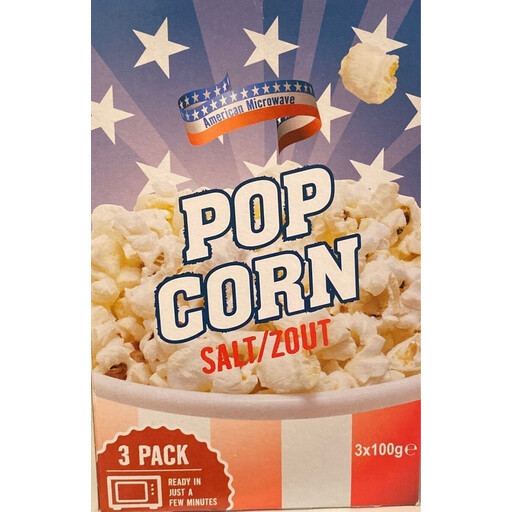
Pop Corn 3 x 100g

Pop Corn 3 x 100g

This is microwave popcorn. The Netherlands Nutrition Centre warns that popcorn can cause choking, so it is not a suitable lunch choice for babies or toddlers.

The product name states that the pack contains 3 x 100 g.

Joybuy

Frequently asked questions

Does the advice about plain popcorn at children’s parties mean it is suitable for childcare settings?

No, that does not follow from the advice. The Netherlands Nutrition Centre mentions a small cup of plain popcorn as a treat for primary school children, but separately warns that popcorn can cause choking in young children. Official US childcare guidelines advise against giving popcorn to children under 4; this is not Dutch law.

Can a small portion of popcorn be advertised as ‘low energy’?

A small portion is not, by itself, enough to justify the ‘low energy’ claim. According to the European Commission, solid foods must contain no more than 40 kcal (170 kJ) per 100 g. A reduced energy claim requires, among other things, a reduction of at least 30% and a statement of the characteristic responsible for it.

How do I work out calories per portion without treating the manufacturer’s portion size as advice for children?

Multiply the kcal per 100 g by the portion weight in grams, then divide by 100. For example, AH Salted Popcorn lists 543 kcal per 100 g and a manufacturer’s portion size of 25 g; that works out to 135.75 kcal. This is a calculation based on the label, not a recommended portion for a child.

What requirements apply when serving food in childcare settings?

The RIVM advises childcare settings to follow an appropriate, approved hygiene code. The NVWA explains that businesses supplying food to consumers must provide information about any allergens present. So keep relevant product information available, even when food is served outside its original packaging.

What should I bear in mind when preparing microwave popcorn at a childcare setting?

Follow the instructions on the packaging and do not let children prepare it without adult supervision. For Jumbo Salted Microwave Popcorn 3 x 90 g, the manufacturer also says not to restart preparation if it has been interrupted. This does not make popcorn suitable for lunch for babies or toddlers.
