To choose a lower-sugar option, first compare similar types of toast by their ‘of which sugars’ value per 100 g, then check the ingredients, fibre and salt. Don’t rely on labels such as ‘plain’ or ‘multigrain’ alone: the two Van der Meulen varieties on Jumbo’s product pages have the same sugar content, but different amounts of fibre and salt. If you’re stocking a small student kitchen, it’s also worth checking whether you can keep an opened pack dry and sealed properly.
Who is this relevant to?
Students looking to choose less sugar
You want to compare types of toast fairly, rather than relying on serving sizes that weigh different amounts. Check ‘of which sugars’ per 100 g, and read the ingredients if you also want to look out for added sugar. This distinction is in line with the food label guidance from the Voedingscentrum.
Students keeping an eye on fibre
You’re looking for a base for breakfast, lunch or a snack, and want to compare fibre as well as sugars. ‘Multigrain’ and ‘wholegrain’ don’t mean the same thing, so check the product name, ingredients and nutritional information for the one you choose.
Students with limited cupboard space or a food allergy
You need a pack that fits in your kitchen and can be stored properly once opened. If you have a food allergy, check the current ingredients and allergen information every time you buy a product, even if you already know it.
What should you look for when choosing?
Start by comparing sugars per 100 g in similar products. Then decide whether fibre, allergens or how to store an opened pack affect your choice.
| What to consider |
What to check when buying |
Who it matters most to |
| Sugars |
Compare ‘of which sugars’ per 100 g in similar types of toast. Read the ingredients if you want to identify added sugar. |
If I want to choose less sugar, I don’t want a smaller serving to make a product look like the better option. For around 40% of consumers, comparing sugar comes first. |
| Fibre and wholegrain |
Check whether the product is labelled ‘wholegrain’ and compare fibre and salt per 100 g. ‘Multigrain’ doesn’t guarantee a fully wholegrain product. |
For breakfast or lunch, I’m looking for a grain product where fibre is my main deciding factor, even if the sugar content isn’t lower. This applies to around 30% of consumers. |
| Ingredients and allergens |
Read the current ingredients list, allergen information and any ‘may contain’ warning. |
If I have a food allergy, I need to be able to check the ingredients and allergens listed on the pack before buying. Around 20% of consumers say this check is their top priority. |
| Stocking up and storage |
Check the pack size and storage instructions, and think about how you’ll seal the pack properly once it’s open. |
With limited cupboard space, I don’t want to open a larger pack than I can store properly. This matters most to roughly 10% of consumers. |
Common mistakes
-
Comparing sugar per serving only
A piece of toast or a serving size chosen by the manufacturer can weigh different amounts from one product to another. That means the per-serving figure tells you little about the difference between two products.
Follow the Voedingscentrum’s advice and compare per 100 g first. Then consider how much you usually eat.
-
Assuming ‘multigrain’ means ‘wholegrain’
Using several types of grain doesn’t automatically make toast fully wholegrain. The Voedingscentrum distinguishes between toast containing a proportion of wholemeal flour and a product made entirely from wholemeal flour.
Check the product name and ingredients, then compare fibre and salt per 100 g.
-
Focusing on fibre alone
On Jumbo’s product pages for Van der Meulen Melba Toast, the multigrain variety has more fibre than the plain one, but also more salt. The ingredients differ too.
As well as checking the fibre value, look at the salt content and, if relevant to you, the full allergen information on the current packaging.
-
Opening a large pack without having anywhere to store it
An opened pack that isn’t sealed properly is less suitable for stocking up in a small or shared kitchen.
Choose a pack size that suits how much you use. The Voedingscentrum recommends storing toast in a cool, dry, dark place and sealing it properly once opened.
Brands to compare
Compare specific products, not just brand names: the information available varies between types of toast, crackers and crispbreads.
Van der Meulen
For comparing plain and multigrain Melba Toast.
- According to Jumbo’s product pages, both of the 120 g packs compared contain 3.2 g of sugars per 100 g. The multigrain variety contains 7.5 g of fibre per 100 g, compared with 3.9 g in the plain variety.
- The same Jumbo pages list 1.5 g of salt per 100 g for the multigrain variety and 1.3 g for the plain one. These values apply to those two varieties, not the entire brand.
Bolletje
A brand to consider if you’re also thinking about crispbreads or crackers instead of toast.
- Bolletje lists crispbreads and crackers in its range.
- Nutritional values depend on the product you choose. Compare the current labels per 100 g before choosing an alternative to toast.
Albert Heijn
A supermarket own brand to compare with other plain Melba Toast.
- Albert Heijn has a product page for AH Melba Toast Plain.
- Albert Heijn warns that ingredients, nutritional values and allergen information may change. Use the current packaging to make your final choice.
Toast and alternatives at Joybuy
This selection includes rice toast and several varieties of Melba Toast. Compare the current nutritional information per 100 g to help you choose; the pack sizes can help you decide what’s practical for keeping in stock.
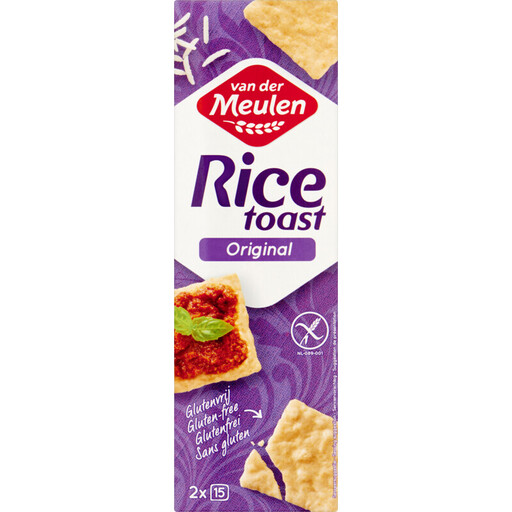 Image unavailable
Van der Meulen Rice Toast Natural · 65 g
A 65 g pack could suit you if you’re looking for a small amount of rice toast to keep in stock. Always check the current packaging when comparing sugar content or if you have allergies.
View at Joybuy
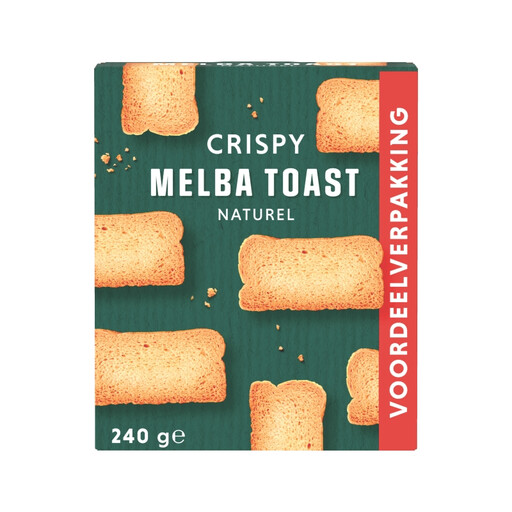 Image unavailable
Crispy Melba Toast · 240 g
This 240 g pack is an option if you can use it all and store it properly once opened. Check the current ingredients and allergen information on the packaging, especially if you need to avoid certain ingredients.
View at Joybuy
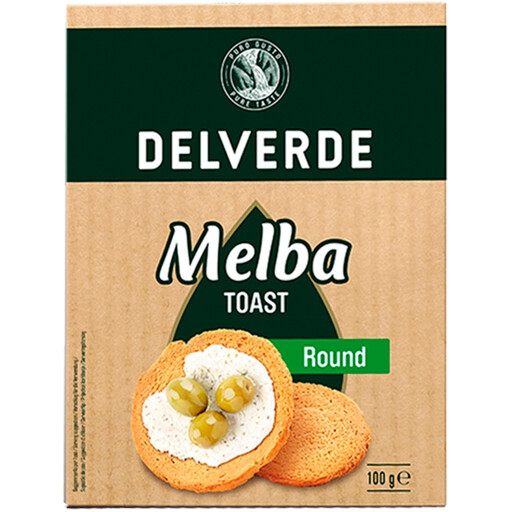 Image unavailable
Conimex Delverde Melba Toast Round · 100 g
This round Melba Toast comes in a 100 g pack. If fibre is a key factor in your choice, include the fibre value on the current packaging in your comparison.
View at Joybuy
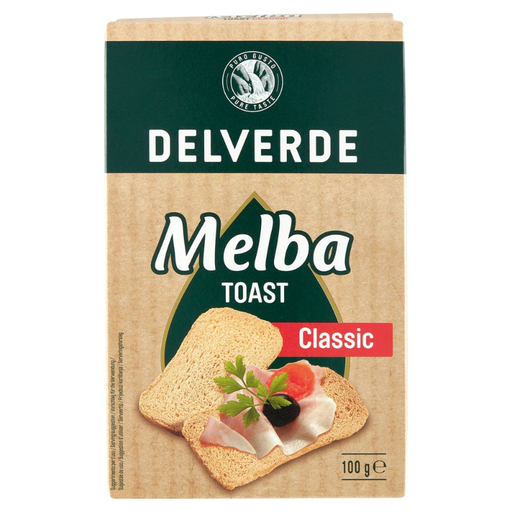 Image unavailable
Delverde Classic Melba Toast · 100 g
The 100 g pack is worth weighing up against your available cupboard space and how much you use. Check the current fibre value and, if you have a food allergy, read the allergen information on the packaging.
View at Joybuy
Frequently asked questions
How do I compare the sugar content of two types of toast?
Compare ‘of which sugars’ per 100 g in products with the same purpose, such as two types of Melba Toast. According to the Voedingscentrum, this value includes all sugars present. Also read the ingredients list if you want to know whether sugar has been added.
Is multigrain toast also wholegrain?
No, ‘multigrain’ doesn’t automatically mean ‘wholegrain’. The Voedingscentrum says a piece of toast can only be called wholegrain if it’s made entirely from wholemeal flour, so check the name and ingredients of the specific product.
How should I store an opened pack of toast?
Store toast in a cool, dry, dark place and seal it properly, as the Voedingscentrum recommends. Also follow the storage instructions and use-by date on the packaging. If you have limited storage space, choose a pack size that suits how much you use.
Does Dutch toast always contain iodised bakers’ salt?
No, the meaning of bakers’ salt doesn’t mean that every type of toast is made with it. Overheid.nl describes bakers’ salt as iodised table salt for bread and other bakery products. Check the ingredients list or ask the manufacturer which salt is used in a particular type of toast.


