For a topped lunch, first compare the sugars per 100 g: under EU rules, solid foods can only be labelled low in sugars if they contain no more than 5 g of sugars per 100 g. Then check fibre, salt and allergens separately. Wholemeal Melba toast may contain more fibre than a plain variety, but that doesn’t automatically make it the right choice if salt or ingredients are your main concern.
Who is this choice relevant to?
Lunch shoppers comparing sugar content
You want to know how much sugar the toast contains rather than relying on wording on the front of the pack. The Netherlands Nutrition Centre recommends comparing nutritional values per 100 g, as serving sizes can vary.
Lunch shoppers keeping an eye on fibre
You’re looking for a base for toppings where fibre matters. Van der Meulen Melba Wholemeal Toast, as listed by Jumbo, contains 9.7 g of fibre per 100 g; according to Van der Meulen, the plain variety contains 3.9 g per 100 g.
Shoppers checking salt or allergens
If salt or particular ingredients matter to your choice, a low sugar content isn’t enough information. Compare the salt per 100 g too, and check the allergen information on the pack you buy.
What should you look for when choosing?
Start with the sugars per 100 g, then decide what matters most for your lunch: fibre, salt and ingredients, or how well it works as a base for toppings.
| What to consider |
What to check when buying |
Who it matters to |
| Sugars |
Check ‘of which sugars’ per 100 g. The EU limit for a low-sugar claim on solid foods is no more than 5 g per 100 g; ‘less sugar’ is a comparison with a similar product. |
If I’m choosing my toast mainly by its sugar content, I want to be able to compare the actual amount. Around 36% of consumers put this sugar check first. |
| Fibre and wholemeal |
Compare the fibre per 100 g and check whether the toast is labelled wholemeal. Multigrain doesn’t necessarily mean wholemeal. |
For my usual topped lunch, I mainly want to know how much fibre the toast provides. This is the main consideration for around 29% of consumers. |
| Salt and ingredients |
Compare the salt per 100 g and check the current ingredients and allergen information on the pack. |
If salt or a particular allergen determines my choice, I can’t rely on the sugar content alone. This is the main consideration for around 21% of consumers. |
| Using it with toppings |
Consider whether the toast goes well with your toppings and follow the storage advice on the pack after opening. |
If I want something quick to top, what matters most is how I can use and store the toast. Around 14% of consumers put this first. |
Common mistakes
-
Reading ‘less sugar’ as ‘low in sugars’
A reduction claim compares a product with a similar one and, by itself, says nothing about the limit for a low-sugar claim. Under EU Regulation (EC) No 1924/2006, a claim about a reduced content requires a reduction of at least 30%.
Also check how much sugar the toast contains per 100 g.
-
Comparing only the sugars
Toast varieties with similar sugar values can differ in fibre and salt. According to product information from Van der Meulen and Jumbo, the plain variety contains 3.9 g of fibre and 1.3 g of salt per 100 g, compared with 9.7 g of fibre and 1.9 g of salt per 100 g for the wholemeal variety.
Compare the sugars, fibre and salt side by side, then decide which matters most to you.
-
Assuming multigrain means wholemeal
The name ‘multigrain’ doesn’t confirm that toast is made entirely from wholemeal flour. The Netherlands Nutrition Centre distinguishes between toast labelled ‘wholemeal’ based on the flour used.
Look for the ‘wholemeal’ label if that’s a requirement for you, and compare the fibre per 100 g too.
-
Assuming plain toast contains no relevant allergens
Ingredients such as cereals containing gluten, sesame or soya may also be relevant in Melba toast. Check the ingredients of the particular product you’re buying.
Check the allergen information on the current pack before buying.
Brands and retailers compared
Van der Meulen Melba
Melba toast available in plain and wholemeal varieties, among others.
- Van der Meulen lists 3.2 g of sugars, 3.9 g of fibre and 1.3 g of salt per 100 g for the plain variety.
- The wholemeal variety listed by Jumbo has more fibre, but also more salt: 9.7 g of fibre and 1.9 g of salt per 100 g.
Albert Heijn
Retailer of products including AH BASIC Melba Toast.
- Albert Heijn lists 3 g of sugars per 100 g for this toast.
- The same product information lists 4 g of fibre and 2 g of salt per 100 g; compare these values if they matter to your choice.
Jumbo
Retailer with product information for several Van der Meulen Melba varieties.
- For both the wholemeal and multigrain varieties reviewed, Jumbo lists 3.2 g of sugars per 100 g; their fibre values are 9.7 g and 7.5 g per 100 g respectively.
- The ‘multigrain’ label doesn’t automatically mean the variety is wholemeal.
Bolletje
Worth considering if you’re also looking at beschuit, a different product category from Melba toast.
- Bolletje describes Echte Beschuit as a product for breakfast and lunch.
- The ingredients list for Echte Beschuit includes sugar and glucose syrup. Check the nutrition table if you want to compare the sugar content.
Melba toast on Joybuy
This Melba toast is an option if you’re looking for a base for lunch toppings. Check the sugar content and other nutritional values on the pack if they’re important to your purchase.
 No image available
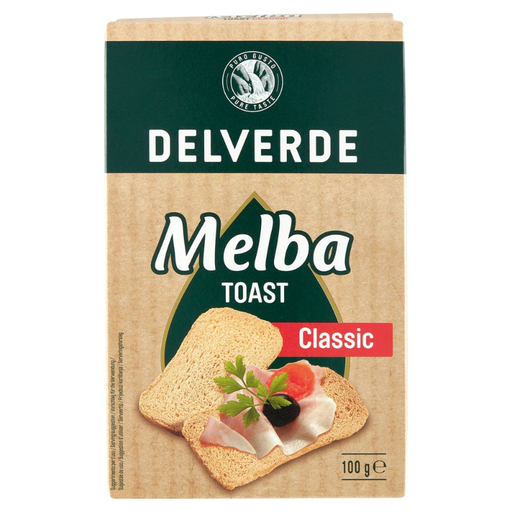
Delverde Classic Melba Toast 100 g
Melba toast to consider as a base for lunch toppings. Check the current nutrition information and allergen details if sugars, fibre, salt or ingredients influence your choice.
View on Joybuy
Frequently asked questions
When can toast be called low in sugars?
For solid foods, EU Regulation (EC) No 1924/2006 sets a maximum of 5 g of sugars per 100 g for a ‘low sugars’ claim. Check ‘of which sugars’ in the nutrition table per 100 g, not just per serving.
Does ‘less sugar’ also mean that toast is low in sugars?
No. Under European rules, a claim about a reduced content requires at least 30% less of that nutrient than in a comparable product; the claim doesn’t give an absolute sugar value. So check the amount per 100 g as well.
Why compare fibre and salt as well as sugars?
Because similar sugar values can come with different amounts of fibre and salt. Van der Meulen lists 3.9 g of fibre and 1.3 g of salt per 100 g for its plain Melba toast; Jumbo lists 9.7 g of fibre and 1.9 g of salt per 100 g for the wholemeal variety.
Does all Dutch toast contain iodised baker’s salt?
You can’t assume this is the case for all toast. The Netherlands Food and Consumer Product Safety Authority describes the permitted presence of iodine compounds in bakery products through the use of added baker’s salt; this doesn’t confirm which salt was used in a particular toast. Check the ingredients list or ask the manufacturer.
How should I store opened Melba toast?
Follow the storage advice for the variety you buy. Albert Heijn recommends storing AH BASIC Melba Toast in a sealed tin after opening.


