A stroopwafel with less sugar is more suited to an everyday snack than as an obvious choice during a long, intense run. According to Voedingscentrum, carbohydrate intake matters during prolonged endurance exercise; a sugar claim doesn’t tell you how many carbohydrates a waffle provides per serving. So check the nutritional information and allergens, and try a snack during training before relying on it in a race.
Who is this choice relevant to?
Runners training for long-distance runs
If you run for several hours a week while preparing for a marathon, carbohydrate intake around long training sessions is a different consideration from how much sugar you want in an everyday snack. Voedingscentrum discusses this need separately for endurance sports.
Sugar-conscious stroopwafel fans
With coffee, at breakfast or as a snack, you can compare products that make a claim about having less sugar. That doesn’t mean a stroopwafel is sugar-free or suitable as fuel while running.
Runners who need to check ingredients
If you avoid certain ingredients, check the allergens on the packaging of the specific variety. A gluten-free stroopwafel isn’t automatically low in sugar and may contain other allergens.
What should you look for when choosing?
First decide whether you want to eat the stroopwafel as an everyday snack or around a long training session. Then compare the nutritional information per 100 g and per waffle; Voedingscentrum recommends using the values per 100 g when comparing products.
| What to consider | What to check when buying | Who it matters to |
|---|
| Carbohydrates during long training sessions |
Check the total carbohydrates per waffle and work out how the snack fits with the food and drink you’ve already tried. |
For a long, intense run, I want to know how a waffle contributes to my planned carbohydrate intake. For around 36% of consumers, getting enough carbohydrates would be the top purchasing priority. |
| Less sugar as a snack |
Compare sugars per 100 g and per serving; also check what a ‘less sugar’ claim is comparing the product with. |
With coffee or at breakfast, I’m mainly looking for a stroopwafel that fits my preference for less sugar, not a product to eat while running. This would be the main reason for choosing one for around 29% of consumers. |
| Tolerance and portability |
Check the serving size, fat and fibre, and try the snack with your usual drink during a training session. |
When I’m out and about, I want to be able to take a serving with me and know whether I find eating while running comfortable. Around 21% of consumers would consider this their main priority. |
| Ingredients and allergens |
Read the allergen declaration for the variety you’ve chosen; assess a gluten-free claim separately from the nutritional values. |
If I need to avoid certain ingredients, the specific waffle must first meet my requirements. An estimated 14% of consumers would put this check first. |
Common mistakes
-
Reading ‘less sugar’ as ‘sugar-free’
According to Albert Heijn’s product information, AH Roomboter minder suiker stroopwafels contain 32% less sugar than the standard AH butter stroopwafel. Céréal Stroopwafels suikerarm contains 65% less sugars than a standard stroopwafel. These products are compared with different reference products; the claims don’t mean the waffles are sugar-free.
Alongside the claim, check the sugars, total carbohydrates, fat and fibre per 100 g and per serving.
-
Using a sugar claim as your whole fuelling plan
According to Voedingscentrum, carbohydrate intake matters during prolonged endurance exercise. A claim on the front of a pack doesn’t tell you how many carbohydrates you’ll get from a waffle and your other food and drink.
Plan your food and drink around the length of your training session, and try your chosen products during training beforehand.
-
Assuming gluten-free means low in sugar
PLUS lists its gluten-free stroopwafels as containing 41,13 g sugars per 100 g. The product information also lists egg and lupin as allergens.
Check the gluten-free label, the full allergen information and the sugar content separately on the packaging.
-
Assuming an older product listing is still current
Product ranges and packaging can change. A waffle with a similar name may also have a different recipe.
Just before buying, check the current product listing and the label of the exact variety you’ve chosen.
Brands and product ranges compared
Céréal
According to Albert Heijn’s product information, Céréal Stroopwafels suikerarm contains 65% less sugars than a standard stroopwafel.
- The stated comparison makes it possible to check the sugar claim against the label.
- This variety contains wheat, milk, egg and soya, among other ingredients. Also check whether this specific variety is available; less sugar doesn’t, on its own, say anything about using it during a long run.
Albert Heijn
According to Albert Heijn, AH Roomboter minder suiker stroopwafels contain 32% less sugar than AH Roomboter stroopwafels.
- The nutritional information provided lists, per 100 g, 44 g carbohydrates, 23 g sugars and 26 g fibre.
- Here, less sugar doesn’t mean sugar-free. Check the current packaging, including the ingredients and allergens.
Jumbo
Jumbo’s stroopwafel range includes standard, mini and gluten-free varieties.
- Jumbo Lekker Vrij van Gluten Stroop Wafels are a separate option to assess based on their ingredients.
- A gluten-free label doesn’t tell you the sugar content; compare the nutritional information on the pack you’ve chosen.
PLUS
PLUS provides nutritional values for both standard and gluten-free stroopwafels.
- Standard PLUS Stroopwafels Per Wikkel contain 36,3 g sugars per 100 g.
- The gluten-free PLUS variety contains 41,13 g sugars per 100 g and includes egg and lupin. So don’t compare varieties based only on their gluten-free label.
Daelmans
PLUS lists Daelmans stroopwafels in standard, mini and duo packs.
- Different pack sizes make it possible to choose a portion that suits you.
- Check the sugars and carbohydrates in the nutritional information for the specific pack; its size doesn’t tell you these values.
Sondey
Lidl Netherlands lists Sondey stroopwafels in a margarine variety weighing 378 g and a butter variety containing 12 waffles and weighing 480 g.
- The listed varieties differ in their ingredients and pack sizes.
- Check the nutritional information for the variety you’ve chosen before comparing its sugar or carbohydrate content with another waffle.
ALDI
ALDI Netherlands lists a pack of standard stroopwafels containing 12 waffles and weighing 378 g.
- The number of waffles and total pack weight are stated.
- Don’t use these pack details to estimate the amount of sugar or carbohydrates per waffle; check the label for that information.
Stroopwafels on Joybuy
This standard stroopwafel is suited to choosing an everyday snack, not to selecting a lower-sugar option. If you want to eat it around a training session, compare the nutritional information per waffle with a fuelling plan you’ve already tried during training.
 No image available
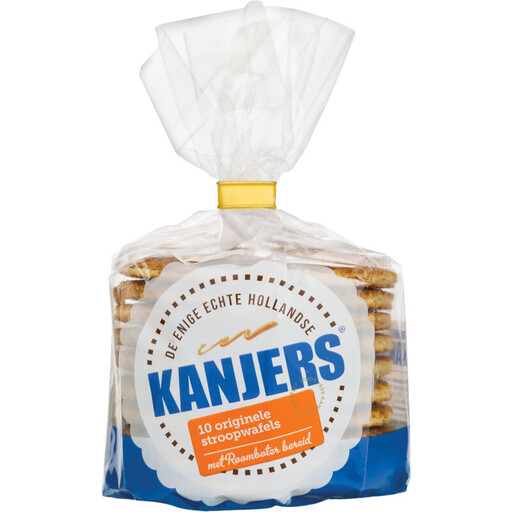
Kanjers Extra Delicious stroopwafels, 10 pieces
A standard stroopwafel for anyone looking for a familiar snack. The pack contains 10 waffles. If you want to plan a serving around a run, check the label for the nutritional information per waffle.
View on Joybuy
Frequently asked questions
Are sugar-free stroopwafels automatically suitable for marathon training?
No. According to Voedingscentrum, carbohydrate intake matters during prolonged endurance exercise, while a sugar claim doesn’t tell you how many total carbohydrates a waffle provides per serving. So assess any stroopwafel as part of a food and drink plan you’ve tried beforehand.
Do ‘low sugar’ and ‘less sugar’ mean the same as sugar-free?
No. According to Albert Heijn’s product information, Céréal Stroopwafels suikerarm contains 65% less sugars than a standard stroopwafel; AH Roomboter minder suiker stroopwafels contains 32% less sugar than the standard AH butter variety. These comparisons use different reference products. Check the nutritional information per 100 g and per waffle to assess the varieties you’ve chosen.
When should you try a stroopwafel as a snack on the go?
Try a new stroopwafel, serving size and accompanying drink during training, not for the first time on race day. This lets you work out whether eating while running is practical and comfortable for you.
Is a gluten-free stroopwafel also low in sugar?
Not necessarily. PLUS lists its gluten-free stroopwafels as containing 41,13 g sugars per 100 g; the product information also lists egg and lupin. Check the allergens and nutritional values separately for the specific pack.


