Who might find this choice useful?

People mindful of their sugar intake

Older people, or those shopping for them, who want a biscuit to enjoy with their afternoon coffee and would like to understand what a sugar claim means. The nutritional information per serving helps you work out how the biscuit you choose fits into your coffee break.

Kano fans choosing their portion

If a pastry filled with almond paste is still important to you, the amount you eat at a time could be the deciding factor. Compare the serving size with the sugar content per 100 g.

Shoppers checking allergens

If you’re putting biscuits out for others, you’ll need to know which ingredients and allergens matter to them. Check the pack you’ve chosen before serving the kano pastries.

What should you look for when choosing?

A kano pastry with a suitable sugar claim

When: Choose this option if both the kano shape and lower sugar matter to you, and the claim on the specific pack is supported by its nutritional information.

The trade-off: A product name or smaller pack does not, on its own, prove that it contains less sugar.

A standard kano pastry in a portion of your choice

When: This is only an option if having a kano pastry matters more than a firm requirement for less sugar.

The trade-off: A smaller portion doesn’t change the sugar content per 100 g. Remember to check the allergens too.

A different biscuit to enjoy with your coffee

When: Consider a biscuit if a kano pastry with almond paste isn’t essential. Verkade describes San Francisco Zero as a biscuit with no added sugars.

The trade-off: ‘No added sugars’ doesn’t mean ‘sugar-free’. Compare the nutritional information and allergens here too.

What to consider What to check when buying Who should pay particular attention?
Sugar claim Read the exact claim and the ‘of which sugars’ figure per 100 g. Compare a ‘less sugar’ claim with a similar product. If less sugar is the deciding factor for me, I want to be able to assess the claim on the exact biscuit I’m buying. Around 40% of consumers put this check first.
Ingredients and allergens For the variety you’ve chosen, check both the ‘contains’ information and any ‘may contain’ warnings. When I’m putting biscuits out for someone else, I need to know whether the ingredients are suitable for them. This is the main consideration for around 30% of consumers.
Portion and coffee break Check the sugar content per serving and decide how much to serve. Also think about what you’re adding to your drink. When I’m putting together an afternoon coffee break, I want to know how many biscuits each person will have. This is the most important consideration for around 30% of consumers.

Common mistakes

  • Assuming a small pack means less sugar

    Pack size tells you nothing about the sugar content per 100 g. Jumbo lists 36.8 g of sugars per 100 g for its butter kano pastries, PLUS lists 38.9 g for its butter kano pastries, and PLUS lists 37.6 g for Aviateur Kano pastries.

    Compare the nutritional information per 100 g, then check how much sugar is in one serving.

  • Reading ‘no added sugars’ as ‘sugar-free’

    A biscuit with no added sugars can still contain sugars. The two descriptions don’t mean the same thing.

    As well as checking the claim, read the ‘of which sugars’ line in the nutritional information on the pack you’ve chosen.

  • Checking allergens only once you’re at the table

    For the kano pastries mentioned from Jumbo, PLUS and Aviateur, ingredients such as wheat, milk, soya, egg and nuts may be relevant. The exact information varies by product.

    Before buying, check the current ingredients and allergen information for the biscuit you plan to serve.

  • Looking at the biscuit alone

    Sugar in your coffee or tea, as well as other treats, is also part of your coffee break. For people aged 70 and over, the Netherlands Nutrition Centre recommends drinks such as water, tea and coffee without sugar.

    Decide in advance what you’ll serve with the biscuit and how many you’ll put out.

Brands compared

Jumbo

Jumbo sells its own-brand 275 g butter kano pastry filled with almond paste.

  • Jumbo lists 36.8 g of sugars per 100 g and 20.2 g per 55 g serving.
  • This sugar content is above the limit for a ‘low sugar’ claim set by the Netherlands Nutrition Centre. Check the allergens on the pack too.

PLUS

PLUS sells its own-brand 275 g butter kano pastry.

  • The nutritional information lists 38.9 g of sugars per 100 g, of which 38.5 g are added sugars.
  • This sugar content is also above the limit for a ‘low sugar’ claim. Check the ingredients and allergens on the pack you’ve chosen.

Aviateur

Aviateur Kano pastries are sold by PLUS in a 230 g pack, with the pastries individually wrapped.

  • The individual wrappers make it easy to decide in advance how many kano pastries to serve.
  • PLUS lists 37.6 g of sugars per 100 g. Check the allergen information for this variety too.

Sondey

According to Lidl, Sondey Kano pastries are butter biscuits filled with almond paste, in a 325 g pack.

  • Lidl describes this variety as a kano pastry made with butter and filled with almond paste.
  • If you’re looking for less sugar, check the nutritional information on the pack you’ve chosen.

Verkade

Verkade San Francisco Zero is an alternative if you’d prefer a biscuit with your coffee instead of a kano pastry.

  • Verkade says this biscuit is available with no added sugars.
  • It isn’t a kano pastry. Check the nutritional information and allergens on the pack you’ve chosen; ‘no added sugars’ doesn’t mean ‘sugar-free’.

An alternative to enjoy with your coffee

If you don’t need a kano pastry or biscuit, these matzo crackers are another option to enjoy with tea. They aren’t biscuits filled with almond paste, so check separately whether the serving size and ingredients suit your coffee break.
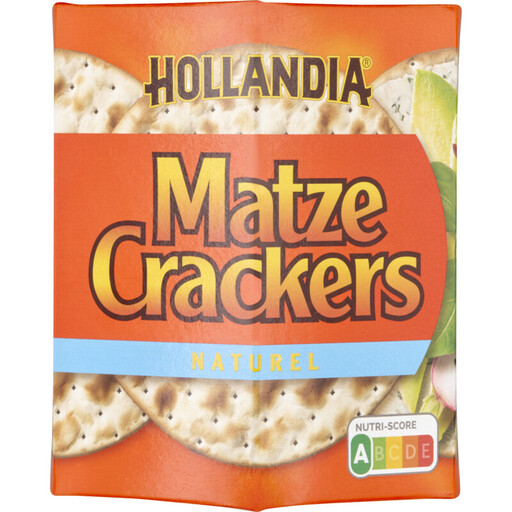
Hollandia Matzo Crackers Natural, pack of 16

Hollandia Matzo Crackers Natural, 16 pieces

A cracker to enjoy with tea when the kano shape isn’t important. Compare the nutritional information per serving on the pack and check the full allergen information before serving these to others.

View at Joybuy

Frequently asked questions

Does ‘less sugar’ mean the same as ‘low sugar’?

No. According to the Netherlands Nutrition Centre, ‘low sugar’ means no more than 5 g of sugars per 100 g. For ‘less sugar’, you need to compare the product with a similar one. Always check the claim on the pack you’ve chosen and what the nutritional information says.

Are the butter kano pastries mentioned low in sugar?

Based on their listed sugar content, the Jumbo and PLUS varieties mentioned don’t meet the limit for a ‘low sugar’ claim. Jumbo lists 36.8 g and PLUS 38.9 g of sugars per 100 g; the Netherlands Nutrition Centre sets the limit for this claim at no more than 5 g per 100 g.

Which allergens should I check when buying kano pastries for others?

Check the current ingredients and allergen information for the exact kano pastry you’ve chosen. The Jumbo and PLUS varieties mentioned may contain ingredients such as wheat or gluten, milk, soya, egg, almond and other nuts. Warnings about possible traces can also vary from pack to pack.

What can I serve with afternoon coffee if I want to limit sugar?

Water, tea or coffee without sugar are options that don’t involve adding sugar to your drink. The Netherlands Nutrition Centre also mentions these drinks in its guidance for people aged 70 and over. Remember to consider your choice of biscuit and portion size too.
