
Parents looking for less sugar
You want to choose something to serve after baking that’s supported by its nutritional information, without treating an ordinary kano as a low-sugar option.


According to their product information, the kano pastries from Jumbo, Albert Heijn and Aviateur contain 36.8 to 37.6 g of sugars per 100 g, so they aren’t a well-supported choice if you’re specifically looking for a low-sugar kano. If reducing sugar matters more to you than the kano shape, compare the nutritional information for a different type of biscuit. If your main aim is to bake with children, choose a recipe developed from the outset to contain less sugar, rather than simply leaving sugar out of a standard recipe.
You want to choose something to serve after baking that’s supported by its nutritional information, without treating an ordinary kano as a low-sugar option.
Children can join in by adding ingredients, stirring, cutting out shapes and decorating. A ready-made kano doesn’t offer that baking activity.
If children with different dietary needs will be sharing the food, check the latest packaging for allergens and any sweeteners before serving it.
When: Choose a kano if its shape and almond paste filling matter more to you than reducing sugar.
Trade-off: It’s a ready-made biscuit; the varieties reviewed aren’t a well-supported low-sugar choice.
When: A ready-made biscuit will do, and you don’t need the kano shape or filling.
Trade-off: A biscuit with no added sugar isn’t a kano; check the sugars in the nutrition table too, as well as any sweetener warnings.
When: The aim is to mix, cut out shapes and decorate together.
Trade-off: Sugar also affects texture and colour. Use a recipe developed to contain less sugar rather than changing a standard recipe at random.
| What to consider | What to check when buying | Who it matters to |
|---|---|---|
| Sugar content | Compare sugars per 100 g and check the serving size separately. Read any claim about reduced sugar alongside information about the comparable product. | If I’m serving biscuits after baking, I want to be able to judge whether the sugar content really suits my choice. For around 50% of consumers, choosing with sugar in mind comes first. |
| Baking together | Decide whether you’re looking for a ready-made biscuit or a recipe with tasks children can help with. | If mixing, cutting out shapes and decorating are the highlights of the afternoon, I don’t want a shop-bought biscuit to replace the activity. Around 30% of consumers prioritise baking together. |
| Ingredients and allergens | Read the latest allergen information. For biscuits containing sweeteners, check the ingredients and any usage warnings too. | If several children will be sharing the food, I want to know in advance which ingredients matter to them. For around 20% of consumers, these checks are the top priority. |
A smaller portion doesn’t change the nutritional value per 100 g. Jumbo, Albert Heijn and PLUS list 36.8 g, 37 g and 37.6 g of sugars per 100 g respectively for the kano pastries mentioned.
Compare the nutritional information per 100 g and read any reduction claim in relation to the comparable product.
A biscuit with no added sugar doesn’t automatically have the shape or almond paste filling of a kano.
Before buying, decide whether you’re mainly looking for the kano experience or a different type of biscuit with nutritional information that suits you.
For Verkade San Francisco Zero, the product information lists maltitols and a possible laxative effect if consumed in excess. The ordinary kano pastries mentioned contain various allergens.
Before children share the food, check the latest packaging for allergens, sweeteners and usage warnings.
According to Laura's Bakery, sugar affects not only sweetness but also texture, colour and the baking result.
For your baking session, choose a recipe already designed to contain less or no refined sugar.
Albert Heijn lists its own-brand butter kano pastries in a 270 g pack.
Jumbo lists butter kano pastries with 38% almond paste filling in a 275 g pack.
PLUS lists kano pastries from Aviateur with a 46% almond paste filling.
San Francisco Zero is a biscuit alternative, not a kano with almond paste filling.
ALDI lists Heerlijck Banket kano pastries in a 330 g pack.
These biscuits and cookie bars are for anyone considering a ready-made alternative to a kano. They won’t replace baking together; check any sugar claims against the latest packaging and nutritional information.
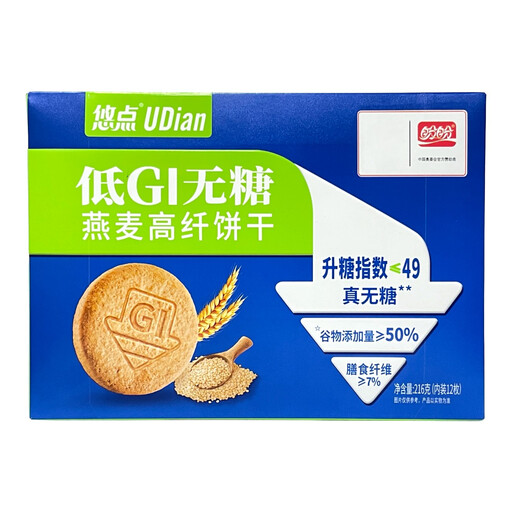 No image available
A ready-made biscuit for anyone who doesn’t necessarily want a kano. The product name states that the pack contains 216 g. Don’t take the ‘Sugar-Free’ wording as proof that the product contains no sugars; check the latest nutritional information.
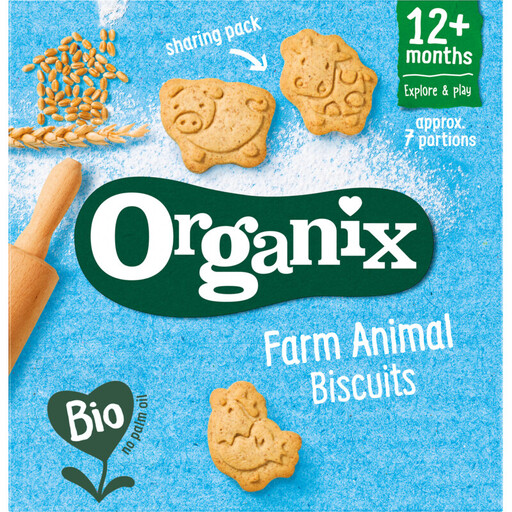 No image available
A ready-made biscuit for when you don’t need the kano shape or almond paste filling. The product name states that the pack contains 100 g; check the latest ingredients and nutritional information if the source of the sugars or any allergens matter to you.
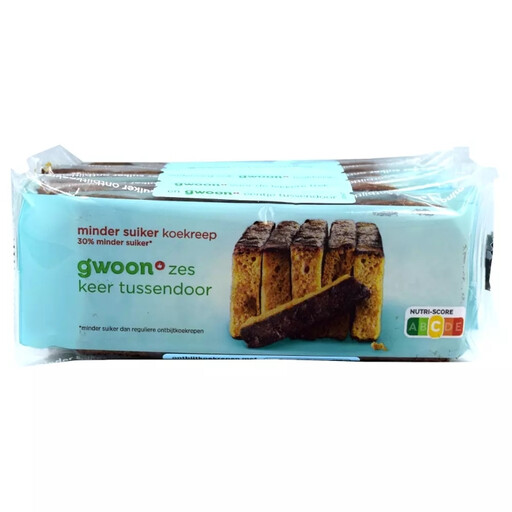 No image available
A ready-made cookie bar for anyone considering a different shape from a kano. The product name states that the pack contains six pieces; check the latest packaging to see what ‘Less Sugar’ means for this variety.
The kano pastries mentioned from Jumbo, Albert Heijn and Aviateur aren’t a well-supported choice if you’re specifically looking for less sugar. Their product information lists 36.8 g, 37 g and 37.6 g of sugars per 100 g respectively. Compare another variety using the latest nutritional information and any relevant claim.
According to the EU rules published by EUR-Lex, a ‘reduced sugars’ claim requires at least 30% fewer sugars than a comparable product. The energy content must also be equal to or lower than that of the comparable product. So, simply having a lower figure than some other biscuit doesn’t prove that the claim is valid.
No, they’re different claims. Albert Heijn describes Verkade San Francisco Zero as having ‘no added sugar’, but also lists 1.7 g of sugars per 100 g. So check both the exact claim and the nutrition table.
Not without allowing for a different baking result. According to Laura's Bakery, sugar also affects texture and colour, so it’s better to choose a recipe developed specifically to contain less or no refined sugar.
Depending on their age, children can add ingredients, stir, handle the dough, cut out shapes and decorate. Rutger Bakt suggests these as ways to get children involved; choose tasks that suit their abilities and supervise them while they bake.