
Shoppers comparing sugar content
You want to choose crispbread with less sugar for your holiday, so you compare similar products per 100 g. According to the Netherlands Nutrition Centre, a claim on the front of the pack doesn't tell the whole story.


For your summer holiday, compare crispbread by its sugar content per 100 g rather than relying on a claim on the front of the pack. Check fibre and salt too, and read the ingredients, allergen information and pack size on the product you plan to take with you.
You want to choose crispbread with less sugar for your holiday, so you compare similar products per 100 g. According to the Netherlands Nutrition Centre, a claim on the front of the pack doesn't tell the whole story.
You use crispbread as a base for breakfast or lunch and want to check its fibre content as well as its sugar content. The nutrition table on the pack you choose is the best place to find this information.
You're looking for several packs to take on the road or to your holiday accommodation. You want to know how much they contain and whether the crispbread will go with the toppings you choose.
Start by comparing the nutritional values per 100 g for similar types of crispbread. Then consider how much you eat and what you'll need for your trip.
| What to consider | What should you check? | Who is this most important for? |
|---|---|---|
| Sugars and claims | Compare the sugar content per 100 g of similar crispbread and check the ingredients list alongside a claim such as ‘less sugar’. | If I want to choose a product with less sugar, I want to know what's in the crispbread, even when the front of the pack highlights something else. This check comes first for around 45% of shoppers. |
| Fibre as a meal consideration | Compare fibre, sugars and salt per 100 g. Also check the allergens in the variety you've chosen. | For my holiday breakfast or lunch, I want my crispbread to suit my fibre requirements too. Around 33% of shoppers put this need first. |
| Holiday supplies | Check the pack size and current product information, and make sure the crispbread goes with the toppings you're taking. | When I buy several packs for a trip, I want to be able to plan how much I need and how I'll use them in advance. This practical consideration comes first for around 22% of shoppers. |
‘No added sugars’ doesn't mean a product contains no sugars, according to the Netherlands Nutrition Centre. A ‘less sugar’ claim also says nothing by itself about fibre or salt.
Compare the nutrition tables per 100 g and read the ingredients lists for the types of crispbread you're considering.
Values per portion can be misleading if the portions listed aren't the same size. The Netherlands Nutrition Centre recommends comparing products per 100 g.
Use this common basis first, then consider how much crispbread you want to eat at a time.
The term ‘wholemeal’ doesn't tell you how much sugar or salt a particular pack contains. Fibre, sugars and salt are listed as separate values in the nutrition table.
Decide which value matters most to you, then check the other values and the allergen information too.
Albert Heijn stocks crispbread from Kies AH and other brands, including sesame varieties and specialist product types.
ALDI Netherlands lists wholemeal, sesame and rustic crispbread under Goud Gebakken. Its wholemeal and sesame varieties are each listed as containing 25 pieces and weighing 375 g.
Lidl Netherlands lists wholemeal crispbread as a product type.
This selection of Joybuy products includes crispbread for breakfast or lunch, as well as a filled crispbread sandwich for when you're out and about. If choosing a product with less sugar is your priority, compare the latest nutrition information per 100 g.
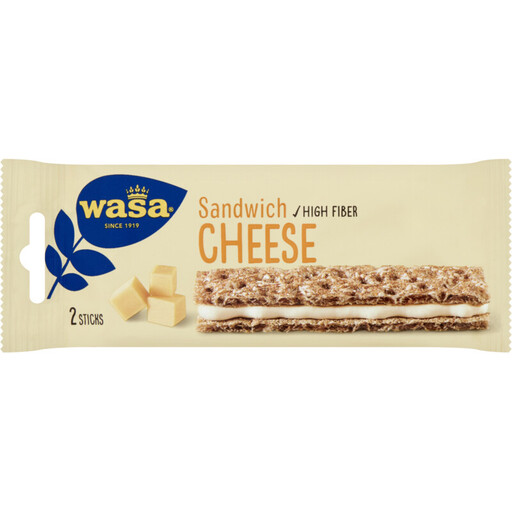 Image unavailable
A filled crispbread sandwich in individual portions for a snack on the go, rather than a plain base for your own toppings.
Check the latest ingredients, allergen information and sugar content per 100 g on the packaging.
 Image unavailable
A pack of crispbread to consider as a base for breakfast or lunch during your holiday.
If these values are important to your choice, compare the sugars, fibre and salt per 100 g on the packaging.
 Image unavailable
A wholemeal option for anyone who wants to take crispbread as a base for breakfast or lunch.
Check the latest nutrition information per 100 g before comparing its sugar content with other varieties.
 Image unavailable
A wholemeal option to consider if you're looking for crispbread for holiday breakfasts or lunches.
Check the packaging for the sugar, fibre and salt content, as well as the allergens in this variety.
No. According to the Netherlands Nutrition Centre, it may still contain naturally occurring sugars. Check the ‘of which sugars’ figure in the nutrition table and compare similar crispbread per 100 g.
Use the nutrition information per 100 g as a common basis. The Netherlands Nutrition Centre points out that portion sizes on packs can vary. After comparing them, consider how much you eat at a time.
No. ‘Wholemeal’ on its own doesn't tell you how much sugar a product contains. Compare the sugar and fibre content of the varieties you're considering separately, per 100 g, and check salt and allergens too.
No, don't assume this is the case for a particular pack. Check the ingredients list for baker's salt, and ask the manufacturer which type of salt is used if this matters for your purchase.