
Parents keeping an eye on sugar
If you’d like to offer a fussy eater something crunchy, you can compare similar products by their sugar content per 100 g and check the ingredients list for sources of added sugar.


Start with plain wholegrain crispbread when comparing sugar content. For similar products, check sugars, fibre and salt per 100 g, and read the ingredients list too. For a fussy eater, it also matters whether they’ll accept the hard, dry texture. A filled variety may taste different, but you’ll need to compare its nutritional information and allergens separately.
If you’d like to offer a fussy eater something crunchy, you can compare similar products by their sugar content per 100 g and check the ingredients list for sources of added sugar.
If your child struggles with hard or dry textures, offering a small portion without pressure may be more helpful than choosing a product based on nutritional information alone. The Netherlands Nutrition Centre advises against forcing a child to eat.
If you want to compare wholegrain products and fibre, check which grains and other allergens the variety contains at the same time. This varies from product to product.
First, compare similar types of crispbread using the label. Then consider whether the texture suits the person eating it and whether the product works as part of a meal.
| What to consider | What to check when buying | Who it matters to |
|---|---|---|
| Sugars and ingredients | Compare sugars per 100 g within the same product type and check the ingredients list for sources of sugar. | If I want to limit sugar, I need to know what the product contains rather than relying only on the front of the pack. Around 31% of consumers make this their priority. |
| Texture and taste | Consider the thickness, filling and flavour; try a small portion without pressure. | My child sometimes turns down a hard, dry bite, even if the nutritional information appeals to me. Around 31% of consumers put acceptance first. |
| Wholegrain and fibre | Check which flours have been used and compare fibre per 100 g. | For breakfast or lunch, I’m looking for a wholegrain option, but the crispbread also needs to work with the rest of the meal. Around 23% of consumers prioritise this balance. |
| Allergens and baker’s salt | Check the current allergen information; look for baker’s salt if the iodine contribution from bread substitutes matters to you. | If I have a relevant allergy, or bread substitutes play a big part in my diet, I need to know what this variety contains first. Around 15% of consumers make this check a priority. |
A statement about added sugars doesn’t tell you how much sugar the crispbread contains in total. Portion sizes can also vary between packs.
So, compare the nutritional information per 100 g for similar products and check the ingredients list as well.
Wasa lists 5.0 g sugars, 23 g fat and 5.0 g fibre per 100 g for Sandwich Cheese Tomato & Basil. For Wasa Wholegrain, the brand lists 1.5 g sugars and 20 g fibre per 100 g. These are different products with different ingredients.
Choose a filled variety to suit the occasion, and compare its full nutritional information and allergen details with those for plain crispbread.
A hard, dry texture can be off-putting. According to the Netherlands Nutrition Centre, pressure can make a child more reluctant to sit down to a meal.
If you like, offer a small portion without pressure and take into account what your child is already used to eating.
The Netherlands Nutrition Centre explains that baker’s salt contains iodine, but bakers aren’t required to use it. So, the product category alone doesn’t tell you how much iodine a variety provides.
Check the ingredients if bread and bread substitutes are an important part of your diet, and consider your choice alongside the rest of your diet.
The range includes plain wholegrain crispbread and varieties with different ingredients, including Protein Wheat and a filled sandwich variety.
Wholegrain Knäckebröd Vezelrijk is a variety made with several grains and sesame.
ALDI describes Robuust crispbread as a wholegrain product with seeds, available in two varieties.
Lidl lists a 250 g pack of wholegrain crispbread.
These crispbread varieties are worth considering as a simple, crunchy base for a meal or snack. Compare their current labels for sugars per 100 g and ingredients, and bear in mind the textures the person eating them will accept.
 Image unavailable
Worth considering if you’re looking for a crunchy base and want to take fibre into account. Compare the nutritional information per 100 g and check the current ingredients and allergen information; the dry texture may not suit everyone.
 Image unavailable
A wholegrain crispbread variety to compare for breakfast or lunch. If you have an allergy, check the current information about grains and other allergens, and try it first to see whether the crunchy texture works for you.
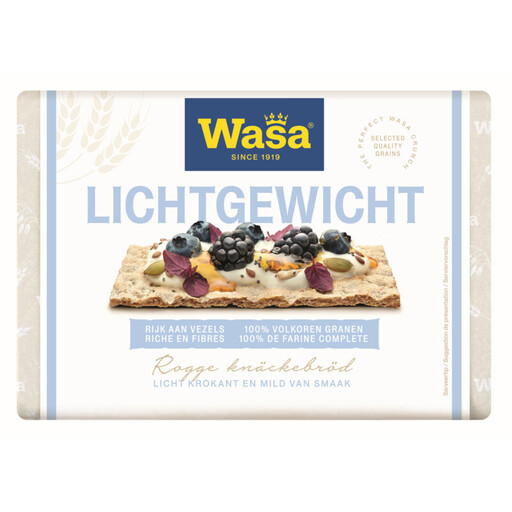 Image unavailable
Another Wasa variety to consider if texture is important for a fussy eater. Don’t rely on the name alone: compare sugars per 100 g and check the current allergen information before choosing this variety.
 Image unavailable
A wholegrain crispbread variety for anyone looking for a simple base to add a topping to. When comparing, check the current sugars and fibre per 100 g, and bear in mind any potential allergens.
 Image unavailable
A variety labelled wholemeal to compare with other crispbreads. Check the current packaging to see which flours have been used and to check the allergens; don’t assume the exact grain composition from the product name.
No. For similar products, compare the ‘of which sugars’ value per 100 g: this includes all the sugars present. Also read the ingredients list to see whether ingredients such as sugar, honey or syrup have been added.
You could start with a small portion, without pressure, and bear in mind that your child may reject the hard, dry texture. The Netherlands Nutrition Centre advises against forcing children to eat.
No, you can’t tell from the product category. According to the Netherlands Nutrition Centre, baker’s salt contains iodine, but bakers aren’t required to use it. Check the ingredients and consider how bread substitutes fit into your overall diet.
Read the allergen information for your chosen variety on the current packaging. Jumbo’s product information lists wheat, rye, barley and sesame for Bolletje Wholegrain Knäckebröd Vezelrijk; other varieties may contain different ingredients.
Follow the storage advice on the packaging for your chosen variety. For Bolletje Wholegrain Knäckebröd Vezelrijk, the product information recommends storing it in a cool, dry place out of direct light and keeping the pack sealed after opening.