
Office buyer comparing sugar content
Looking for low-sugar crackers and comparing the nutritional information per 100 g. The Netherlands Nutrition Centre recommends using this basis for comparison, so different portion sizes don’t skew your choice.


Choose crackers for the office biscuit tin by comparing similar products per 100 g, looking at ‘of which sugars’ rather than relying on words such as ‘light’ or ‘low carb’. For a shared supply, check the ingredients and allergens too, and choose packaging that can be sealed securely after opening. A low sugar content alone tells you nothing about the amount of fibre or salt.
Looking for low-sugar crackers and comparing the nutritional information per 100 g. The Netherlands Nutrition Centre recommends using this basis for comparison, so different portion sizes don’t skew your choice.
Wants to store crackers properly after opening and check the ingredients and allergens for colleagues. Storage advice can vary by product; Jumbo, for example, advises resealing opened Luchtige Crackers Naturel securely.
May need a separate gluten-free option, or want to compare wholegrain crackers by fibre content. A ‘gluten-free’ or ‘low carb’ label doesn’t replace checking the rest of the nutritional information and the allergens.
Start by comparing ‘of which sugars’ per 100 g for similar crackers. Then consider what your shared supply needs in terms of storage, allergens, fibre and salt.
| What to consider | What to check when buying | Who it matters most to |
|---|---|---|
| Total sugars | For similar crackers, compare ‘of which sugars’ per 100 g and check the ingredients list for sources of added sugar. | If I mainly want crackers with little sugar in the tin, I need to be able to see how much sugar they actually contain. Around 33% of consumers say this is their main purchasing requirement. |
| Storage after opening | Read the storage advice and check whether the packaging can be resealed or contains individual portions. | When colleagues help themselves to crackers at different times, I want the opened supply to stay dry and well sealed. For around 27% of consumers, this convenience comes first. |
| Allergens and dietary requirements | Check the latest allergen information; if needed, keep a gluten-free option separate to prevent cross-contact. | If a colleague has a specific dietary restriction, I need to be able to identify which crackers are suitable and which should be kept separate. This is the top priority for around 20% of consumers. |
| Fibre and salt | Compare the fibre and salt values per 100 g alongside the sugar content. | I don’t want to choose based on sugar alone if fibre or salt also matters. Around 20% of consumers prioritise this broader comparison. |
Added sugars and total sugars are different figures. Albert Heijn lists 0 g of added sugars for AH Stevige crackers volkoren, but 1.6 g of total sugars per 100 g.
Before comparing crackers, check both ‘of which sugars’ in the nutritional information and the ingredients list.
Carbohydrates, sugars, fibre and salt are listed separately in the nutritional information. So a claim about fewer carbohydrates doesn’t answer every question about a product’s composition.
Decide which figure matters most for your office supply, then compare similar products per 100 g.
The ingredients listed vary from one cracker to another. For example, Bolletje lists wheat, barley and sesame seeds in its Bagel Crackers Sesam; a cracker’s shape won’t tell you whether it’s gluten-free.
Keep the current packaging or ingredient information to hand, and store a gluten-free option separately if cross-contact could be an issue for colleagues.
For Jumbo Luchtige Crackers Naturel, Jumbo advises resealing the packaging securely after opening and using the remaining crackers within a few days.
Follow the storage advice for your chosen crackers, refill the tin in small quantities and seal the remaining supply securely.
Bolletje’s range includes Protein & Low Carb Crackers and vegetable crackers. These product lines show why a carbohydrate claim should be considered separately from the sugar content.
Albert Heijn’s product information lets you compare two specific firm wholegrain crackers.
Jumbo’s standard light cracker and separate gluten-free light cracker may suit different needs in the office supply.
Goud Gebakken Low Carb Crackers are worth considering if the carbohydrate information catches your eye.
These crackers suit a shared office supply where sugar content is one of the things to consider. Check the current packaging for sugars per 100 g, allergens and storage advice before filling the tin.
 No image available
A wholegrain crispbread to compare when both sugar and fibre matter for your office supply.
Check the current packaging for sugars per 100 g and for wheat, rye, barley and sesame; according to the product information, lupin may also be present. Seal the pack securely after opening.
 No image available
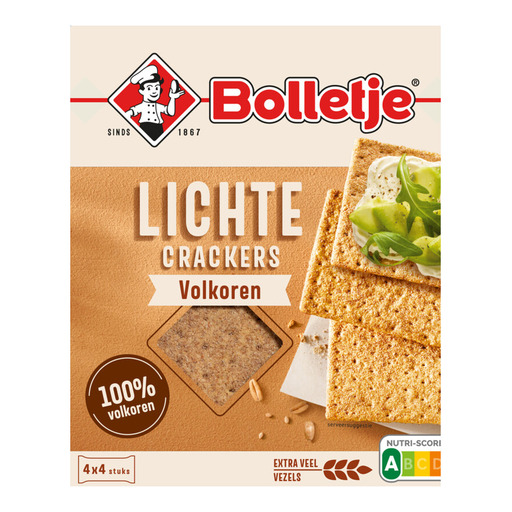
A wholegrain cracker for anyone who wants to compare sugar and fibre values side by side.
Don’t rely on ‘Light’ alone: check the nutritional information per 100 g. Also check the latest allergen information, including wheat, barley and sesame, and seal the pack securely after opening.
 No image available
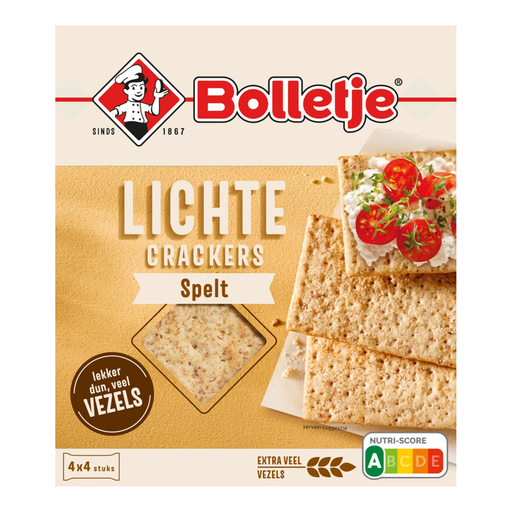
A spelt cracker to consider if you’re comparing fibre and salt as well as sugars.
Check the current label for values per 100 g and allergens, including wheat, spelt, barley and sesame. If salt is a factor in your choice, include that figure in your comparison too.
 No image available
A wholemeal crispbread for an office supply where you want to consider sugars, fibre and salt together.
Carefully check the latest allergen information if colleagues have dietary restrictions; the product information lists cereals containing gluten and sesame, among other things. Store the crackers in a dry place and seal the pack securely after opening.
 No image available
A rye cracker to include when comparing sugars and fibre for your office supply.
Check the salt content per 100 g and the latest allergen information too. The product information lists rye and barley and notes that sesame and milk may be present; seal the pack securely after opening.
According to the Netherlands Nutrition Centre, the ‘low sugar’ nutrition claim for solid foods means no more than 5 g of sugars per 100 g. Also check the rest of the nutritional information, ingredients and allergens: the sugar figure alone doesn’t tell you whether a cracker meets all the requirements for your office supply.
No. ‘No added sugars’ doesn’t mean the total sugar content is zero. For example, Albert Heijn lists 0 g of added sugars and 1.6 g of total sugars per 100 g for AH Stevige crackers volkoren. So make sure you understand what each figure means.
Compare similar crackers using their nutritional values per 100 g, as recommended by the Netherlands Nutrition Centre. This lets you assess sugars, fibre and salt on the same basis; you can then consider the portion size separately.
Follow the storage advice on the packaging and seal opened crackers securely. It’s best to refill the tin in small quantities; store a gluten-free option separately if cross-contact could be an issue for colleagues.
No. A claim about carbohydrates isn’t the same as information about total sugars. Bolletje says its Protein & Low Carb Crackers contain fewer carbohydrates than other breakfast crackers; to compare sugar content, check ‘of which sugars’ per 100 g separately.