
Low-sugar recipe experimenter
You want to try small coffee ice cream bases separately and can plan ahead. Finding the right balance between less sugar and your preferred texture matters more to you than making a large batch.


Choose a machine to suit the way you like to prepare ice cream: a pre-frozen tub is ideal for testing small recipes, a freezer bowl suits planned batches, and a compressor is the way to go if you don’t want to freeze anything in advance. None of these systems guarantees creamy low-sugar coffee ice cream. Wageningen University & Research explains that sugar affects the formation of ice crystals, so your recipe and portion size matter too.
You want to try small coffee ice cream bases separately and can plan ahead. Finding the right balance between less sugar and your preferred texture matters more to you than making a large batch.
You want to get started without freezing a bowl or ingredients base first. Look for machines with a compressor and compare the usable capacity with the amount your recipe makes.
You make coffee ice cream for several portions, have room in your freezer and want to weigh up batch size against preparation and cleaning.
First decide whether you want to plan ahead and how much ice cream you need each time. Then check the recipe settings and care requirements for the exact model.
Ideal for: testing small recipes individually when you can freeze the base in advance.
The trade-off: you’ll need to plan ahead and choose a programme to suit the ingredients.
Ideal for: planned batches when you have room to freeze the bowl in advance.
The trade-off: preparation times vary by model. Princess says the 282605 needs to be frozen for at least 8 hours.
Ideal for: making ice cream without freezing a bowl or base first.
The trade-off: compare the processing capacity with the bowl capacity. A compressor doesn’t change the effect that less sugar has on texture.
| What to consider | What should you check? | Who is this important for? |
|---|---|---|
| Recipe texture | Compare your ingredients base with the programme instructions and try a small amount first. | If I want to reduce the sugar, I want to see how my recipe turns out before making a larger quantity. Around 36% of consumers put texture first. |
| Preparation and freezer space | Check what needs to be frozen in advance and whether the bowl or tub will fit in your freezer. | If I want to make ice cream spontaneously, I don’t want to have to freeze a bowl or base first. Around 29% of consumers put making ice cream without pre-freezing first. |
| Portion size | Compare the processing capacity, not just the bowl capacity, with the quantity in your recipe. | Whether I’m testing individual recipes or making several portions, I want a machine that suits the amount I actually make. Around 21% of consumers put batch size first. |
| Cleaning and ease of use | Check which parts can be removed and follow the cleaning instructions for your model. | After making coffee ice cream, I want to know how many parts I need to clean and how to clean them according to the manual. Around 14% of consumers put ease of use first. |
The bowl capacity doesn’t always tell you how much ice cream you can make in one batch. Magimix lists 2-litre bowls for the Gelato Expert, but gives the processing capacity for ice cream as 1 litre.
Compare the processing capacity of the exact model with your recipe, not just the stated bowl capacity.
Machines with a freezer bowl or a pre-frozen ingredients base require some preparation. For the non-self-freezing machines it tested, Consumentenbond recommends freezing the bowl or ingredients mixture 24 hours in advance if possible.
Decide whether you’re happy to plan ahead. If you want to get started without pre-freezing, compare machines with a compressor.
Allow for the freezer space and time needed for preparation.
Wageningen University & Research explains that sugar affects the formation of ice crystals. A machine programme therefore can’t guarantee that every low-sugar coffee ice cream recipe will be creamy.
Consider the whole recipe and try a small amount first. Don’t judge the result by the programme name alone.
The CREAMi NC300EU/NC302EU range is designed to process pre-frozen ingredients bases.
The 282605 is a churning ice cream maker with a separate freezer bowl, designed for planned preparations.
The Gelato Expert is a compressor option for anyone who doesn’t want to freeze a bowl first.
The DO9201I is a compressor option with a bowl capacity of 2 litres, according to DOMO.
The ICE30BCE with a freezer bowl and the ICE90E with a compressor differ in their preparation requirements and stated bowl capacities.
These Joybuy product picks are suited to testing small recipes and making planned batches with ice cream makers. Before ordering, check the preparation requirements, processing capacity and product information for the exact model.
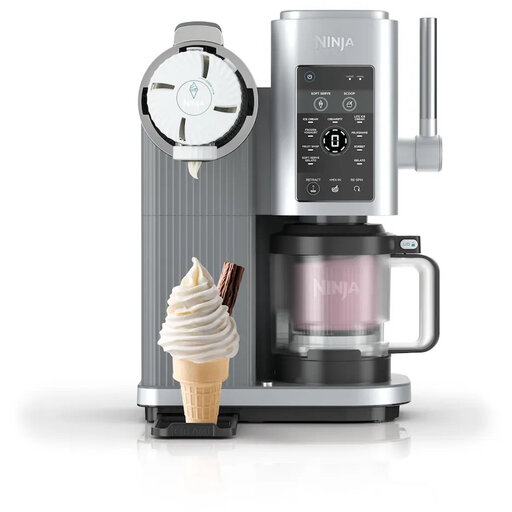 No image available
The product information lists a maximum of 500 ml of ice cream mixture per batch, making it suitable for testing individual recipes.
The removable freezer bowl needs to be frozen in advance.
The stated preparation timer is 40 minutes.
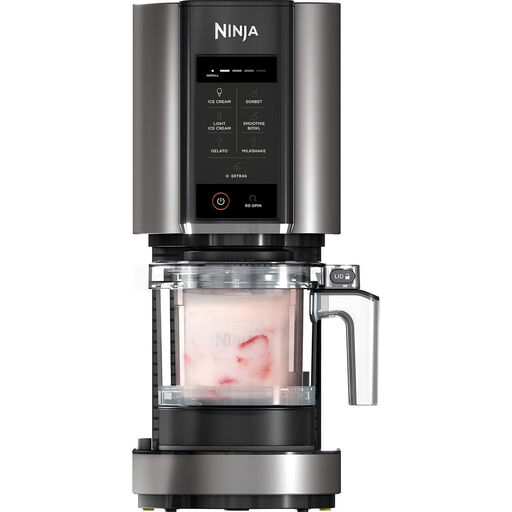 No image available
The 473 ml tub capacity is suited to making individual portions.
According to the product information, the base needs to be frozen 24 hours in advance.
The listed programmes include Light Ice Cream. Follow the instructions for your exact recipe and model.
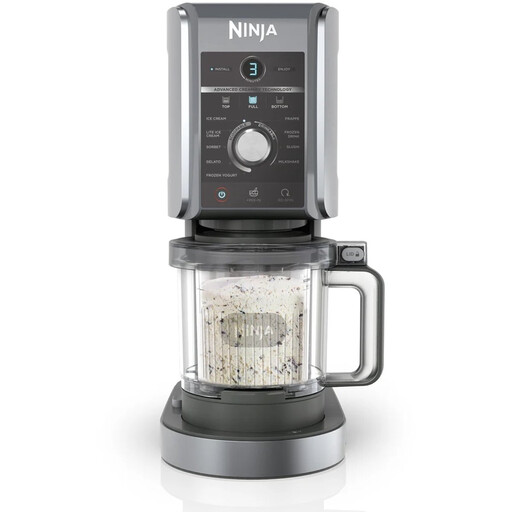 No image available
The product information lists two 480 ml tubs, so you can prepare different recipes separately.
The machine processes pre-frozen bases.
The listed programmes include Light Ice Cream and CreamiFit.
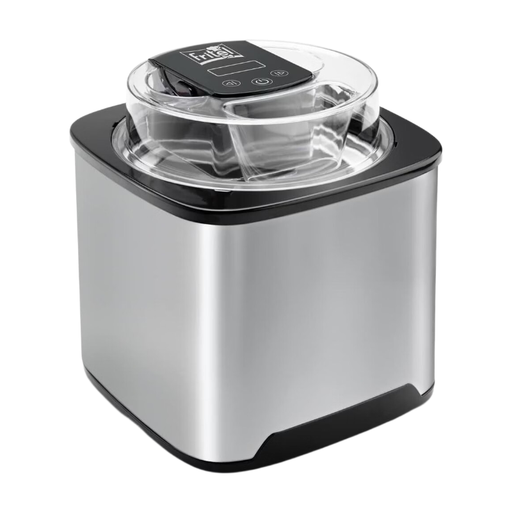 No image available
The freezer bowl and stated 2-litre capacity make it suitable for a planned batch.
According to the product information, the bowl needs to be frozen for at least 8 hours in advance.
The listed version has a digital timer and a filling opening.
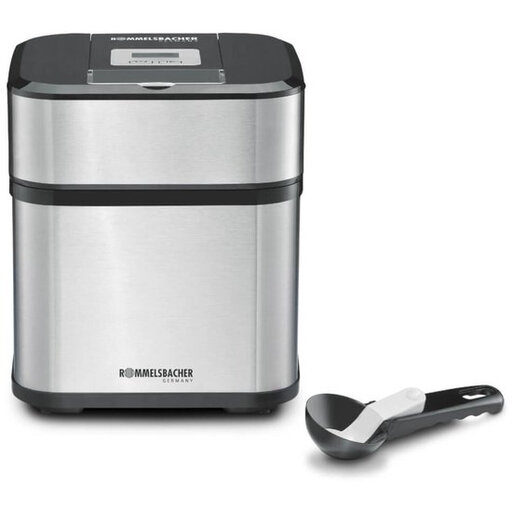 No image available
The product information lists a maximum of 500 ml of ice cream mixture per batch, making it suitable for testing smaller recipes.
The bowl has a capacity of 1.5 litres and needs to be frozen in advance.
According to the product information, the machine can be used to make ice cream and sorbet.
No, a machine can’t guarantee that texture. Wageningen University & Research explains that sugar affects the formation of ice crystals, and the result also depends on the ingredients in your recipe.
No. A freezer bowl or ingredients base needs to be frozen in advance, whereas a machine with a built-in compressor cools as it churns. Follow the preparation instructions for your exact model.
Voedingscentrum advises pregnant people, young children, older people and those with weakened immune systems to avoid dishes containing uncooked egg. Choose a base without raw egg for them; an ice cream maker won’t automatically heat a raw base to a safe temperature.
Voedingscentrum recommends limiting caffeine to around 200 mg a day during pregnancy or breastfeeding and, as a precaution, drinking no more than two cups of coffee. The amount of caffeine in coffee ice cream depends on the recipe and portion size.
According to NVWA, CE marking is compulsory for electrical products. Check the marking and product information for the specific appliance. The marking alone doesn’t prove that an independent safety test has been carried out.