
If you compare sugar content
You want to serve chocolate flakes with tea and choose based on sugar per 100 g, not just the flavour name. The variants listed by Albert Heijn in this comparison range from 56 to 72 g per 100 g.


Of the chocolate flakes compared here, De Ruijter Royaal Extra Dark has the lowest sugar content at 56 g per 100 g, according to Albert Heijn. Check the label on the pack you buy too: a name suggesting extra-dark chocolate does not, by itself, mean the flakes contain less sugar.
You want to serve chocolate flakes with tea and choose based on sugar per 100 g, not just the flavour name. The variants listed by Albert Heijn in this comparison range from 56 to 72 g per 100 g.
You’re looking for a dark or extra-dark option, but also want to know how much sugar it contains. A higher cocoa percentage won’t tell you how a product compares with other brands unless you check the labels.
You use flakes on bread, in yoghurt or with a dessert, and want to check which pack suits the occasion. Check the allergen information too: the products listed by Albert Heijn differ in their declarations of milk, soya and wheat, among other things.
First decide whether sugar content or flavour will guide your choice. If you’re serving them to others, always check the allergens on the current packaging too.
| What to consider | What to check before buying | Who it matters to |
|---|---|---|
| Sugars per 100 g | Compare the ‘of which sugars’ figure per 100 g in the nutrition tables of the variants you’re considering. | I want chocolate flakes with tea, but would prefer the option with less sugar from the ones available to me. Sugar content is the top priority for around 50% of consumers. |
| Chocolate flavour | Decide whether you want dark, extra-dark or milk chocolate, and check the cocoa percentage alongside the sugar content. | For a dessert, I mainly want a flavour that works well with it, even if another option contains less sugar. Flavour is the deciding factor for around 30% of consumers. |
| Suitability for serving | Read the allergen information on the current packaging and check what pack size you need. | If I’m serving flakes to others, the allergens and pack size need to suit the occasion. For around 20% of consumers, this practical suitability comes first. |
For De Ruijter, Albert Heijn lists 56 g of sugars per 100 g for Royaal Extra Dark and 63 g for the standard dark flakes. This difference doesn’t mean that a flavour name has the same sugar content across every brand, or that it makes a claim about reducing sugar.
Place the nutrition tables from the packs side by side and compare ‘of which sugars’ per 100 g.
A dark or milk chocolate option doesn’t tell you everything about its allergens. Albert Heijn lists soya and wheat for Choca Flakes and warns that the product may contain milk.
Check the ingredients and allergen information on the current packaging before buying or serving the flakes.
The dark, extra-dark and milk chocolate flakes give you different flavours to compare per 100 g.
AH Pure and AH Mix are different types of flakes. Compare their nutrition tables and choose the flavour you prefer.
Choca Flakes are an option to compare with other brands of chocolate flakes as a topping on bread or in yoghurt.
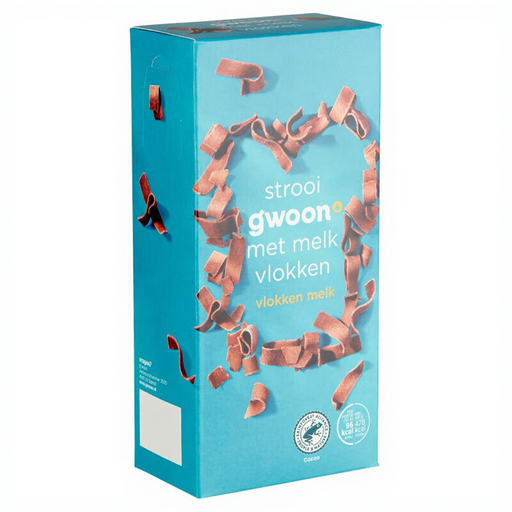
These milk chocolate flakes are a good fit if you prefer the taste of milk chocolate on bread or in yoghurt. If less sugar is your top priority, compare the sugar content on the packaging.
 No image available
An option if you want to use milk chocolate flakes on bread or in yoghurt. The pack contains 300 g; check the latest nutrition and allergen information before serving.
No, the flavour name alone doesn’t confirm that. Albert Heijn lists 56 g of sugars per 100 g for De Ruijter Royaal Extra Dark and 63 g for De Ruijter dark flakes. For other products, check the nutrition table per 100 g again.
It depends on the product and how much you use. The Voedingscentrum gives 10.4 g of sugars for a standard 15 g serving of chocolate flakes. For a specific pack, use the figure per 100 g and the amount you serve yourself.
Read the ingredients and allergen information on the current packaging. The variants listed by Albert Heijn differ in their declarations of milk, soya and wheat, among other things, so don’t rely on the dark or milk chocolate label alone.