If you want to bake biscuits without adding granulated sugar, you could choose a recipe with dates or apple and raisins, but these ingredients still contain sugars. For a crisp shortbread biscuit, a recipe using a sweetener and a classic butter-and-flour dough is a better fit for your goal. Bear in mind that sugar also affects the texture and colour. If you’re buying ready-made biscuits, compare the sugars per 100 g, polyols, ingredients and allergens for the exact variety.
Who are the different options for?
Home bakers who don’t want to add granulated sugar
For example, Albert Heijn Allerhande recipes use dates or apple and raisins for sweetness. This is different from sugar-free baking: these ingredients contain sugars themselves and give biscuits a different texture from classic shortcrust pastry.
Fans of crisp shortcrust biscuits
If texture is important to you, you could try a butter-and-flour recipe with a sweetener, such as Jumbo’s. Follow the proportions and method in your chosen recipe: according to the Netherlands Nutrition Centre, sugar also contributes to texture, volume and colour.
Shoppers comparing biscuit labels
For ready-made biscuits, you can compare the amount of sugars, polyols and energy per 100 g with the serving size. Check the ingredients and allergens on the current packaging too, especially if you need to avoid a particular ingredient.
What should you look for when baking or buying?
First decide what matters most to you: leaving granulated sugar out of a recipe, baking a crisp biscuit or comparing the ingredients of a ready-made biscuit. Each option calls for a different check.
| What to look for |
What to check when buying |
Who it matters to |
| Added and naturally occurring sugars |
Check which ingredients sweeten the recipe. For packaged biscuits, compare ‘of which sugars’ per 100 g; this figure doesn’t cover added sugar alone. |
If I bake with dates or fruit, I want to leave out granulated sugar without calling the result sugar-free. For around 40% of consumers, that’s the top priority. |
| Crisp biscuit texture |
If a crisp texture is your priority, choose a shortcrust recipe with a sweetener and follow the recommended proportions and baking time. |
I’m looking for a biscuit that’s more like classic shortcrust than a fruit biscuit. For around 30% of consumers, that texture comes first. |
| Ingredients and allergens |
For the exact variety, check the ingredients, allergens, sugars, polyols and energy per 100 g, as well as the serving size. |
When buying a ready-made biscuit, I want to know what’s in my serving and whether I need to avoid any ingredients. Around 30% of consumers prioritise checking the label. |
Common mistakes
-
Assuming that no added granulated sugar means sugar-free
Dates, apple and raisins contain naturally occurring sugars. In addition, ‘no added sugars’ is a separate nutrition claim: according to the Netherlands Food and Consumer Product Safety Authority, this also applies to foods added for their sweetening properties.
Decide whether you want to leave granulated sugar out of your own recipe or find a packaged product with a specific sugar claim. If it’s the latter, check both the ingredients and ‘of which sugars’ per 100 g.
-
Looking only at ‘0% sugar’
A low sugar figure doesn’t tell you how many polyols or how much energy a biscuit contains. Albert Heijn lists 0.3 g of sugars and 14 g of polyols per 100 g for AH Digestive 0% sugar, and warns on the product page that excessive consumption may have a laxative effect.
Read the full nutrition information, serving size and any warnings on the packaging of the variety you choose.
-
Reading ‘less sugar’ as ‘sugar-free’
‘Less sugar’ describes a comparison, not the absence of sugars. For example, ALDI Netherlands lists a Goud Gebakken koekhapper variety with 30% less sugar; on its own, this doesn’t tell you how much sugar is in your serving.
Check what the claim is being compared with and read the nutrition table for that exact variety.
-
Assuming you know the allergens from the biscuit’s name
A sugar claim says nothing about allergens. The Céréal biscuit with speculoos flavour and almonds listed by Jumbo contains, among other things, wheat, almonds, soya, egg and milk.
If you have an allergy, check the current ingredients and allergen information on the packaging. The Netherlands Food and Consumer Product Safety Authority explains how allergens must be clearly identified in the ingredients list.
Brands and recipe sources to consider
Lotus Biscoff
Lotus Bakeries describes Biscoff as a crisp, caramelised speculoos biscuit that can also be used as an ingredient. It’s a flavour inspiration for desserts, rather than a lower-sugar option by default.
- A distinctive speculoos flavour if you want to use biscuits in a dessert.
- If reducing sugar is your priority, check the nutrition information on the packaging you use.
Albert Heijn
Albert Heijn Allerhande has recipes using dates and apple and raisins. Albert Heijn also provides nutrition information for AH Digestive 0% sugar, a ready-made biscuit.
- You can compare a fruit-sweetened baking recipe with the information for a packaged product.
- Albert Heijn advises checking the current label on packaged products, as product information can change.
Jumbo
Jumbo offers a shortbread recipe with a sweetener, as well as product information for a ready-made Céréal biscuit with speculoos flavour and almonds.
- The recipe offers an option for anyone who wants to bake with classic shortcrust pastry.
- The Céréal variety mentioned contains several allergens; check the exact packaging.
Lidl / Sondey
Lidl Netherlands describes Sondey as a range of different biscuits, cookies and snacks, including vegan options.
- The range includes different types of products to consider individually.
- A description of the range doesn’t tell you the sugar or allergen information for a specific biscuit.
ALDI
ALDI Netherlands lists, among other products, a koekhapper variety with 30% less sugar and a breakfast cake labelled ‘zero’. These are different types of product from a homemade biscuit.
- Individual product listings give you a starting point for checking the claims made for each variety.
- Don’t assume a koekhapper or breakfast cake is comparable to a biscuit; read the nutrition information for the product you choose.
Ready-made biscuits at Joybuy
This product selection is for a ready-made biscuit, not an ingredient or mix for baking your own. Check the packaging to decide whether the ingredients suit your needs around sugar and allergens.
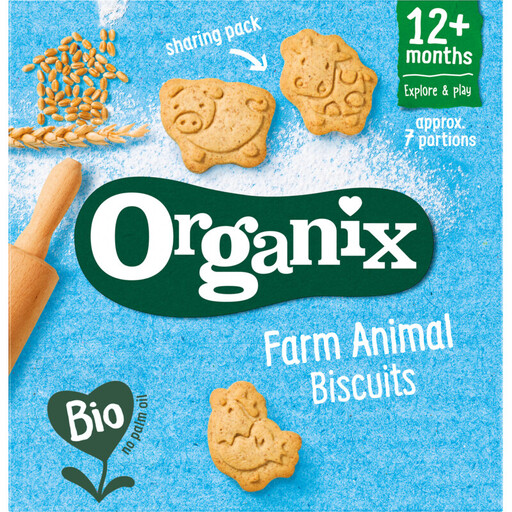 Image unavailable
Organix Bio Farm Animal Biscuits 100 g
A ready-made biscuit for anyone comparing products by their ingredients and sugar content. Check the current packaging for nutrition information per 100 g, allergens and, if you’re buying the biscuits for a child, the age guidance.
Pack size: 100 g.
View at Joybuy
Frequently asked questions
Does ‘no added sugars’ mean the same as ‘sugar-free’?
No, these are different nutrition claims. According to the Netherlands Food and Consumer Product Safety Authority, ‘no added sugars’ also means that no foods have been added for their sweetening properties; it doesn’t rule out sugars that are naturally present. Under EU rules, ‘sugar-free’ means a maximum of 0.5 g of sugars per 100 g or 100 ml. So a recipe with added dates doesn’t automatically qualify for either claim.
How do I compare two biscuits with a sugar claim?
Compare the exact varieties for ‘of which sugars’, energy and polyols per 100 g, then check the serving size and ingredients. Albert Heijn lists 0.3 g of sugars and 14 g of polyols per 100 g for AH Digestive 0% sugar; Jumbo lists 0.4 g of sugars and 29 g of polyols per 100 g for the Céréal biscuit mentioned. These figures alone don’t tell you whether the products have the same ingredients or allergens.
Do I still need to check for allergens in low-sugar biscuits?
Yes, a sugar claim doesn’t tell you whether a product contains allergens. The Netherlands Food and Consumer Product Safety Authority sets out how regulated allergens must be listed in the ingredients. If you have an allergy, always check the current packaging for the exact variety, rather than relying on a general range page.
How should I store homemade biscuits with dates or fruit?
Follow the storage advice for the specific recipe you’re using. A biscuit with dates and one with apple and raisins aren’t the same recipe, so don’t assume they have the same shelf life.


