
The sugar-conscious stock buyer
You want to compare biscuits for a snack drawer or selection by their total ‘of which sugars’ content per 100 g, rather than relying on the claim on the front of the pack.


When stocking up on snacks, first compare the ‘of which sugars’ figure per 100 g across similar biscuits; terms such as ‘zero’, ‘no added sugar’ and ‘reduced sugar’ don’t mean the same thing. Then check the rest of the nutritional information, the ingredients and any allergens. Individually wrapped biscuits can be handy for handing out, while larger packs should be resealed after opening in line with the storage advice.
You want to compare biscuits for a snack drawer or selection by their total ‘of which sugars’ content per 100 g, rather than relying on the claim on the front of the pack.
As well as sugar, you check sweeteners, on-pack warnings and allergens. This is particularly important when a product needs to suit people with specific dietary restrictions.
You weigh up handing out individual portions against buying larger packs, and want to know how to store biscuits after opening in line with the storage advice.
When comparing similar biscuits, use the nutritional values per 100 g as your starting point; the Netherlands Nutrition Centre recommends this basis for comparing labels. Then check whether the ingredients and packaging suit the people you’re buying for and how you plan to hand them out.
| What to consider | What to check when buying | Who it matters to |
|---|---|---|
| Total sugar content | For the same type of biscuit, compare ‘of which sugars’ per 100 g. Also check the nutritional information for energy, fat, fibre and salt. | If my main aim is to have less sugar in the stash, I need to be able to assess different claims using the same nutritional basis. This sugar content is the top priority for around 50% of consumers. |
| Sweeteners and allergens | Read the ingredients, allergen information and any warning about excessive consumption on the current packaging. | When I’m choosing biscuits for people with dietary restrictions, a sugar claim shouldn’t take the place of checking whether the ingredients are suitable. This is the top priority for around 30% of consumers. |
| Portions and storage | Check the number of biscuits, whether they’re individually wrapped and what the storage advice says after opening. | For a snack drawer where biscuits are handed out individually, I want to be able to divide and store the stash easily. This convenience matters most to around 20% of consumers. |
A product with no added sugar may still contain naturally occurring sugars. Albert Heijn lists both ‘0% added sugar’ and naturally occurring sugars for Verkade San Francisco Zero.
Before choosing based on a claim, compare the ‘of which sugars’ figure per 100 g across similar biscuits.
Low sugar doesn’t automatically mean low in energy. According to Albert Heijn’s product information, AH Digestive 0% suiker contains 0.3 g of sugars and 465 kcal per 100 g.
As well as sugar, check the nutritional information for energy, saturated fat, fibre and salt, depending on what matters for your selection.
Some biscuits containing sweeteners carry a warning that excessive consumption may have a laxative effect. The allergens present or that may be present also vary from product to product.
Check the current ingredients list, allergen information and warnings before adding a product to your stash.
For handing out individual biscuits, it makes a difference whether they’re individually wrapped or come from an opened pack. Albert Heijn advises storing AH Digestive in a sealed tin after opening.
Choose packaging that suits how you plan to hand them out, and follow the storage advice on the pack once it’s open.
These product ranges offer examples of different label claims and packaging types; a brand name alone doesn’t tell you how much sugar an individual product contains.
Céréal offers, among other options, speculoos, coconut and chocolate varieties with a stated low sugar content.
San Francisco Zero is a biscuit for anyone specifically looking for a product with no added sugar.
AH Digestive 0% suiker is an option if you’re looking for digestives in a larger pack.
The range includes other kinds of snack products alongside biscuits: individually wrapped koekhappers and pre-sliced ontbijtkoek.
Lotus Biscoff Original is a standard speculoos biscuit you can use as a reference when comparing this type of biscuit.
These products represent two different options: a cookie bar labelled ‘Less Sugar’ and biscuits labelled as having no added sugar. When stocking up, always compare the total sugar content and intended audience, rather than relying only on the wording on the front of the pack.
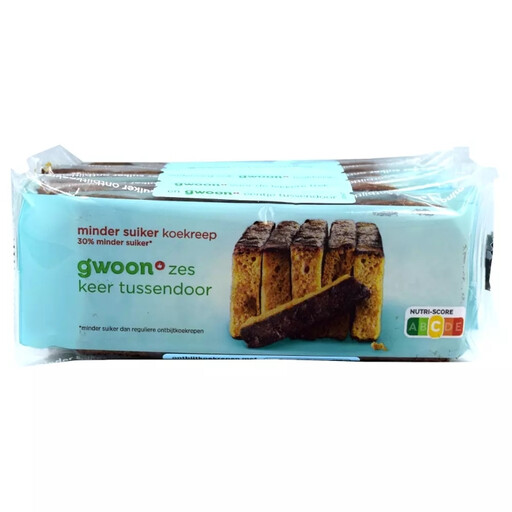 Image unavailable
A good fit for a stash that includes a cookie bar labelled ‘Less Sugar’. The pack contains 6 bars; before buying, compare the ‘of which sugars’ figure per 100 g with a suitable alternative cookie bar and check the allergen information.
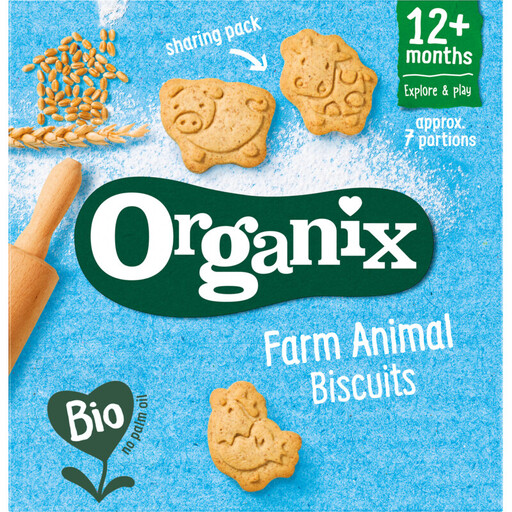 Image unavailable
Only relevant if your snack stash is specifically for young children: the product information recommends these biscuits for children aged 12 months and over. The pack contains 100 g; check the total sugars and allergens on the current label rather than relying solely on the ‘no added sugar’ claim.
No. A product with no added sugar may still contain naturally occurring sugars; Albert Heijn notes this, for example, for Verkade San Francisco Zero. To check the total, look at ‘of which sugars’ in the nutritional information per 100 g.
Compare the same type of biscuit using the nutritional values per 100 g, as recommended by the Netherlands Nutrition Centre. You can also use the per-portion information to work out how you want to hand them out.
Some of these biscuits contain polyols, such as maltitols, and carry a warning that excessive consumption may have a laxative effect. Read the ingredients and warnings on the current packaging before choosing them for your stash.
Check the allergens highlighted in the ingredients list and any ‘may contain’ statements on the current packaging. The Netherlands Food and Consumer Product Safety Authority says allergens must be listed on the label; which ingredients you need to look out for varies from biscuit to biscuit.