If you want to serve biscuits with as little sugar as possible at a work meeting, compare the ‘of which sugars’ figures per 100 g and per biscuit; don’t choose based only on words such as ‘zero’. If you’re mainly looking for a familiar treat with less sugar, check the total sugar content too. In either case, check the ingredients, allergens and any sweetener warnings for the group.
Who is this choice relevant to?
Organisers keeping an eye on sugar
You’re looking for biscuits to serve with coffee and want to compare the stated sugar content per 100 g and per biscuit served. The Netherlands Nutrition Centre recommends comparing nutritional values per 100 g for a fair comparison.
Organisers of groups with allergy concerns
You want to check which allergens and sweeteners a product contains before serving it. That means checking the information on the current packaging, not just the claim on the front.
Organisers looking to serve a familiar type of biscuit
For example, you might be looking for a syrup waffle, biscuit or Dutch breakfast cake with a claim about reduced sugar. With this kind of choice, the sugar content per 100 g is still important: a relative reduction doesn’t automatically mean the sugar content is low.
What should you look for when choosing?
First decide whether the stated sugar content, suitability for the group or a familiar type of biscuit is your priority. Then compare the portions you actually plan to serve.
| What to consider |
What to check when buying |
Who is this most important for? |
| Stated sugar content |
Compare ‘of which sugars’ per 100 g and then per biscuit. Check whether the packaging says ‘sugar-free’, ‘no added sugar’ or ‘less sugar’. |
I want to serve biscuits based on their sugar content, not just the claim on the packaging; this is the most important purchase criterion for around 36% of consumers. |
| Allergens and sweeteners |
Read the allergen and ingredient information on the current packaging, including any ‘may contain’ statement and warnings about sweeteners. |
If I don’t know what every attendee can eat, I want to be able to make suitable choices before the meeting; this is the top priority for around 29% of consumers. |
| Familiar type of biscuit |
Think about the type of biscuit you want to serve. If it claims to contain less sugar, compare the absolute nutritional values too. |
I want to offer a familiar treat with coffee, even if it isn’t virtually sugar-free; this matters most to around 21% of consumers. |
| Planning portions |
Check the number of biscuits or portions in each pack and how many you want to serve per attendee. |
I need to know in advance how many packs I’ll need for the meeting; being able to plan easily is the deciding factor for around 14% of consumers. |
Common mistakes
-
Assuming ‘less sugar’ means ‘low in sugar’
Albert Heijn says its butter syrup waffles with less sugar contain 32% less sugar than the regular AH version, but they still contain 23 g of sugars per 100 g. The comparison tells you something different from the absolute nutritional value.
First compare similar products per 100 g, then check how much sugar is in the biscuit you want to serve.
-
Choosing based only on ‘zero’
‘No added sugar’ doesn’t mean a product contains no sugars. Some biscuits with sweeteners also carry a warning that excessive consumption may have a laxative effect.
Read the nutritional information, ingredients and warnings before choosing biscuits for a group.
-
Checking allergens only when serving
The biscuits discussed here show that ingredients such as wheat, milk, soya and almonds may be relevant. The Netherlands Food and Consumer Product Safety Authority says that checking allergen information before buying is important for making a suitable choice.
Check the packaging in advance and keep the allergen information available when you serve the biscuits.
-
Relying only on online product information
Ingredients and allergen information can change. So a product page you viewed earlier isn’t enough to confirm the details of the biscuits that eventually arrive on the table.
Check the label on the pack you’ve bought before serving.
Brands to consider
Céréal
Jumbo lists Céréal biscuits with sesame and vanilla, as well as an almond speculoos variety.
- The Jumbo product pages list 0 g and 0.4 g of sugars per 100 g respectively for these varieties.
- Check the sweeteners and warnings; the speculoos variety contains almonds.
Verkade
San Francisco zero is a small biscuit labelled ‘0% added sugar’.
- Albert Heijn lists around 31 biscuits per pack and 1.7 g of sugars per 100 g.
- The product information lists wheat, milk and soya, and warns of a possible laxative effect if consumed in excess.
Albert Heijn
The own-brand range includes different types of biscuits, including 0% sugar digestive biscuits and butter syrup waffles with less sugar.
- According to Albert Heijn, the syrup waffles contain 32% less sugar than the regular AH butter syrup waffles.
- Those same syrup waffles contain 23 g of sugars per 100 g. Compare the nutritional information and check the allergens on the packaging.
Jumbo
Jumbo Ontbijtkoek Minder Suiker offers a different type of biscuit to enjoy with coffee or tea.
- Jumbo lists six portions and 30% less sugar than its plain ontbijtkoek bar.
- The product information also lists 22.7 g of sugars per 100 g; a sugar-reduction claim doesn’t mean the product contains 0 g of sugars.
ALDI
Goud Gebakken Koekhappers with less sugar are an option in a format that’s different from a small biscuit.
- ALDI describes a pack of six individually wrapped cakes.
- For a group purchase, check the nutritional values and allergens on the current packaging.
Lidl / Sondey
Lidl describes Sondey as a range of various biscuits and snacks.
- You can check whether the type and packaging of your chosen biscuit are suitable for the meeting.
- Check the sugar content, ingredients and allergens for the specific pack; you can’t tell these from the brand name.
Biscuit bars at Joybuy
These biscuit bars are a good fit if you’re looking for a familiar treat with a ‘Less Sugar’ claim. If you’re considering them for a work meeting, assess the claim alongside the nutritional information and ingredients.
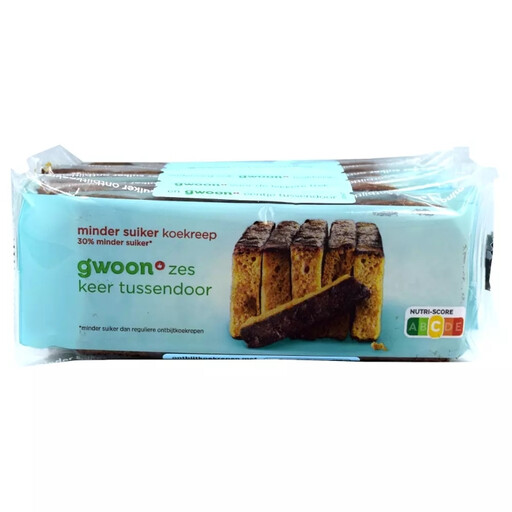 Image unavailable
g'woon Cookie Bars Less Sugar, 6 bars
The six-bar format could work well if you want to count out portions for a meeting. Compare the current sugar content per 100 g and per bar, and check what the ‘Less Sugar’ claim is based on. Before serving, also read the ingredient and allergen information on the packaging.
View at Joybuy
Frequently asked questions
Does ‘less sugar’ mean a biscuit is low in sugar?
No. The claim compares the biscuit with a reference product. Check the ‘of which sugars’ figure per 100 g and the portion you’re serving too: Albert Heijn says its butter syrup waffles with less sugar contain 32% less sugar than the regular AH version, but they still contain 23 g of sugars per 100 g.
How do I compare biscuits with different portion sizes?
First compare the nutritional values per 100 g, then check the figures for the biscuit you actually plan to serve. The Netherlands Nutrition Centre points out that manufacturers set their own portion sizes, so comparing figures per portion alone can be misleading.
What should I do about allergen information for a work meeting?
Check the allergens on the packaging before choosing biscuits for the group, and keep the information available when serving them. The Netherlands Food and Consumer Product Safety Authority stresses the importance of checking allergen information before buying; don’t assume a product is suitable for every attendee based on its name.
Are biscuits with sweeteners a suitable choice for everyone?
Not necessarily: suitability depends on the ingredients and what attendees can or want to eat. Some of the product pages discussed here warn that excessive consumption may have a laxative effect. So read the warnings and, if needed, provide a clearly labelled alternative.


