Low-sugar biscuits aren’t essential fuel for marathon training. When choosing a biscuit, look at the carbohydrates per portion, when you’ll eat it and its ingredients—not just the sugar claim. Large portions, or products high in fat or fibre, may cause discomfort just before a run. If a product contains polyols, it’s also worth considering how well you tolerate them.
Who might need to make this choice?
Runners who plan what they eat around long training sessions
If you train for a marathon for several hours a week, look beyond the sugar content: how many carbohydrates does a portion provide, when will you eat it and what will you drink with it? The Netherlands Nutrition Centre highlights the importance of getting enough carbohydrates during intensive endurance training.
Runners who want to limit sugar
You might compare biscuits or spiced breakfast cake with less sugar, no sugars or no added sugars. These claims alone don’t tell you how many carbohydrates a portion contains or how you’ll respond to its ingredients.
Runners who consider tolerability or allergens
You’ll want to try a portion before having it on a long run. Fat, fibre and polyols may be relevant when choosing what to eat around a training session. If you have allergies, check the information on the current packaging too.
What should you look for when choosing?
First decide when you want to eat the snack and how many carbohydrates the portion provides. Then compare the sugar claim, ingredients and how well you tolerate it. The Netherlands Nutrition Centre advises that large portions and products high in fat or fibre can stay in your stomach for longer if eaten just before exercise.
| What to consider |
What to check when buying |
Who it matters to |
| Carbohydrates per portion |
Compare the carbohydrates per portion and per 100 g. Include the portion in your overall food and drink plan. |
For long training sessions, I want to know how many carbohydrates my chosen portion provides. Around 33% of consumers prioritise this kind of carbohydrate planning. |
| When you eat it and how well you tolerate it |
Check the portion size and the amounts of fat and fibre. For products containing polyols, look out for warnings on the packaging. |
If I eat shortly before running, I want to choose a snack I can tolerate in that portion size. Around 25% of consumers prioritise this comfort. |
| What the sugar claim means |
Check the sugars and carbohydrates per portion. For ‘less sugar’ claims, see which product the manufacturer is comparing it with. |
I want to limit sugar without assuming that every claim means the same thing. Around 25% of consumers give this comparison top priority. |
| Ingredients and packaging |
Read the current ingredients and allergen information, and check whether the portion is practical to take with you. |
If I need to consider allergens or want to take a snack with me, the specific product packaging needs to suit my needs. This is the first thing around 17% of consumers consider. |
Common mistakes
-
Assuming ‘less sugar’ means it’s suitable fuel for training
A lower sugar content doesn’t tell you how many carbohydrates your portion provides or whether the timing works for your training.
Check the nutritional information per portion and factor the snack into your overall food and drink plan. Low-sugar biscuits aren’t essential for this.
-
Trying a product containing polyols for the first time on a long run
Products such as Céréal biscuits and Peijnenburg spiced breakfast cake carry a warning that excessive consumption may have a laxative effect.
Try a new product and the portion you plan to eat during an ordinary training session—not for the first time on race day.
-
Comparing only the wording on the front of the pack
‘Less sugar’, ‘sugar-free’ and ‘no added sugars’ describe different things. Ingredients and allergens also vary from product to product.
Read the nutritional and allergen information on the current packaging. Only compare a ‘less sugar’ claim with the reference product named alongside it.
Brands to consider
Albert Heijn
AH Digestive 0% suiker is a sweetened biscuit sold in a 400 g pack.
- Albert Heijn lists 0.3 g of sugars and 63 g of carbohydrates per 100 g for this product.
- According to Albert Heijn, the product contains 14 g of polyols per 100 g. The packaging warns that excessive consumption may have a laxative effect.
Jumbo
Jumbo Ontbijtkoek Minder Suiker comes in six 50 g portions. Spiced breakfast cake is a different product from a biscuit.
- According to Jumbo, this product contains 30% less sugar than Jumbo ontbijtkoekreep naturel and 26.1 g of carbohydrates per 50 g portion.
- The product contains rye and wheat. If you have a relevant allergy, check the full information on the packaging.
Aldi / Goud Gebakken
ALDI Netherlands lists a Goud Gebakken Koekhappers variety with 30% less sugar, as well as a raisin variety.
- According to ALDI, the cakes are individually wrapped in packs of six.
- Assess the lower-sugar variety using the nutritional information and ingredients on the specific packaging. The raisin variety is a different choice.
Lotus Biscoff
Lotus Bakeries describes Biscoff as a crisp, caramelised biscuit for occasions such as a treat.
- Biscoff offers a familiar point of comparison if you’re weighing up an ordinary biscuit against a product with a ‘less sugar’ claim.
- Check the packaging for the specific Biscoff variety. The brand description doesn’t make it a low-sugar training snack.
Biscuits and bars at Joybuy
These options include spiced breakfast cake and biscuit bars labelled as containing less sugar. If you’re planning to eat one around a training session, check the portion, ingredients and nutritional information for each product. The label alone doesn’t determine whether the snack is right for you at that time.
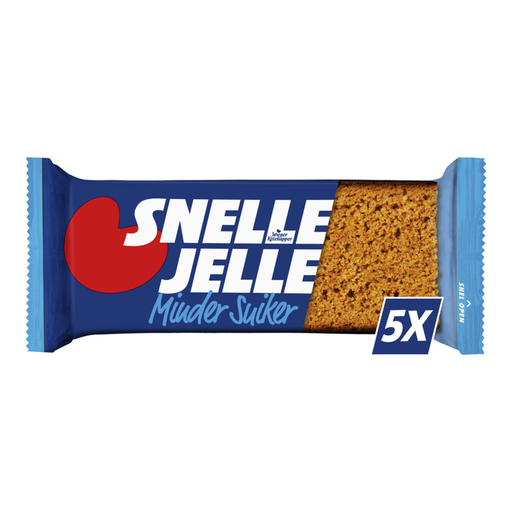 Image unavailable
Snelle Jelle lower-sugar spiced cake, 250 g
An option if you want to take spiced cake in portions and factor its carbohydrates into your training plan.
Jumbo lists five pieces per pack for Snelle Jelle Kruidkoek Minder Suiker, with 63 g of carbohydrates and 24 g of sugars per 100 g. Check the current packaging before working out the figures per bar.
If you have a relevant allergy, read the ingredients information. Try the portion and timing during an ordinary training session first.
View at Joybuy
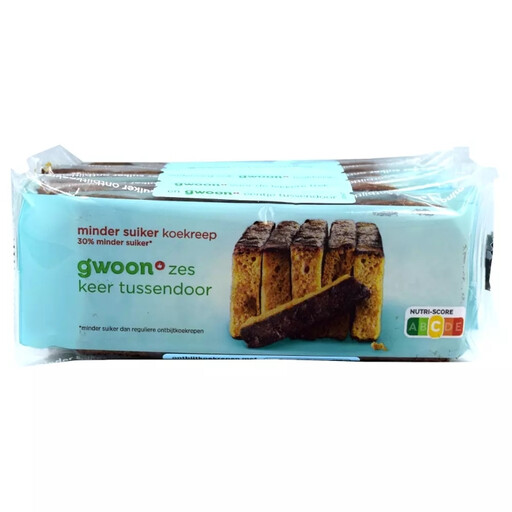 Image unavailable
g'woon Cookie Bars Less Sugar, 6 bars
An option if you’re looking for biscuit bars labelled as containing less sugar.
The product name indicates that the pack contains six bars. Check the current packaging for the sugars and carbohydrates per portion, and see what the ‘less sugar’ claim refers to.
Check the allergen information and try your chosen portion during an ordinary training session before having it around a long run.
View at Joybuy
Frequently asked questions
Are low-sugar biscuits necessary for marathon training?
No, low-sugar biscuits aren’t essential for marathon training. For intensive endurance training, the Netherlands Nutrition Centre highlights the need for enough carbohydrates and for paying attention to what you eat and drink around exercise. A biscuit is simply a snack that may fit into your own plan and suit your tolerance.
Can I eat a sugar-free biscuit just before running?
It may be an option if the portion and timing work for you, but the sugar label alone won’t tell you that. The Netherlands Nutrition Centre advises against large portions and products high in fat, protein or fibre just before exercise. Try a new biscuit during an ordinary training session first.
What do ‘less sugar’ and ‘no added sugars’ mean?
They’re different claims: ‘less sugar’ refers to a comparison, while ‘no added sugars’ doesn’t mean that the product contains no sugars. Jumbo and Snelle Jelle each name a different reference product for their lower-sugar products. So check the claim, ingredients and nutritional information for the variety you’re buying.
Why should runners pay attention to polyols?
Some products containing polyols carry a warning that excessive consumption may have a laxative effect. This is mentioned, for example, on the Céréal and Peijnenburg product pages. If you want to eat one of these products before a long run, try the intended portion during an ordinary training session first to see how you respond.


