
If sugar content is your top priority
You’re looking for a biscuit to have with coffee that has as little sugar as possible per 100 g, and you also want to know which sweeteners or polyols it contains.


If keeping sugar as low as possible is your main priority, compare biscuits by their sugar content per 100 g. A biscuit labelled ‘less sugar’ may still contain considerably more sugar than a zero biscuit. For a familiar treat with coffee, a reduced-sugar stroopwafel may be more to your taste. Before choosing something for guests, check the portion size, ingredients, allergens and any polyols too.
You’re looking for a biscuit to have with coffee that has as little sugar as possible per 100 g, and you also want to know which sweeteners or polyols it contains.
You want to share a familiar biscuit and are happy with a demonstrable reduction in sugar, even if the product isn’t sugar-free.
As well as sugar, you check the portion size, nutritional information, allergens and any warnings on the packaging.
First decide whether sugar content or the type of biscuit matters most to you. Then compare the nutritional information and ingredients of specific products, even if the front of the pack says ‘zero’ or ‘less sugar’.
| What to consider | What should you check? | Who is this most important for? |
|---|---|---|
| Sugar content | Compare ‘of which sugars’ per 100 g and check the weight of one biscuit. Albert Heijn lists 0.3 g of sugars per 100 g for AH Digestive 0% sugar. | If I want to keep sugar as low as possible, I don’t want to rely on the product name alone. Around 33% of consumers put sugar content first. |
| Type of biscuit and portion | Check the number of biscuits, the weight of each one and what a ‘less sugar’ claim is being compared with. A stroopwafel and a biscuit are different types of product. | When I’m having coffee with friends, I want to offer a biscuit that suits the occasion, even if it isn’t sugar-free. For around 27% of consumers, choosing a treat for the coffee table comes first. |
| Ingredients and allergens | Read the ingredients list and allergen information, particularly for products containing sweeteners or polyols. Check the warnings on the packaging. | If I’m putting biscuits out for others, I want to know which ingredients may be relevant to my guests. This check is the top priority for around 20% of consumers. |
| Availability | Check whether your chosen product is available at your shop and read the current packaging. An online product listing doesn’t, by itself, mean it’s in stock there now. | I want to be able to pick up a suitable biscuit when I’m shopping for coffee with friends. Availability is the deciding factor for around 20% of consumers. |
According to Albert Heijn, AH Roomboter reduced-sugar stroopwafels contain 32% less sugar than the regular AH version, but still have 23 g of sugars per 100 g. So the claim on the front of the pack doesn’t tell you how much sugar is in the biscuit itself.
Check the ‘of which sugars’ figure per 100 g and take the portion weight into account when making your choice.
A low sugar content doesn’t tell you everything about a biscuit’s nutritional value. Energy, fat, fibre and salt may also be relevant when you’re comparing products.
Where possible, compare these values within the same type of biscuit and consider how much you’ll actually serve.
Some of the zero biscuits we looked at contain polyols. Their packaging warns that excessive consumption may have a laxative effect. Allergens vary by product.
Before buying, read the ingredients, allergen information and any warnings, especially if you’re choosing biscuits for several guests.
A product page may remain visible even when a biscuit is no longer in the online range. This is the case with the Céréal Sesam & Vanille listing we found at Jumbo.
Check availability at the shop where you plan to buy it, and review the nutritional information on the packaging you find there.
These examples cover different types of biscuits and biscuit-like products. Always compare the specific product: a stroopwafel, a biscuit and a breakfast cake aren’t interchangeable.
Albert Heijn lists products including reduced-sugar stroopwafels and Digestive 0% sugar biscuits.
Céréal makes biscuits with sweeteners, including a Sesam & Vanille variety listed at Jumbo.
Verkade San Francisco Zero is a biscuit for anyone looking for a classic biscuit shape.
ALDI lists Goud Gebakken koekhappers with less sugar and Koek & Bakker Ontbijtkoek Zero.
Lidl presents Sondey as a brand of various biscuit and snack products, and also lists ontbijtkoek zero.
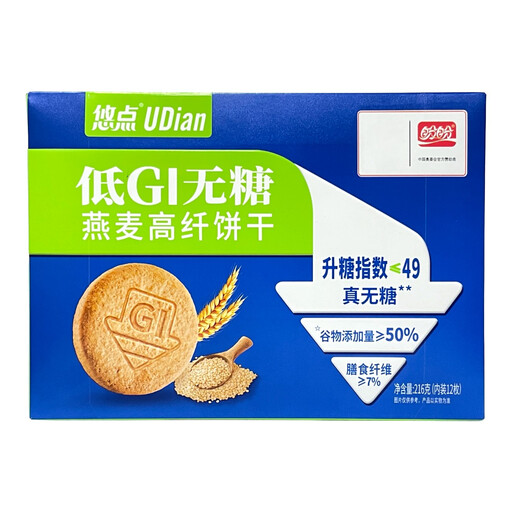
These oat biscuits are worth considering if you’re looking for something to have with coffee. If reducing your sugar intake is your main priority, give the sugar content on the packaging more weight than the product name.
 No image available
An option if you’d like to serve an oat biscuit with coffee and check the ingredients for your guests.
The product name says ‘Sugar-Free’, but the nutritional information listed gives 11.7 g of sugars per 100 g. So don’t assume the biscuit is sugar-free based on its name.
For your guests, check the listed wheat, soya, oats and egg, and read the packaging to find out how much one biscuit weighs.
No. Albert Heijn says its Roomboter reduced-sugar stroopwafels contain 32% less sugar than the regular AH version, but they still have 23 g of sugars per 100 g. So check the nutritional information for the biscuit itself.
No. A product with no added sugar may still contain naturally occurring sugars. Albert Heijn lists Verkade San Francisco Zero as having both 0% added sugar and 1.7 g of sugars per 100 g.
The packaging for some biscuits containing polyols says that excessive consumption may have a laxative effect. Read this warning and the ingredients list for the specific product before putting it out for guests.
Above all, check the ingredients, allergens, portion size and nutritional information for the biscuit you choose. The Voedingscentrum recommends looking beyond the front of the label and reading the ingredients list and nutrition table too.