
A coffee drinker keeping an eye on sugar
Wants to serve a biscuit with an afternoon coffee, so compares the sugars per 100 g with the amount per biscuit. A label such as ‘less sugar’ means something different from ‘no sugars’.


When comparing biscuits to have with coffee, first check the sugar content per 100 g and per biscuit. Then choose between a lower-sugar option and one with no sugars. Biscuits with no sugars may contain polyols, while a lower-sugar biscuit can still contain a significant amount of sugars. Also check the serving size, ingredients and allergens for the option you choose.
Wants to serve a biscuit with an afternoon coffee, so compares the sugars per 100 g with the amount per biscuit. A label such as ‘less sugar’ means something different from ‘no sugars’.
Wants to limit sugar, but also checks the ingredients and warnings. According to the Voedingscentrum, high intakes of polyols can cause flatulence and diarrhoea. The allergens present vary from one biscuit to another.
Prefers a familiar syrup waffle or speculoos biscuit and also wants to compare serving sizes. A lower-sugar option may fit the bill, as long as the remaining sugars per biscuit suit their preferences.
First, distinguish between the sugar content and the claim on the front of the pack. Then check whether the ingredients, allergens and usual serving size suit the occasion.
| What to consider | What to check when buying | Who is this most important for? |
|---|---|---|
| Sugar content | Compare ‘of which sugars’ per 100 g and, if available, per biscuit. Don’t take ‘less sugar’ to mean sugar-free. | If I mainly want to serve less sugar with coffee, the amount in my usual serving should guide my choice. Around 42% of consumers prioritise sugar content. |
| Polyols and allergens | Read the ingredients, allergen information and any warning about a laxative effect. | If I’m sensitive to polyols or need to avoid an allergen, I want to know exactly what this option contains first. This check is the most important factor for around 33% of consumers. |
| Taste and serving size | Check the number of biscuits, the serving size and the nutritional information per serving. | For a coffee break, I want to serve a familiar type of biscuit without losing sight of the size of one serving. This is the first consideration for around 25% of consumers. |
According to Albert Heijn, AH Butter Less Sugar Syrup Waffles contain 32% less sugar than the regular AH version, but still have 23 g of sugars per 100 g. So the comparison on the pack doesn’t tell you everything about the biscuit’s nutritional value.
Compare the ‘of which sugars’ figure per 100 g and per serving before choosing between options.
Albert Heijn states that AH Digestive 0% Sugar contains 0,3 g of sugars, but also 465 kcal per 100 g. A low sugar content on its own doesn’t tell you how much energy a product provides.
Check the energy content as well as the sugars, and decide how many biscuits you’ll serve with coffee.
Product information from Albert Heijn and Jumbo warns that several biscuits containing sweeteners may have a laxative effect if eaten in excess. The Voedingscentrum lists flatulence and diarrhoea as possible effects of a high intake of polyols.
Check the ingredients and the warning on the pack of the option you choose.
A sugar claim says nothing about the allergens present. The ingredients in the biscuits, speculoos and breakfast cake bars mentioned here vary.
Read the allergen information on the exact pack you’re buying, even if you’ve viewed the product online.
These examples show that options with no sugars, lower-sugar options and regular speculoos are different choices. Always compare the specific product, not just the brand.
According to product information from Jumbo and Albert Heijn, Céréal offers biscuits with no sugars in flavours including speculoos and almond, sesame and vanilla, and chocolate chips.
The range in this comparison includes both AH Digestive 0% Sugar and AH Butter Less Sugar Syrup Waffles.
Jumbo Less Sugar Breakfast Cake is a breakfast cake bar, making it a different kind of treat from a crisp biscuit.
Regular Lotus Biscoff Speculoos is included here as a familiar speculoos biscuit for comparison, not as an option with a sugar-reduction claim.
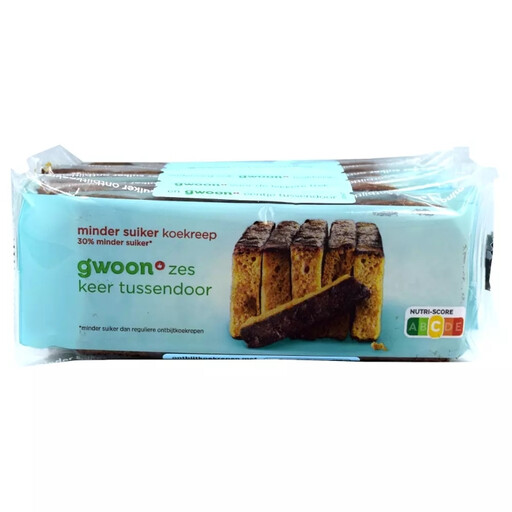
This selection features cookie bars labelled Less Sugar. A cookie bar is different from a crisp biscuit to have with coffee, so compare the serving size and nutritional information before choosing one for your coffee break.
 No image available
This pack of six cookie bars is a good choice if you’d rather serve a bar than a crisp biscuit with coffee. Compare the nutritional information per bar and check the latest allergen information; the Less Sugar label alone doesn’t tell you how much sugar each bar contains.
No. A biscuit with less sugar can still contain sugars. Albert Heijn states that AH Butter Less Sugar Syrup Waffles contain 32% less sugar than the regular AH version, but also 23 g of sugars per 100 g. So check the amount per serving too.
No. The ‘no sugars’ label on its own doesn’t tell you whether a product is right for every older person. The Voedingscentrum emphasises that older people are not a uniform group. For the biscuit you choose, also compare the serving size, energy, ingredients and any warnings about polyols.
Read the ingredients and check the pack for any warning about a laxative effect. According to the Voedingscentrum, high intakes of polyols can cause flatulence and diarrhoea. Product information from Albert Heijn and Jumbo also includes warnings about excessive consumption for several options.