
Less fat per snack occasion
You want to serve nuts for Father’s Day and focus on how much fat you actually eat. Compare the labels per 100 g, then decide on your portion; oven-baking alone doesn’t mean a product is low-fat.


Choose based on the fat content per 100 g and the amount you serve: unsalted or made without added fat does not automatically mean low-fat. For solid foods, the ‘low-fat’ claim applies to products containing no more than 3 g of fat per 100 g, according to the European Commission and the Netherlands Food and Consumer Product Safety Authority; a historic Duyvis claim about less fat referred to a specific coated variety that Albert Heijn listed as discontinued.
You want to serve nuts for Father’s Day and focus on how much fat you actually eat. Compare the labels per 100 g, then decide on your portion; oven-baking alone doesn’t mean a product is low-fat.
You’re looking for plain nuts with little salt and don’t want to confuse salt with fat. Choose based on the ingredients, salt content and flavour you’re after; unsalted doesn’t automatically mean low-fat.
You’re looking for a savoury, crunchy snack and want to know exactly what oven-baking or a reduced-fat claim means. Check the product variety, what the claim is compared with and the salt content. Duyvis describes its Oven Baked Peanuts Original as made without added fat or oil.
A good fit if: you’re specifically looking for a crunchy, coated party snack and want to assess the claim for that particular variety.
Consider: Albert Heijn linked the historic claim of 30% less fat to ordinary peanuts in a crunchy coating, compared with the average in the Netherlands; the page also stated that the variety had been discontinued.
A good fit if: you’re looking for a savoury nut mix and it’s important to you that no fat or oil has been added.
Consider: Duyvis Oven Roasted Noten Mix lists 47 g of fat per 100 g, so dry-roasting doesn’t make this mix low-fat.
A good fit if: you care more about low salt than a reduced-fat claim and want to serve plain nuts.
Consider: AH cashews and Jumbo nut mix list 50 g and 54.7 g of fat per 100 g respectively; both ingredient lists include sunflower oil.
A good fit if: you’re looking for a sweeter mix with nuts and raisins suit the combination you have in mind.
Consider: the PLUS mix examined contains 40% raisins and lists 33.8 g of fat and 26.1 g of sugars per 100 g; it isn’t a pure nut mix.
| What to consider | What to look for when buying | Who might prioritise this? |
|---|---|---|
| Fat content and portion | Compare total fat per 100 g and weigh your portion. Calculate the amount using the label value per 100 g × portion weight / 100. | If I want to know how much fat is in my portion, I first compare products on the same weight basis, then pay attention to how much I serve myself. Around 34% of consumers put fat content and portion size first. |
| Claim and preparation method | Check the full claim, the comparison category it refers to and the ingredients; treat ‘oven roasted’ as a description of how the product is prepared. | If you’re looking for a reduced-fat claim or a product made without added fat, you’ll want to check exactly what the claim is comparing it with. Around 26% of consumers say this is their most important consideration. |
| Salt content | Compare salt per 100 g and check whether you’re looking at plain unsalted nuts or a seasoned or coated snack. | If I want to serve plain nuts with little salt, I’d rather choose based on that detail on the label than on a reduced-fat claim. Around 20% of consumers prioritise salt and the type of snack. |
| Ingredients and allergens | Read the ingredients and allergen information for the exact variety, including warnings about possible traces. | If you’re serving nuts to guests, the ingredients and allergen information may determine which variety is suitable. Around 20% of consumers give these ingredients the greatest importance. |
Duyvis Oven Roasted Noten Mix lists 47 g of fat per 100 g, even though the product description says no fat or oil has been added. For solid foods, the European Commission’s ‘low-fat’ claim applies to products containing no more than 3 g of fat per 100 g.
First compare total fat per 100 g, then treat the preparation method as a separate product feature.
The AH cashews and Jumbo nut mix examined are unsalted, but list 50 g and 54.7 g of fat per 100 g respectively and include sunflower oil in their ingredient lists.
Check salt, ingredients and total fat separately, then choose the feature that matters most for your get-together.
The PLUS mix contains 40% raisins and lists 33.8 g of fat and 26.1 g of sugars per 100 g. Its ingredients therefore differ from those of a pure nut mix.
Check the proportion of dried fruit and the nutritional information before using total fat as your only point of comparison.
The historic AH page for Duyvis Oven Roasted Borrelnoten Herbs&Onion stated ‘discontinued’. This product information doesn’t confirm that it will be available for a future Father’s Day.
When buying, check the current product variety and packaging; don’t use historic claims as information about current stock or availability.
Worth considering for savoury party nuts, oven-baked peanuts and roasted nut mixes; the product type and variety determine what you can compare.
The own-brand range offers a specific unsalted cashew variety for anyone looking for plain nuts.
The own-brand range includes an unsalted mix with various nuts and peanuts.
The Dutch product page lists cashews in unsalted and spicy roasted varieties.
The official product page lists Trader Joe’s roasted, unsalted cashews in a 250 g pack.
The nut and raisin mix examined is an option if you’re looking for a sweet mix rather than nuts alone.
These Joybuy products are a selection of different nut snacks for a get-together. Compare the ingredients and the values listed per 100 g: none of the products shown meets the threshold of no more than 3 g of fat per 100 g for a ‘low-fat’ claim.
 Image unavailable
An option if you’re looking for peanuts with little salt per 100 g.
The ingredient list states 99% peanuts and sunflower oil. The nutritional information lists 50 g of fat and 0.02 g of salt per 100 g; this is not a low-fat product.
Contains peanuts; may contain cashew nuts.
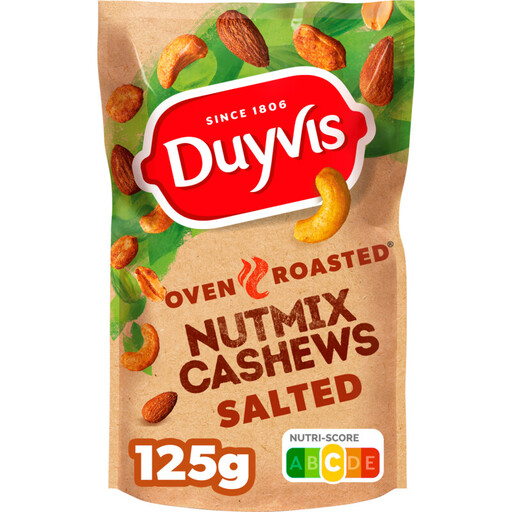 Image unavailable
A roasted mix for anyone looking for a savoury nut snack made without added fat or oil.
The mix contains cashews, peanuts and almonds and lists 47 g of fat per 100 g; this is not a low-fat product.
Contains cashews, peanuts and almonds.
 Image unavailable
An option if you’re looking for plain almonds with no added salt.
The ingredient list states 100% almonds. The nutritional information lists 50 g of fat and 0.00 g of salt per 100 g; this is not a low-fat product.
Contains almonds.
 Image unavailable
An option if you’re looking for roasted cashews with no added salt.
The nutritional information lists 46.67 g of fat and 0.067 g of salt per 100 g; this is not a low-fat product.
Contains cashews.
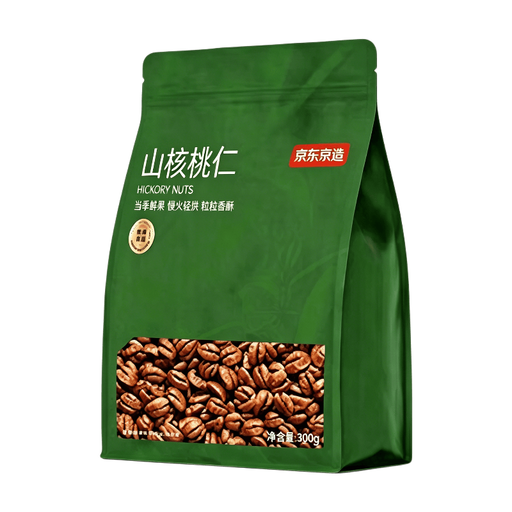 Image unavailable
An option if you like to serve smaller portions; the product description says the portions are individually wrapped.
The nutritional information lists 46.4 g of fat and 1.6 g of salt per 100 g; this is not a low-fat product.
Contains hickory nuts, sugar and salt.
For solid foods, the European Commission’s ‘low-fat’ claim applies to products containing no more than 3 g of fat per 100 g; the Netherlands Food and Consumer Product Safety Authority explains that nutrition claims are covered by European rules. This threshold is per 100 g, not per portion.
For the specific Oven Roasted Borrelnoten Herbs&Onion variety, Albert Heijn stated that the comparison was with ordinary peanuts in a crunchy coating, compared with the average in the Netherlands. So the claim doesn’t compare it with all types of nuts; the AH page also stated that this variety had been discontinued.
Multiply the value on the label per 100 g by the weight of your portion, then divide by 100. For 25 g of Duyvis Oven Roasted Noten Mix, which Jumbo lists as containing 47 g of fat per 100 g, that’s 47 × 25 / 100 = 11.75 g of fat. This calculation is based on the label value.
Store nuts in a cool, dry place in a tightly sealed container, and follow the instructions on the packaging. The Netherlands Nutrition Centre recommends storing them in a cool place, for example at 10 to 15 °C; for the Duyvis mix examined, Jumbo recommends using a light- and airtight container after opening.
Check the ingredients and allergen information for the exact variety and packaging, including warnings about possible traces. Ingredients vary by product: the PLUS mix examined lists peanuts and sulphites, among other ingredients, while historic product information for the Duyvis Herbs&Onion variety stated that it contained peanuts and wheat/gluten.