Who is this guide for?

Less fat, but still nuts

This is for you if you want to limit the amount of fat in your snack and are happy to choose a different type, preparation method or portion size. Compare the nutritional values on the label; words such as ‘unroasted’ don’t tell you how much fat is in the product. PLUS, Jumbo and the European Commission provide information to help you assess ingredients and fat levels.

Protein-focused snackers

This is for you if protein is your priority, but you also want to know how much fat you’ll get in your portion. Compare protein and fat on the same basis, for example per 100 g. Product information from PLUS and Jumbo shows why it’s important to check the exact variant.

Planning your daily portion

This is for you if you eat nuts regularly and want to fit a measured portion into your diet. Voedingscentrum information includes unsalted nuts in the Wheel of Five; the nutrients you get also depend on how much you eat.

What should you look for when buying?

What to consider What should you check? Who is this most relevant to?
Fat per portion Compare the fat per 100 g, then work it out for the portion you eat. If I want to eat less fat, I look at the nutritional values, not just whether the nuts are ‘unroasted’. Around 34% of consumers prioritise limiting fat.
Protein alongside fat Check protein and fat per 100 g side by side, and use the same portion size for both. If protein is my snack goal, I also want to know how much fat I’ll get with it. Around 33% of consumers prioritise protein intake.
Portion size Weigh your portion; multiply the values per 100 g by the portion weight divided by 100. If I eat nuts regularly, measuring out a portion in advance helps me apply the nutritional values to what I actually eat. Portion planning is the main priority for around 20% of consumers.
Preparation and label Check the ingredients, salt and allergen information for the exact variant. If I’m watching out for added oil, salt or allergens, I check the packaging rather than relying on the type name. Preparation and ingredients are the main priority for around 13% of consumers.

Common buying mistakes

  • Confusing a preparation claim with low fat content

    ‘No added oil’ doesn’t tell you how much naturally occurring fat the nuts contain.

    Check the fat per 100 g alongside the ingredients list for the exact variant.

  • Assuming a smaller portion provides the same amount of protein

    With the same nuts, both the fat and protein you get decrease when you eat less.

    Recalculate both nutritional values for your own portion.

  • Using general values for an entire type of nut

    Products of the same type can have different ingredients and nutritional values.

    Use the information for the exact variant you’re considering, not just the name ‘cashews’ or ‘peanuts’.

Brands to compare by product range

Duyvis

The product ranges described include unsalted peanuts and Oven Baked Peanuts Original, catering to different preferences around salt and preparation.

  • Duyvis describes Oven Baked Peanuts Original as prepared without added oil or fat.
  • This is a preparation claim from the manufacturer, not proof that the product is low in fat. The unsalted peanuts described contain sunflower oil.

Albert Heijn

The listing for Duyvis Oven roasted peanuts original is useful if you want to check the nutritional values for that specific variant.

  • The Albert Heijn listing shows nutritional values per 100 g.
  • Use these values for the variant named and don’t confuse them with information about other Duyvis products.

Jumbo

The cashew variants described let you check the ingredients and preparation method for each product.

  • The unroasted variant reviewed lists cashews as its only ingredient.
  • The other variant described also contains sunflower oil. Nutritional values vary between exact variants.

ALDI

ALDI’s range information includes cashews, almonds, walnuts and Brazil nuts, both salted and unsalted.

  • The types listed give you a starting point for exploring different nuts.
  • The range information doesn’t show that these types are low in fat or have the same ingredients.

PLUS

PLUS Unsalted Unroasted Cashews is worth considering if you’re looking for a product whose ingredients list names cashews only.

  • The product listing names cashews as an ingredient.
  • The packaging states that the product may contain peanuts. Check the allergen information on the exact packaging.

Nut products at Joybuy

This Joybuy selection includes peanuts, cashews and chestnut kernels. Compare the listed fat and protein values per 100 g for each variant; product names and ingredients differ.

Verse Extra Large roasted peanuts, 210 g

Verse Extra Large Roasted Peanuts, 210 g

An option if you’re looking for roasted, unsalted peanuts and want to assess the protein and fat values together.

The product description lists 100% peanuts, 26 g protein and 50 g fat per 100 g.

View at Joybuy

Jiazhouyuanye Original Flavour Large Cashew Nuts, 160 g

Jiazhouyuanye Original Flavour Large Cashew Nuts, 160 g

An option if you want to assess a cashew product with a simple ingredients list.

The product description lists 100% cashews, 19.8 g protein and 47.7 g fat per 100 g.

View at Joybuy

g’woon Cashew Nuts Roasted & Unsalted, 200 g

g’woon Cashew Nuts Roasted & Unsalted, 200 g

An option if you’re looking for roasted, unsalted cashews and want to compare the nutritional values of each variant.

The product description lists cashews as an ingredient, 18.67 g protein and 46.67 g fat per 100 g.

View at Joybuy
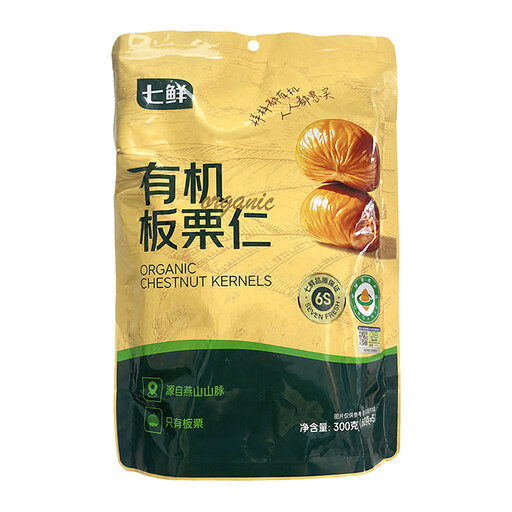
7FRESH Chestnut Kernels, 300 g

7FRESH Chestnut Kernels, 300 g

An option to consider if a lower fat value matters more to you than a high protein content.

The product description lists chestnut, 0.0 g fat and 4.7 g protein per 100 g.

View at Joybuy

g’woon Peanuts in Shell, 500 g

g’woon Peanuts in Shell, 500 g

An option if you want to compare peanuts with a high protein value while also taking their fat content into account.

The product description lists 29 g protein and 49 g fat per 100 g. The peanuts are raw; the description recommends roasting them before eating as a snack.

View at Joybuy

Frequently asked questions

Do unroasted nuts or nuts with no added oil count as low in fat?

No. The unroasted cashews reviewed from PLUS and Jumbo contain 46.5 and 48.1 g fat per 100 g respectively. For solid foods, the European Commission defines a ‘low fat’ claim as a maximum of 3 g fat per 100 g. So the preparation method alone doesn’t tell you how much fat a product contains.

How do I work out the nutritional values for my portion?

Multiply the values per 100 g by your portion weight divided by 100. For the Duyvis Unsalted Peanuts reviewed, Jumbo lists 52 g fat and 27 g protein per 100 g. A 25 g portion therefore contains 13 g fat and 6.75 g protein.

Can I choose cashews if I have a peanut allergy?

Don’t assume that you can. The PLUS Unsalted Unroasted Cashews reviewed state that the product may contain peanuts. Check the allergen information on the exact packaging; the product name alone can’t guarantee that it’s safe for you.

Which specific product recall warnings are relevant?

On 20 May 2026, the NVWA issued a warning about ALDI Trader Joe’s unsalted cashews, 170 g, barcode 2003020120930, with a best-before date of 23-09-2026, due to possible metal fragments: do not eat this product. The stated best-before date has now passed, but that doesn’t prove that a pack you still have is safe. On 20 May 2026, Albert Heijn announced a recall of AH Extra Large Salted Peanuts in a tub with a best-before date of 04-11-2026; Albert Heijn said customers could get a refund by returning the product.

How should I store an opened bag of nuts?

Follow the instructions on the label. The Duyvis Unsalted Peanuts product page recommends storing them in a cool, dry place and keeping an opened bag in a light-proof, airtight container.
