What should you look for when buying?
Distinguish between fat per 100 g, the amount you eat per portion and the snack format that’s right for your guests. For solid foods, the European Commission sets the threshold for a ‘low fat’ claim at no more than 3 g of fat per 100 g.
| What to consider |
What to look for |
Who is this most relevant to? |
| Less fat or low fat |
Read the full claim and what it’s based on; compare fat per 100 g. |
If I want less fat, I check what the claim is based on and how much fat the product contains. Around 36% of consumers prioritise reducing the fat content of products. |
| Suitable for your guests |
Choose an appropriate format for children under four; check the ingredients and allergen information. |
If young children or guests with a relevant allergy are coming along, I want to choose a snack that’s suitable for them. Around 29% of consumers prioritise suitability for their guests. |
| Portion size and salt |
Compare fat and salt per 100 g and per weighed portion; unsalted isn’t a claim about fat. |
If I want to serve regular unsalted nuts, I prefer to weigh out the portion myself rather than mistake ‘unsalted’ for ‘low fat’. Around 21% of consumers prioritise portion control and unsalted snacks. |
| Packaging and preparation |
Check the pack size and portioning; follow the storage instructions after opening. |
If I want to serve or prepare snacks in advance, I check whether there are individual portions and how much preparation is needed. Around 14% of consumers prioritise serving convenience and practical preparation. |
Chestnut products at Joybuy
These ready-to-eat chestnuts are an alternative to regular nut snacks. Compare the stated fat content per 100 g and see which pack size suits your snack occasion.
 No image available
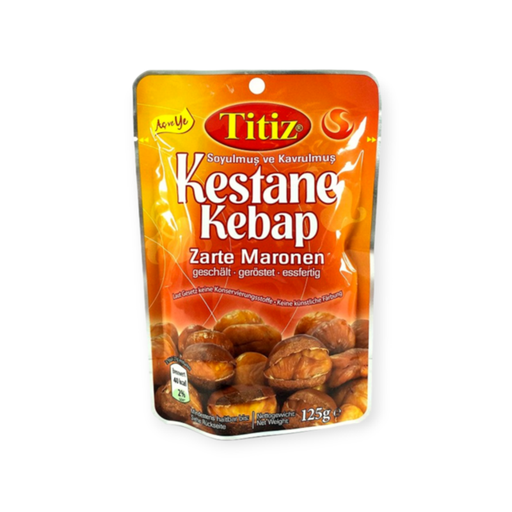
Titiz Roasted Chestnuts 125 g
Peeled, roasted chestnuts are a good choice if you’re looking for a ready-to-eat chestnut snack.
The product information lists 1,4 g of fat, 170 kcal and 0,01 g of salt per 100 g. Ingredients: 100% chestnuts. Pack size: 125 g.
View at Joybuy
 No image available
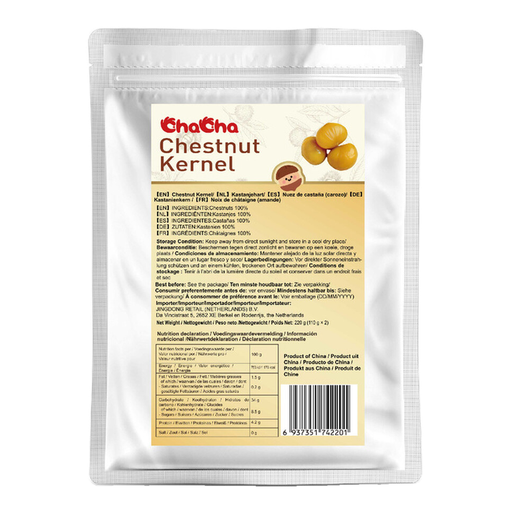
ChaCha Chestnut Kernels 220 g
Chestnut kernels are a good option if you want to portion a ready-to-eat snack into individual servings.
The product information lists 1,5 g of fat, 178 kcal and 0 g of salt per 100 g. Ingredient: chestnut. Pack size: two 110 g portions.
View at Joybuy
 No image available
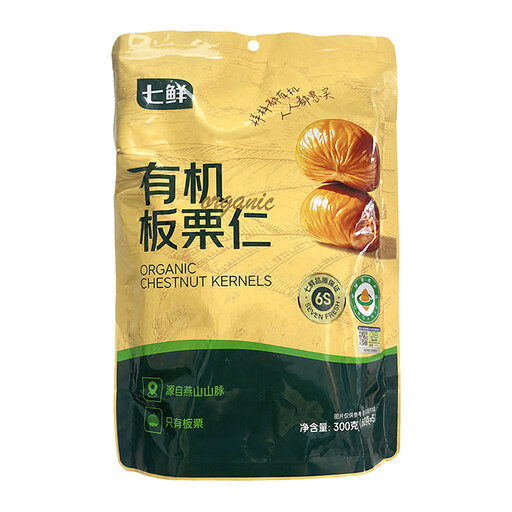
7FRESH Chestnut Kernels 300 g
These chestnut kernels are a good choice if you’re looking for a ready-to-eat snack and want to portion it yourself.
The product information lists 0,0 g of fat, 185 kcal and 0,0 g of salt per 100 g. Pack size: 300 g.
View at Joybuy
 No image available
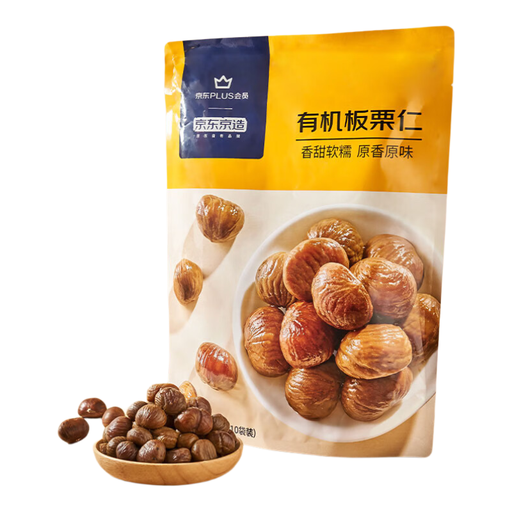
J.ZAO S++ Grade Whole Chestnuts, 1 kg (10 bags)
According to the product name, these peeled chestnuts are ready to eat and come in individual bags.
The product information lists 1,7 g of fat, 191 kcal and 0 g of salt per 100 g. Pack size: ten 100 g bags.
View at Joybuy
 No image available
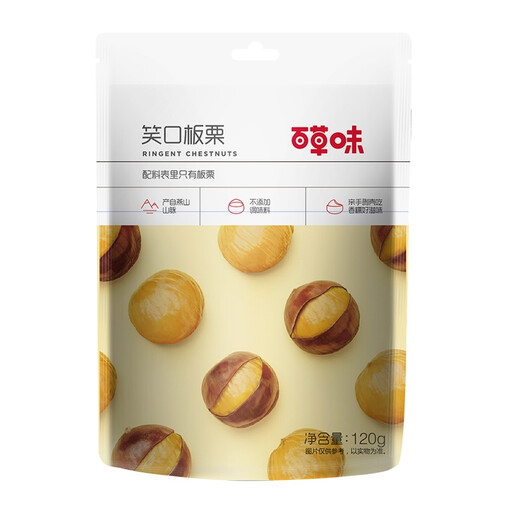
Be&Cheery Smiling Chestnuts 120 g
These pre-cut chestnuts are individually packed, making them a good choice if you want to serve ready-to-eat portions.
The product information lists 1,2 g of fat, 196 kcal and 0,01 g of salt per 100 g. Ingredients: chestnut and sugar. Pack size: 120 g.
View at Joybuy
Frequently asked questions
Are unsalted cashews automatically low in fat?
No. For solid foods, the European Commission sets the threshold for a ‘low fat’ claim at no more than 3 g of fat per 100 g. The checked PLUS product lists 46,5 g of fat per 100 g, so ‘unsalted’ describes a different quality.
Does ‘no added oil’ mean the same as less fat?
No. ‘No added fat or oil’ doesn’t in itself mean that the total fat content is lower than that of a comparable product. Compare the nutritional information and read the full claim.
Can I serve whole nuts to children under four?
MDL Fonds advises against giving whole nuts to children under four because of the risk of choking. Choose a different format that suits the ingredients the child can eat; any allergies should be checked separately.
Where can I check allergens in packaged nut snacks?
Read the allergen information on the specific pack. The NVWA states that allergen information must appear on the label of pre-packed products; if there’s a relevant allergy, check the ingredients for the specific variant too.
How do I compare a portion with the nutritional values per 100 g?
First, compare products using the same basis shown on the label, then weigh the portion you want to serve. The value per 100 g describes the product; the amount of fat, energy and salt in a portion depends on how much you eat. Also check whether the values apply to the product before or after preparation.


