Choose dried fruit based on its declared total fat per 100 g, and decide in advance how much to take with you. For solid foods, the European Commission defines low fat as no more than 3 g of fat per 100 g; this does not prove that a product contains less fat than similar products. Check sugar, energy and ingredients too: the Netherlands Nutrition Centre recommends eating no more than 20 g of dried fruit a day.
Who might find this choice relevant?
People keeping an eye on fat
You want to check the declared total fat per 100 g and distinguish between a low fat content and a comparison with similar products. For solid foods, the European Commission sets the threshold for a low-fat claim at no more than 3 g of fat per 100 g.
People who want to control their portion
You’re looking for a small, sweet addition to your lunchbox and want to consider sugar, energy and how much you take with you, as well as fat. The Netherlands Nutrition Centre recommends eating no more than 20 g of dried fruit a day.
People who like to prepare lunch practically
You’re choosing between weighing out a portion yourself and taking a product in small boxes. Follow the storage advice on the packaging too; Albert Heijn and PLUS recommend storing the raisins included in the research in a cool, dry, dark place.
What should you look for when choosing?
For an office lunch, fat per 100 g is just one factor to consider: portion size, packaging and ingredients can also matter.
| What to consider |
What to look for |
Who might find this more relevant? |
| Total fat |
Check the total fat per 100 g. A low fat content is not the same as a proven reduction compared with similar products. |
If I want to check fat content first, I look at the nutritional values per 100 g. This is the top priority for around 31% of consumers. |
| Portion, sugar and energy |
Weigh the amount you’re taking with you and check the nutritional values for that exact portion. |
If I want to know how much sugar and energy my lunch snack contains, I check both the portion size and the product’s nutritional information. Around 25% of consumers make this their top priority. |
| Easy to take with you |
Check the number of portions, the weight of each box and the storage advice. |
If I want to take a small snack without weighing it out, individually portioned packaging matters. This convenience is the top priority for around 19% of consumers. |
| Ingredients and allergens |
Read the ingredients list and allergen information on the packaging you’re buying. |
If I have a food sensitivity, I want to check the ingredients and warnings for the specific product. This is the top priority for around 13% of consumers. |
| Pack size |
Compare the net weight with how much you plan to use, and follow the storage instructions. |
If I’m considering a larger pack, I want to know how much it contains and how to store it. This is the most important factor for around 12% of consumers. |
Common pitfalls
-
Confusing low fat with reduced fat
A low declared fat content does not prove that a product contains less fat than similar products.
If you’re choosing based on fat, use the nutritional values per 100 g. Don’t present a product as reduced fat unless you can substantiate the comparison.
-
Assuming no added sugar means low in sugar
AH Raisins state 0 g of added sugar, but contain 59 g of total sugars per 100 g.
Check both the total sugars and the amount you’ll actually be taking with you.
-
Assuming the portion on the pack is the daily recommendation
The AH Raisins included in the research list a portion size of 50 g; the Netherlands Nutrition Centre recommends eating no more than 20 g of dried fruit a day.
Weigh your lunch portion and include any other dried fruit you eat that day in your total.
Brands to consider
Albert Heijn
The own-brand products included in the research include raisins and a raisin and apricot mix in small boxes.
- The product pages provide nutritional values and portion information; the mix contains 10 boxes of 14 g each.
- The mix included in the research lists sulphites. The declared 50 g portion for the raisins is not the same as the Netherlands Nutrition Centre’s recommendation for a daily amount.
Jumbo
The variety included in the research consists of dried, pitted apricots in a 250 g pack.
- The product information gives nutritional values per 100 g and per 20 g portion.
- The apricots list sulphites and may contain nuts, peanuts and sesame. Jumbo warns that, on rare occasions, fragments of stones may be present.
Lidl
Lidl sells dried fruit under the Alesto brand, including mango strips; its shop page for dried fruit from southern regions lists several varieties.
- Lidl describes its mango strips as having no added sugar and states that the sugars are naturally present.
- This description does not substantiate a reduced-fat claim. Lidl says the dried fruit from southern regions mentioned is available in store.
ALDI
The ALDI pages included in the research list Trader Joe’s raisins in a 500 g pack and sun-dried apricots in a 250 g pack.
- The product pages confirm the product type and pack size.
- Describing the apricots as soft is a retailer’s description and, by itself, says nothing about their fat content.
PLUS
The Sultana raisins included in the research come in a 375 g stand-up pouch.
- PLUS lists raisins and sunflower oil as ingredients, and states 0 g of added sugar.
- PLUS warns that small sticks and stones may be present. The retailer says that product information and local pricing may change.
Dirk
The 1 de Beste Apricots included in the research come in a 375 g pack.
- The product page confirms the product identity and pack size.
- Dirk describes the apricots as soft and flavoursome, but this does not substantiate a nutritional claim.
Dried fruit at Joybuy
These Joybuy products are examples of dried fruit for a lunch snack. Compare the declared fat, sugar information and ingredients for each variety with what you’re looking for.
 No image available
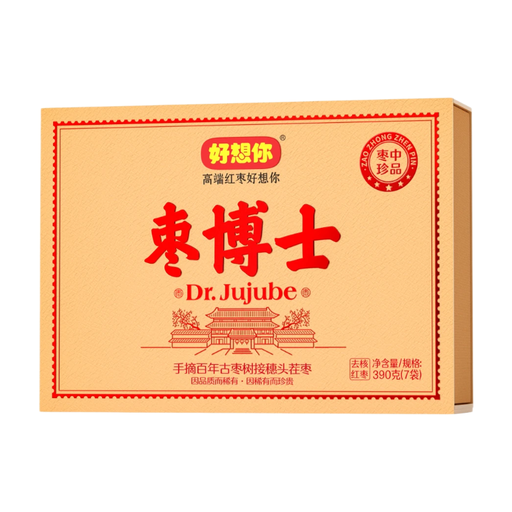
Haoxiangni Dr.Jujube Premium Gold-Grade Pitted 390g
An option if you’re looking for a ready-to-eat jujube snack.
Declared total fat: 0 g per 100 g. Sugars: 50 g per 100 g.
Joybuy
 No image available
Zohra Medjool dates M 908g
An option if you want to take pitted Medjool dates with you as a snack.
The product description says they’re pitted and can be eaten straight away.
Joybuy
 No image available
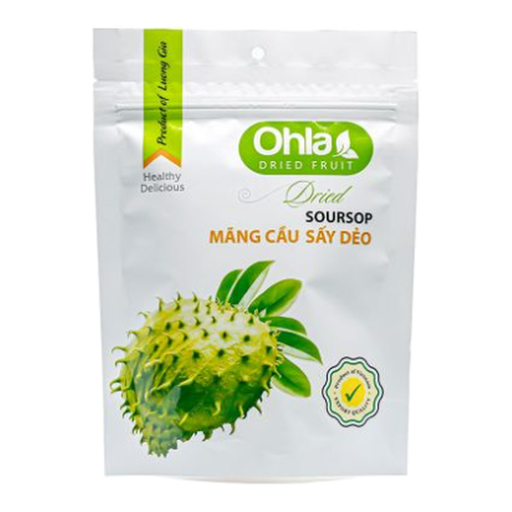
OHLA dried soursop 180g
An option if you’re considering dried soursop as a lunch snack.
Declared total fat: 2,21 g per 100 g. The ingredients list white sugar, glucose and sodium metabisulphite.
Joybuy
 No image available
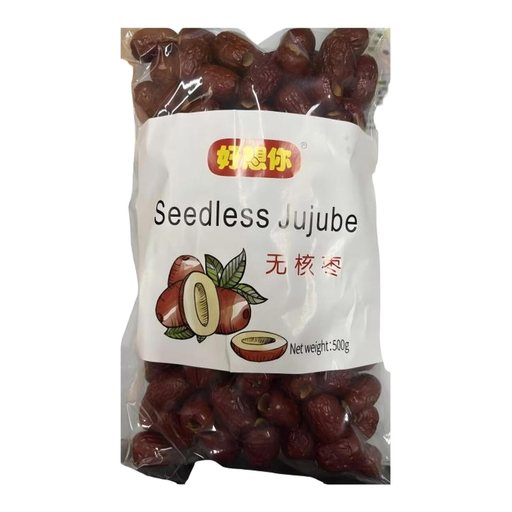
Haoxiangni pitted jujubes 500g
An option if you’re looking for ready-to-eat, pitted jujubes.
Declared fat: 0,5 g per 100 g. The product description states 60 g of sugar per 100 g.
Joybuy
 No image available
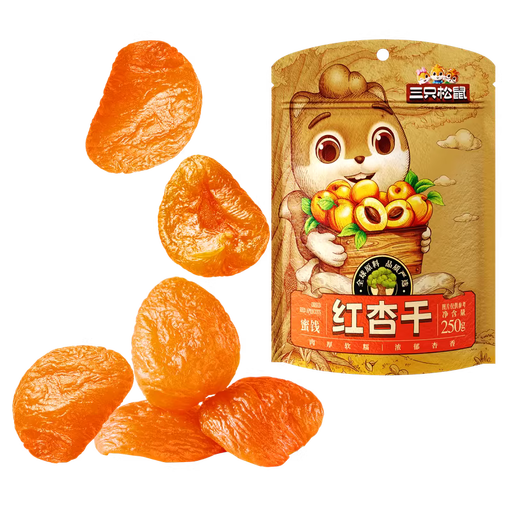
Three Squirrels dried red apricots 250g
An option if you’re looking for ready-to-eat dried apricots for your lunchbox.
Declared fat: 0 g per 100 g. The ingredients list sugar, maltose syrup and sulphites; the nutrition table states 62 g of sugars per 100 g.
Joybuy
Frequently asked questions
Does low fat mean a product is low in calories?
No. The European Commission sets separate conditions for low-fat and low-energy claims. So check the energy content for the amount you’ll be taking with you too.
Is the portion shown on the packaging automatically the recommended daily amount?
No. AH Raisins list a portion size of 50 g, while the Netherlands Nutrition Centre recommends eating no more than 20 g of dried fruit a day. Consider the recommendation alongside the product’s nutritional information.
What should I look out for if I have a food sensitivity?
Read the ingredients and allergen information on the specific pack. The Jumbo apricots included in the research contain sulphites and may contain nuts, peanuts and sesame; the AH Hamsterchef mix included in the research also lists sulphites.
Are pitted apricots guaranteed to be free of stone fragments?
No. Jumbo warns that a piece of stone or stone fragments may occasionally be present, even in the pitted apricots included in the research.
Which claim conditions are relevant when comparing dried fruit?
For solid foods, the European Commission sets the threshold for a low-fat claim at no more than 3 g of fat per 100 g. The Netherlands Food and Consumer Product Safety Authority (NVWA) points out that voluntary food information must not be misleading, confusing or ambiguous. A low fat content alone does not prove a reduction compared with similar products.


