
Rye bread toaster
You want to know whether your larger or thicker slices will fit and whether you can adjust the browning. A capacity figure based on standard slices doesn’t tell you whether your rye bread will fit in the slot.


First, measure your usual slices of rye bread and the space available on your worktop: a long exterior doesn’t guarantee that a wide or thick slice will fit in the slot. A single long slot is a sensible option if you usually toast only a small amount of bread at a time; two long slots are worth comparing if you often want to toast several slices at once. Capacity claims and browning settings alone don’t prove which model toasts rye bread better.
You want to know whether your larger or thicker slices will fit and whether you can adjust the browning. A capacity figure based on standard slices doesn’t tell you whether your rye bread will fit in the slot.
You’re short on worktop space, so you compare the appliance’s dimensions and where it will go before opting for extra capacity. Remember to allow enough clear space for heat to escape, too.
You regularly toast bread from frozen or several slices in a row. Look at the defrost function, browning control, capacity and how easy it is to remove the crumbs.
Start with how your bread will fit and the space available. Then consider how many slices you want to toast at once and which settings you’ll use.
| What to consider | What to check when buying | Who is this important for? |
|---|---|---|
| Will my rye bread fit? | Measure the length, width and thickness of your usual slice. Ask for the usable slot dimensions if they aren’t listed. | I want to know whether my wide or thick slice will fit before considering extra features; around 36% of consumers put fit first. |
| Worktop space | Compare the length, width and height with the space available, and follow the placement instructions. | If my worktop is short on space, I want to know in advance where the appliance can go and how it can release heat; around 29% of consumers put worktop space first. |
| Adjustable browning | Check the browning settings and whether the model has a defrost function if you toast bread from frozen. | I want to be able to adjust the setting to suit the bread I’m toasting; around 21% of consumers give adjustable toasting results top priority. |
| Capacity and crumbs | Compare one long slot with two, and check whether there’s a removable crumb tray. Check separately whether larger slices will fit. | If I make several slices in a row, I want to know how many fit at once and how to remove the crumbs; around 14% of consumers prioritise capacity and maintenance. |
A toaster that’s around 40 cm long doesn’t necessarily have a slot that will fit your wide or thick slice.
Measure your bread and ask for the usable internal dimensions of the exact model before you choose.
In its toaster test, the Dutch Consumers’ Association notes that price and speed say little about toasting results. The test doesn’t compare these models using rye bread.
Think of the settings as adjustment options, not a quality score. For an assessment of performance, look for a test using the bread you eat.
In the Netherlands, there’s no fixed statutory two-year guarantee period. Your legal rights if a product is faulty are separate from any manufacturer’s warranty.
If there’s a fault, contact the seller and check what additional terms apply to the manufacturer’s warranty.
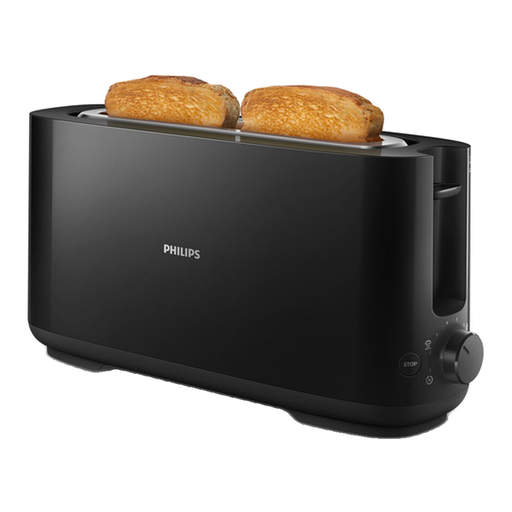
Philips describes the Daily Collection HD2590/90 as a long-slot toaster. Its stated external dimensions are 12 × 40,2 × 19 cm.
Princess describes the 142353 as a model with one long slot, designed to fit one larger slice or two standard slices.
Braun describes the Identity 2 HT5220 as having two extra-long slots and capacity for up to four standard slices. Its stated external dimensions are 40,4 × 16,5 × 18,8 cm.
Severin describes the AT 2509 as having two long slots and capacity for up to four standard slices. Its stated dimensions are 18,5 × 39,7 × 15,7 cm, in height × width × depth order.
Compare these toasters by capacity, slot type and settings. For your rye bread, always check the usable opening and the space available on your worktop.
 No image available
A long-slot model worth comparing if you want to toast a larger slice; check the usable opening first.
Philips lists eight browning settings, a defrost function and a removable crumb tray. The external dimensions are 12 × 40,2 × 19 cm.
 No image available
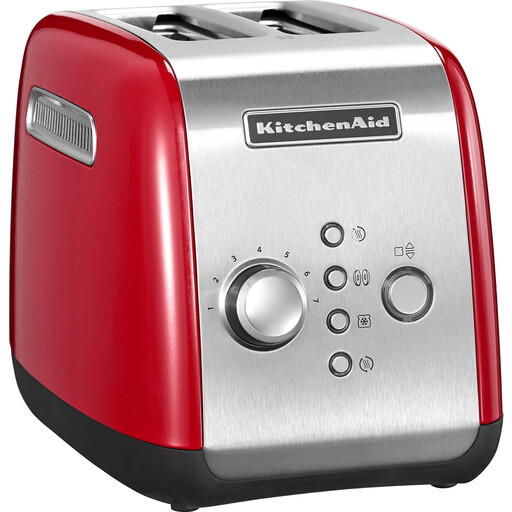
The stated capacity for two slices may suit smaller batches; check whether the slot can accommodate your rye bread.
The product variant has extra-wide slots and seven browning settings. Extra width alone doesn’t confirm that a particular slice will fit.
 No image available
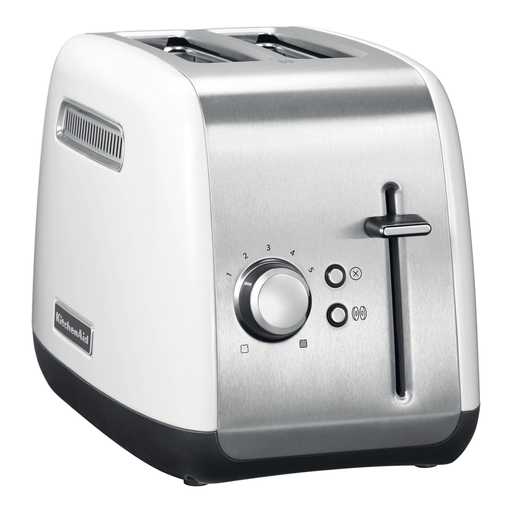
A two-slice model to compare if you usually make smaller batches; check the slot dimensions against your bread.
The product variant has a bagel setting and a high-lift lever.
 No image available
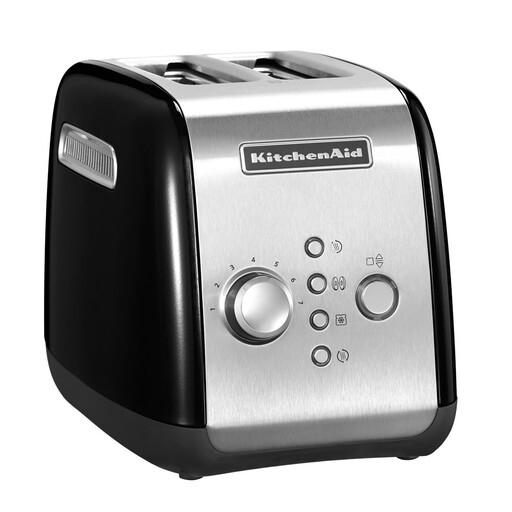
The two-slice capacity may suit you if you toast only a little bread at a time; measure the opening against your rye bread.
The product variant has extra-wide slots and seven browning settings.
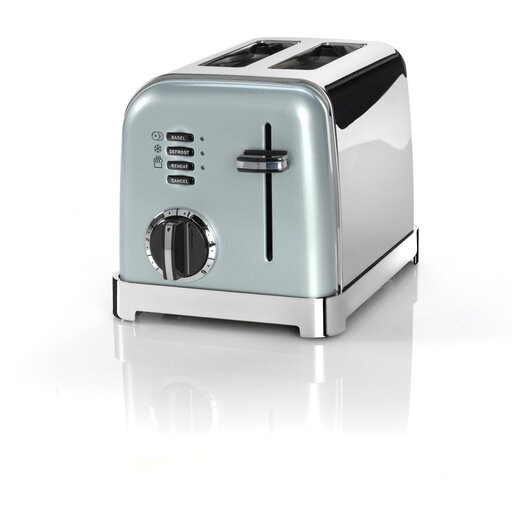 No image available
The two-slice capacity may suit smaller batches; before choosing, check that your rye bread will fit in the slots.
This variant is finished in green.
No. Measure your usual slice and check the usable length and width of the opening on the exact model. External dimensions and capacity for standard slices aren’t a substitute for this.
Follow the clearance instructions in your model’s manual and make sure the appliance can release heat. The Netherlands Fire Service emphasises the importance of heat dissipation around electrical appliances, so fitting it into the available space isn’t enough on its own.
Check whether the exact model has a removable crumb tray, and follow the manual for emptying and cleaning it. The Philips HD2590/90 and Princess 142353 both list a tray; this doesn’t establish a universal cleaning interval.
According to the Dutch Government, you have legal rights in the Netherlands if a product is faulty, and the seller must provide an appropriate solution. There’s no fixed statutory two-year guarantee period; any manufacturer’s warranty is separate from those rights.
The Netherlands Food and Consumer Product Safety Authority says that new electric toasters covered by the applicable Commodities Act Decree on Electrical Equipment must carry a CE marking. The relevant low-voltage rules apply to electrical equipment with a rated AC voltage of 50 V to 1000 V. Check the marking and accompanying documentation for the exact model.