
Student using required modelling software
Wants to check first whether their course software runs locally on their chosen operating system and processor. AnyLogic and Esri publish system requirements for their software.


Start with the software required by your course and check that it works with your laptop’s operating system and processor. AnyLogic lists Windows x64 and certain macOS platforms as supported; for ArcGIS Pro, check the system requirements for the version you’ll be using. Then compare the exact configuration for screen size, memory, storage, ports and the conditions behind battery life figures.
Wants to check first whether their course software runs locally on their chosen operating system and processor. AnyLogic and Esri publish system requirements for their software.
Needs a laptop that’s easy to carry, but also enough room to work on study projects. Compare the screen size and weight of the exact configuration.
Looks at memory, storage and screen space for local work. For example, Lenovo lists expandable memory for the ThinkPad E14 Gen 7 (AMD), model 21T00050MB; these features don’t automatically apply to other configurations.
A good fit if: you often travel between lectures and need Windows software. For model 21T00050MB, Lenovo lists a 14-inch screen and two memory slots, among other features.
Trade-off: a smaller screen gives you less space than a 16-inch model; check the weight and battery life for the specific configuration.
A good fit if: you mainly work with large spreadsheets or several model windows and want more screen space.
Trade-off: a larger laptop is less compact to carry around. Microsoft describes x86 and x64 app emulation in Windows 11 on Arm, but this doesn’t confirm that a particular study app will work.
A good fit if: your course allows macOS and the required software runs on it. AnyLogic lists certain macOS versions, including ARM, as supported.
Trade-off: check each programme individually; the Esri documentation consulted for ArcGIS Pro lists Windows. Apple’s battery life figures are based on specific video and internet tests, not model simulations.
| What to consider | What should you check? | Who is this important for? |
|---|---|---|
| Software compatibility | Ask for your course’s software list, including programme names and versions; check the operating system and processor architecture. | If my course requires specific modelling software, I want to know in advance whether it will work on my chosen laptop. Around 31% of consumers put compatibility with required software first. |
| Carrying it between lectures | Compare the weight, screen size, required power supply and test conditions behind battery life figures. | If I often take my laptop with me, I want a size that suits my workspace and bag. Around 25% of consumers rank portability as their top priority. |
| Local modelling work | Compare the software and project file requirements with the exact RAM, SSD and screen configuration; check whether the memory is expandable. | For anyone working with models and data locally, memory, storage and screen space all matter. Around 25% of consumers prioritise local modelling work. |
| Purchase and servicing | Compare the same model code and configuration, including the power supply and service terms; consider any extra warranty alongside your statutory rights. | If I want to weigh up the total purchase and service costs, I check what’s included with the exact configuration. Around 19% of consumers put purchase and service costs first. |
Support varies by programme. General emulation in Windows on Arm doesn’t confirm that a particular application or its associated components will work.
Ask your course provider for the programme name and version, then check the official requirements before choosing a configuration.
Apple’s stated battery life is based on specific video and internet tests, not on running logistics models.
Compare battery life figures only alongside their test conditions, and make sure you can charge your laptop if you’ll be doing calculations locally.
The model code, keyboard layout, configuration and included power supply can vary between versions. Lenovo lists a Belgian keyboard for model 21T00050MB; check the version on offer.
On the product page, check the full model code, keyboard layout, configuration and box contents.
If no power supply is included, you’ll need to arrange one separately; a different keyboard layout may also be less practical.
The ThinkPad E14 Gen 7 (AMD) is a compact Windows option worth comparing if ports and expandability matter to you.
The ProBook 4 G1ah 14 is a compact Windows range to consider if business service terms are important.
The configurable Dell 14 Plus is worth considering if you want to carefully tailor the combination of screen, storage and keyboard.
The 13-inch MacBook Air with M5 is a compact macOS option if your course supports the required programmes on macOS.
This selection includes compact and larger Windows laptops for study projects involving models and spreadsheets. Before buying, check that the required software works with the operating system and processor architecture of your chosen configuration.
 No image available
The 16-inch version gives you a larger screen for documents and spreadsheets; check whether 8 GB of memory is enough for the software and projects you use.
WUXGA screen with a 16:10 aspect ratio, AMD Ryzen 5 7520U, 8 GB onboard memory, 512 GB SSD and Windows 11 Home. The memory can’t be upgraded. A charger isn’t included.
 No image available
The 14-inch size and stated weight of around 1.42 kg make it suitable for carrying between lectures; also consider whether the screen space works for you.
IPS screen with a 1920 × 1200 resolution, AMD Ryzen 5 7520U, 8 GB onboard memory, 512 GB SSD and Windows 11 Home. The memory can’t be upgraded. USB-A, USB-C and HDMI are listed; a charger isn’t included.
 No image available
The 16-inch WUXGA version gives you room for models and spreadsheets; first check that your course software works with the Snapdragon X processor.
WUXGA screen with a 16:10 aspect ratio, Snapdragon X processor, 16 GB LPDDR5X, 512 GB SSD and Windows 11 Home. Microsoft describes x86 and x64 emulation in Windows 11 on Arm, but this doesn’t confirm that a particular study application will work.
 No image available
The 13.8-inch size and stated weight of 1.34 kg are worth considering if you often carry your laptop around; check the processor’s software compatibility.
Touchscreen with a 2304 × 1536 resolution, 16 GB memory, 512 GB SSD and Windows 11 Pro. Microsoft describes x86 and x64 emulation in Windows 11 on Arm; check separately that the required programmes and peripherals work.
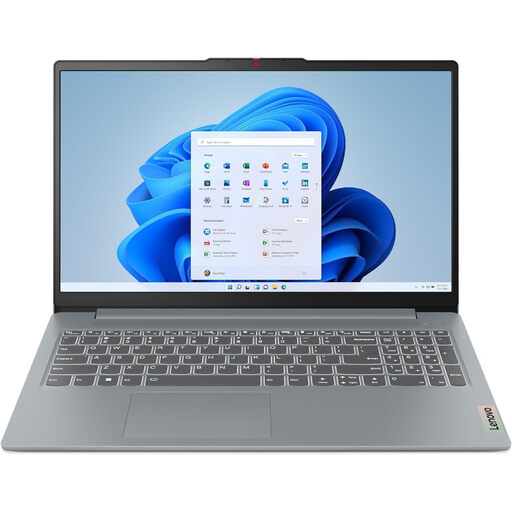 No image available
The 15.3-inch screen gives you room for spreadsheets and model windows; bear in mind the stated starting weight of 1.63 kg when carrying it around.
WUXGA IPS screen with a 16:10 aspect ratio, Ryzen 7 8840HS, 16 GB DDR5 memory and a 512 GB SSD. An extra M.2 slot for storage expansion is listed; this version comes with Windows 11 Home.
Not for every modelling programme. AnyLogic lists Windows x64 and certain Macs as supported platforms. If your course requires ArcGIS Pro, check the system requirements for the version you’ll be using; the Esri documentation consulted lists Windows. Ask for the full software list first.
According to Microsoft, Windows 11 on Arm can emulate x86 and x64 apps, but that doesn’t prove that a particular modelling application, add-on or peripheral will work. Check compatibility with the software required by your course before choosing.
Compare the exact laptop configuration with the official system requirements for the software version used by your course. Also check that any peripherals you need are compatible with the ports on that configuration.
No. According to ACM ConsuWijzer, in addition to any seller’s warranty, you’re entitled to a statutory guarantee for as long as you could reasonably expect the product to work properly. Under that guidance, if a fault occurs during normal use, the seller must offer an appropriate solution at no cost.
According to ACM ConsuWijzer, online purchases of products generally come with a statutory 14-day cooling-off period after delivery. Also read the seller’s information about trying out and returning the product; this is separate from your statutory guarantee if the product is faulty.