
Local app developer
You write code on your own computer and want to assess the layout, symbols and basic operation without relying on web app-based key configuration for your core work.


Start by considering the physical layout, then test the programming symbols and shortcuts you actually use. For local work without cloud tools, a wired keyboard is a straightforward starting point; compact layouts, adjustable split halves and extra key functions each involve their own trade-offs. Check whether remapping or other extras depend on software or a web app before you rely on them in your workflow.
You write code on your own computer and want to assess the layout, symbols and basic operation without relying on web app-based key configuration for your core work.
You want to be able to adjust your hand position and workspace, and consider taking breaks from screen work as well as choosing a keyboard.
You sometimes work at a different desk or on another device, and weigh portability and connectivity against the number of keys you can access directly.
First, check that the physical layout gives you access to the symbols and shortcuts you use in your own editor and terminal. Then weigh up software features, hand position and portability.
| What to consider | What to look for | Who is this important for? |
|---|---|---|
| Basic local operation | Separate everyday typing from additional software features; check the connection and test the keys you need on your own computer. | If I want to type locally without my basic work depending on a web app, I prioritise straightforward operation. Around 36% of consumers make basic local operation their top buying priority. |
| Programming symbols and shortcuts | Compare the physical layout with your configured input language and try the symbols and shortcuts you use often. | I want to find braces, brackets and other programming symbols quickly without building my workflow around a different layout. Around 29% of consumers prioritise easy access to programming symbols. |
| Hand position | Check that the keyboard halves fit on your desk and assess the setup separately from any comfort claims. | During longer typing sessions, I want to try different hand positions and see what feels comfortable. Around 21% of consumers put hand position ahead of other buying factors. |
| Portability and switching between devices | Check the dimensions and layout, and whether your devices support the connection you want. | If I work in different places or on different devices, I weigh a smaller keyboard against having direct access to the keys I need. Around 14% of consumers prioritise portability or switching between devices. |
Keychron describes Launcher for remapping and macros as a web app. So don’t assume this extra configuration will be available when you’re working without web access.
Make a list of the keys you need, and treat remapping as optional until you’ve confirmed that the configuration suits your workflow.
CHERRY lists different layouts for different article numbers; Keychron limits hot-swap to the designated RGB hot-swap version.
Check the full article number, the keys shown and the variant before factoring in a feature.
Separately positioned halves give you room to adjust your setup, but they don’t replace the need to take breaks or arrange your workspace thoughtfully.
Consider your workspace as a whole and try the hand position for yourself to see if it suits you. Arboportaal also recommends varying your activities and taking microbreaks during screen work.
The KC 6000 SLIM is a full-size wired keyboard for a permanent workspace.
According to Keychron, the K3 Max combines a compact 75% layout with several connectivity options.
The Split Break v.2 is an option to consider if you want two keyboard halves that can be positioned separately.
The MX Keys Mini is a compact wireless option for a smaller workspace.
This selection focuses on compact keyboards with a listed wired option and US layout. Check that the physical version suits your input language and workspace.
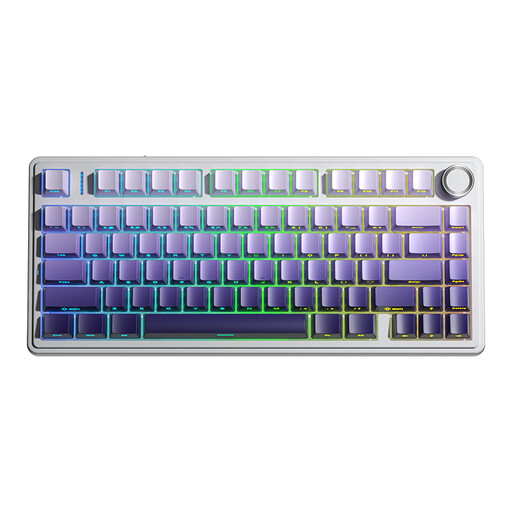 No image available
A compact option for local typing if you’re looking for a US layout.
75% layout, QWERTY US, with wired, Bluetooth and 2.4 GHz connectivity.
The listed version has Star Vector Switch.
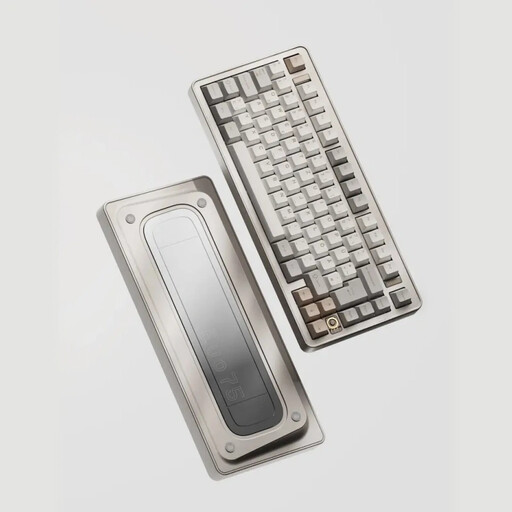 No image available
Worth considering if you want to type locally with a compact US version.
75% layout and wired USB-C; the product information also lists Bluetooth and 2.4 GHz.
The version is listed as having hot-swappable switches and VIA compatibility.
 No image available
A compact option if you want to type locally and have a choice of connectivity options.
75% layout, QWERTY US, with wired, Bluetooth and 2.4 GHz connectivity.
The product information lists 82 keys and a TFT screen.
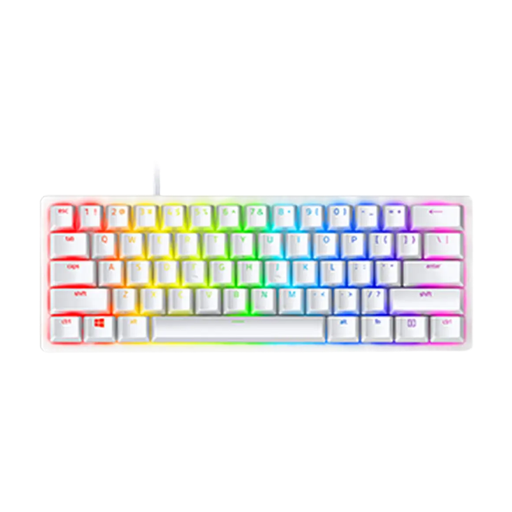 No image available
A small wired option if a US layout matters more to you than having direct access to every key.
60% layout and detachable USB-C cable.
The product information lists memory for up to five profiles that can be activated without software.
 No image available
A compact wired option if you want a US layout and space is limited.
60% layout, QWERTY US and 61 keys.
The product information describes membrane keys with a mechanical feel.
No. Start with the standard keys and check that your input layout supports your code and shortcuts. Keychron describes remapping through a web app; consider this extra feature separately if you want to work without web tools.
According to the R-Go manual, connect the keyboard cable to your computer; for a computer with only USB-A, the manual lists a converter. Before buying, check that you choose the wired version and the appropriate layout.
R-Go says Break Software controls the LED, so don’t rely on the break indicator as a software-free feature. Arboportaal also recommends varying your activities and taking microbreaks during screen work, regardless of your keyboard.
For a standard online consumer purchase, you generally have 14 days to change your mind after delivery, according to ACM ConsuWijzer. Check the terms and any exceptions that apply to your order.
If a product doesn’t perform as you could reasonably expect under normal use, the seller is responsible for providing an appropriate solution, such as a repair, replacement or refund, according to ACM ConsuWijzer. A manufacturer’s guarantee does not replace this statutory right; there is no fixed general time limit for the statutory guarantee.