Who is this buying guide for?

Club with audience members at the back of the hall

Wants visitors to be able to follow photos, names and dates from the furthest seats. Measure the room and check captions from those seats. The Consumers’ Association discusses viewing distance as something to consider; when it comes to archive text, a test in your own hall is still important.

Volunteers with a mixed archive

Want to switch easily between photos and videos. A USB connection alone doesn’t guarantee that every file will play: check the supported file types in the manual for the exact model.

Club showing a continuous presentation

Wants to show archive material for long periods or on a schedule. Compare the stated operating hours, content management features and considerations for displaying still images for extended periods.

What should you look for when choosing?

Standard LCD, LED or QLED TV

When: For individual gatherings with photos or videos, provided the size, viewing angle and playback of your own files are suitable.

Consider: A technology name alone doesn’t tell you how well a TV will perform in your hall. Test the model with your own content and lighting.

OLED TV

When: Consider OLED if visitors will be sitting in different parts of the room and a wide viewing angle is important, especially if the images change regularly.

Consider: The Consumers’ Association describes a wider viewing angle as a general trend; still slides shown for long periods require care to avoid image retention. An older test does not give a risk percentage for a current model.

Commercial TV or digital signage

When: Consider this option if your club wants to schedule content, restrict access to the controls or use the screen for many hours a day.

Consider: The Business TV app and stated 16/7 usage apply to Samsung’s BEHX-H model, not automatically to other commercial displays.

What to consider What should you check? Who might find this more important?
Screen size and readability Measure the furthest and side-on seats. Show a real archive photo with the smallest caption at the intended screen size. If I want visitors at the back of the hall to be able to read names and dates too, I’ll test this from their seats. Around 33% of consumers put readability first.
File playback and controls Test representative files and check the supported formats in the manual for the exact model. Also see whether the controls are suitable for the presentation. If I want to switch between my own photos and videos without any fuss during a club evening, I’ll check the files and the steps involved in advance. Around 27% of consumers give playback of their own archive the highest priority.
Viewing angle and light Assess the model with the room lights on, both directly in front and from the outermost seats. Look out for windows and lights reflecting on the screen. If there are seats to the side or daylight in the room, I’ll check whether photos are easy to view from those spots. This is the main reason for buying a TV for around 20% of consumers.
Extended use and management Work out the expected hours of use, how long slides will remain still and whether you need content management. Compare the stated operating hours for the exact model and its energy label in kWh/1000 hours. If I want to use the screen often or for long stretches, I’ll compare the usage terms and how volunteers will manage the content. Around 20% of consumers put extended use and management first.

Pitfalls when choosing a TV for your local history archive

  • Choosing based on screen size alone

    A screen size that works well for moving images may not make small archive captions readable at the back of a hall.

    Measure the seating area and test a real slide with the smallest text at the intended screen size.

  • Assuming USB will play every archive video

    Supported photo and video files vary from one TV to another; a USB port doesn’t guarantee that every archive file will be recognised.

    Check the manual for the exact model and test sample files before buying. If files won’t play directly, connecting a laptop via HDMI may be an alternative.

    If you use a laptop as an alternative, allow for extra work operating it during the presentation and time to test files in advance.

  • Choosing a screen for long-running still slides as if it were only for film nights

    Extended display of still images is something to consider with OLED. An older Consumers’ Association test doesn’t predict the risk for a current model; commercial management features are only relevant if your club will use them.

    Compare your planned hours of use and the length of time still slides will be shown with the terms for the exact model. Also consider whether your club needs content management.

  • Confusing owning archive material with having permission to show it

    Owning a file doesn’t automatically give you permission to show copyrighted material at a club evening. Auteursrecht.nl notes that a private club event does not automatically count as a domestic setting. Identifiable people in images may be personal data covered by the GDPR.

    Before showing any relevant archive item, check who controls the rights and what legal basis applies to identifiable people. The Dutch government and the Dutch Data Protection Authority outline the respective considerations around copyright and images.

Brands to consider

Samsung

Alongside standard televisions, Samsung has a Business TV range that may be relevant to clubs looking into scheduled content playback.

  • Samsung Business Netherlands lists a Business TV app and 16/7 usage for the BEHX-H LH50BEHHLGUXEN.
  • These specifications apply to this model and are not the result of an independent endurance test. Also consider whether a 50-inch screen is large enough for your hall.

LG

LG offers standard LCD TVs and models with MiniLED, among other options, as points of comparison for a presentation setup.

  • LG Netherlands lists four HDMI inputs, two USB inputs and VESA 300 × 300 mm for the 55QNED85A6C.
  • Connections and mounting details don’t prove that your club’s files will play or that the viewing angle will be suitable for your hall.

Philips

Philips offers 55-inch QLED and OLED models, among other options, giving you two screen types to compare.

  • Philips Netherlands lists a screen size of 55 inches for the 55PUS7800/12 and the 55OLED760/12.
  • The balance between viewing angle and extended display of still images depends on the TV and how it’s used; manufacturer information is not independent test data.

Sony

Sony may be worth considering for clubs looking into playing files directly from USB.

  • Sony Netherlands describes viewing photos and videos from a USB device.
  • Sony refers users to the manual for the relevant product for details of playable file types, so support is not guaranteed for every model or archive format.

TVs at Joybuy

These are standard LCD, LED or QLED TVs for showing a local history archive, for example using a connected presentation source or, where stated, USB media playback.

50NU800B6LC 50-inch 4K Smart TV

50NU800B6LC 50-inch 4K Smart TV

A 50-inch screen with three HDMI connections may suit a club that wants to connect a presentation source via HDMI; check readability from the furthest seats.

50 inches; 4K; three HDMI connections; anti-reflective screen.

View at Joybuy

Philips 55PUS8001 55-inch 4K TV

Philips 55PUS8001 55-inch 4K TV

The stated USB media playback may suit a club that wants to show photos and videos from storage devices; test your own files and check the supported formats.

55 inches; 4K; two USB ports; LED-LCD; light sensor for automatic brightness adjustment. The description lists support for JPEG, PNG, HEVC, MKV and H.264.

View at Joybuy

Metz 86MQE8000Z 86-inch QLED Google TV

Metz 86MQE8000Z 86-inch QLED Google TV

The stated 86-inch screen size may be suitable for a large hall; measure the available space and test visibility from the seats before choosing a size.

86 inches; QLED; 4K HDR10+; HDMI 2.1.

View at Joybuy
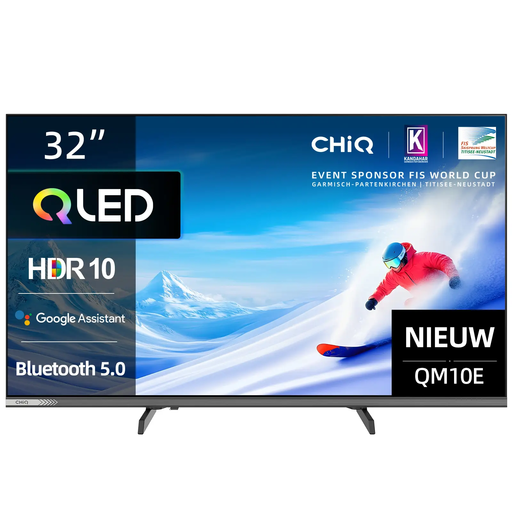
CHiQ L32QM10E 32-inch QLED Smart Google TV

CHiQ L32QM10E 32-inch QLED Smart Google TV

This 32-inch model may only be suitable if its screen size works for your hall and the archive is easy to read; test the smallest captions from the furthest seat.

32 inches; QLED; Full HD; HDR10; HDMI 1.4 and USB 2.0 connections.

View at Joybuy
Metz 65MQE8000Z 65-inch QLED Google TV

Metz 65MQE8000Z 65-inch QLED Google TV

A 65-inch screen may work for group presentations if it’s the right size for your space. Check readability in person and test a connected presentation source.

65 inches; QLED; 4K HDR10+; HDMI 2.1.

View at Joybuy

Frequently asked questions

Is 55 inches large enough for your club room?

It depends on how far away the furthest seats are, and especially on the size of names and captions. The Consumers’ Association suggests around 2.4 times the screen diagonal as a starting point for comfortable viewing at home; this isn’t a guaranteed readability standard for archive text. Test your own presentation from the back of the hall.

Can you plug a USB stick with the archive straight into the TV?

Only if the exact model supports the storage device and the file types you’re using. Sony Netherlands refers users to the product manual for playable file types. A laptop connected via HDMI and tested in advance may be an alternative if the TV can’t play the files itself.

What should you consider when positioning the TV and using it for long periods?

Check the dimensions, weight and mounting details for the exact model before choosing a stand or bracket. With an OLED TV, avoid leaving the same slide on screen for longer than necessary; the Consumers’ Association test mentioned here covered older models and doesn’t predict the lifespan of a new TV.

How can you compare the energy consumption of TVs?

The European energy label shows consumption in kWh per 1000 hours. To compare models, multiply the stated consumption by the expected hours of use and divide by 1000; your actual costs will also depend on your electricity tariff.

Can you simply show old films, photos and identifiable local residents at a club evening?

Not automatically. The Dutch government says you may need permission to use other people’s copyright-protected work; Auteursrecht.nl notes that a private club event doesn’t automatically count as a domestic setting. According to the Dutch Data Protection Authority, identifiable people in images are personal data. Before showing material or publishing it elsewhere, check the rights and the applicable legal basis under the GDPR.
