What should you consider when choosing?
KEF Netherlands emphasises the importance of speaker placement in relation to your listening position. The Consumers’ Association notes that Wi-Fi speakers need a stable network.
| What to consider |
What to look for |
Who is it mainly for? |
| Stereo soundstage |
Check whether you’re buying a pair, whether stereo pairing is supported and whether both speakers will fit around your listening spot. |
If you listen from one fixed spot, you’ll want to position instruments to your left and right. That’s why around 36% of consumers prioritise stereo sound above all. |
| Listening in several parts of the room |
Consider where you listen and how the room can accommodate the speakers; a larger speaker won’t necessarily deliver the same result everywhere. |
If you listen throughout the living room, you’ll want a setup that suits the areas you use. Around 29% of consumers prioritise coverage of the listening area. |
| Connecting to your music source |
Check the outputs on your CD player or turntable, the inputs on the exact speaker model and whether you’ll need any cables. Some turntables require a phono preamp. |
If you want to play albums from your own player, the connection needs to suit that source. Around 21% of consumers prioritise having the right source connection. |
| Components and support you’ll need |
Check whether the model is active or passive, whether you need an amplifier and whether the offer includes one speaker or a pair. Also check how the system is controlled and what support is available. |
If you want to know what you need for a complete, working setup and how to operate it, these components are key. Around 14% of consumers focus mainly on this. |
Joybuy products
This selection includes a Bluetooth speaker set, passive bookshelf speakers and soundbar systems. Not every system consists of two separate stereo speakers that can be positioned independently, so look for a configuration that suits your listening spot.
 No image available
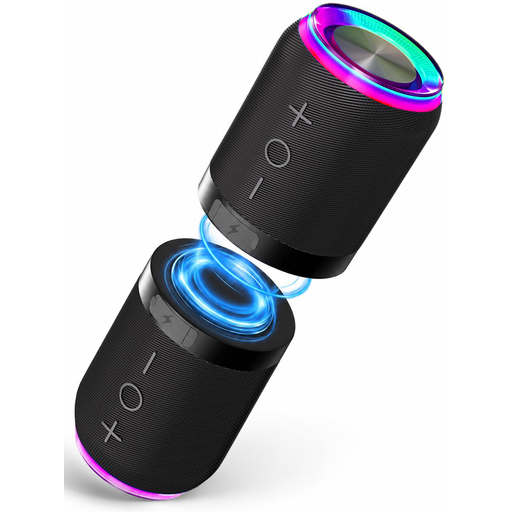
2-in-1 Bluetooth speaker set with magnetic attachment, set of 2, IPX6
An option if you’re looking for two detachable units for left-right playback and want to play albums via Bluetooth, AUX or a TF card.
The product description mentions two separable units and an IPX6 rating.
View at Joybuy
 No image available
HiVi-Swans D3.1MKII passive bookshelf speakers, pair
A good fit if you’re looking for a pair of passive speakers and already have a suitable amplifier or would like to choose one separately.
The product information lists a 6.5-inch bass/midrange driver and a 28 mm soft-dome tweeter. An external amplifier is required.
View at Joybuy
 No image available
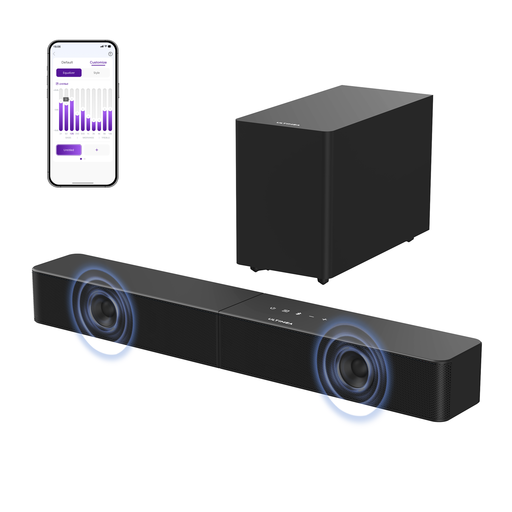
ULTIMEA Poseidon R3T 2.1 soundbar with wireless subwoofer
Could suit you if you’re looking for a soundbar system for music and app control; this isn’t a pair of separate stereo speakers that can be positioned independently.
The product information lists Bluetooth 6.0, HDMI, optical and USB connections, and an app with an equaliser.
View at Joybuy
 No image available
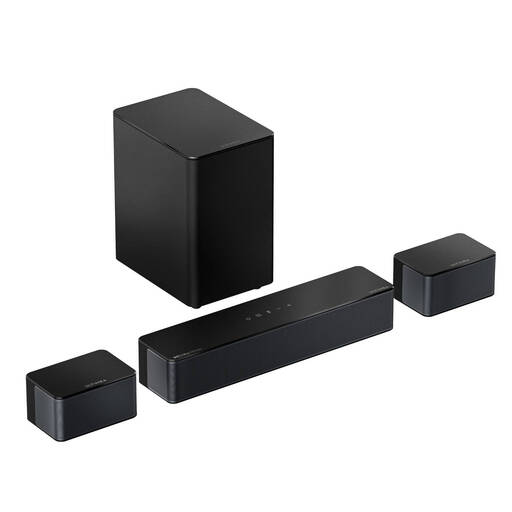
ULTIMEA Poseidon M4T 5.1 soundbar system
An option if you’re looking for a 5.1 soundbar system as well as music playback; its configuration isn’t the same as a separately positioned stereo pair.
The product information lists a 5.25-inch wireless subwoofer, Bluetooth 5.4, HDMI eARC and two wired surround speakers.
View at Joybuy
 No image available
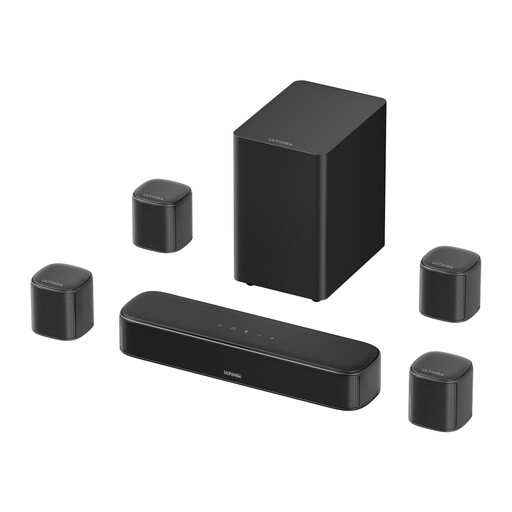
Ultimea Aura S4T 7.1 soundbar with four surround speakers
Could suit you if you want to play music and TV audio through one surround system; it isn’t a pair of stereo speakers for a left-right setup.
The product information lists HDMI, optical and AUX connections, a 5.25-inch subwoofer and app control. According to the description, the two rear speakers can be connected wirelessly.
View at Joybuy
Frequently asked questions
Is one large Wi-Fi speaker enough for your jazz albums?
It can be a practical choice if you mainly want to hear music in different parts of the room. If you want a clear left-right soundstage from one listening spot, look for two separate speakers and check whether you can position them suitably.
How should you start positioning a stereo pair?
Start by positioning both speakers in relation to your main listening spot, then experiment with how far they are from the walls. KEF Netherlands offers placement tips, but the guide for your chosen model is still important; don’t treat distances as universal buying limits.
Can you connect your turntable directly to a Sonos Five?
A Sonos Five has a line input. If your turntable doesn’t have a built-in phono preamp, Sonos says you’ll need to connect a separate phono preamp first; then check which RCA-to-3.5 mm connection you need.
What should you check in addition to the speakers?
Check whether you need a second speaker, amplifier, stands, cables or a phono preamp, and whether the offer includes a pair or a single speaker. According to the Dutch government, statutory consumer protection in the Netherlands doesn’t come with a fixed legal guarantee period; if a product is faulty, contact the seller.
What rules must a wireless speaker meet if it’s sold in the Netherlands?
According to the Dutch Authority for Digital Infrastructure, radio equipment placed on the EU market must meet the applicable requirements of the Radio Equipment Directive. Once the manufacturer has assessed conformity, it applies the CE marking. This describes the regulations and doesn’t confirm the conformity of any specific model.


