
Vandaag of morgen in huis

Kwaliteit gegarandeerd

Welkomstaanbiedingen ontgrendelen: GRATIS bezorging | Tot 80% korting | Gratis 30 dagen JoyPlus-proefperiode
Download de app
Furnishing a new living room seems simple until you have to choose between a coffee table, side table, TV unit, sideboard or console table. Product photos often show a spacious, inviting room, but at home the furniture may turn out to be larger, lower or less practical than you expected.
When buying living room furniture, these are the most common pitfalls:
A few checks can help you avoid buying furniture that only looks good in the product photos.
Before you buy, measure the available length, width and height. Remember to allow for doors, radiators and skirting boards, as well as enough space to walk past the furniture.
For a coffee table, the tabletop isn’t the only thing to consider. Check:
For example, an 80 cm round table can mean fewer sharp corners in a compact living room. A slim console table, 30 cm deep, is better suited to a hallway, behind a sofa or against a narrow wall.
Wooden furniture is made from a range of materials:
Look out for descriptions such as E1 board. This classification relates to formaldehyde emissions from board materials; it isn’t a general quality guarantee for the entire piece of furniture. Also check the joints, leg construction, screws and included instructions.
A product description might state that a tabletop is 4 cm thick, but that alone doesn’t tell you how sturdy the table is. The frame, fixings and surface it stands on also affect its stability.
A coffee table with storage is handy, but check that its stated weight capacity suits the way you plan to use it. It’s best to place heavy items low down and distribute the weight evenly.
For a sideboard, these points are important:
A tall or freestanding sideboard should be secured with suitable wall anchors if required by the product safety information. Fixings aren’t always included. Don’t let children hang from drawers or doors, and check regularly that the furniture remains stable.
The selection below matches different needs with features you can check. The features listed are based on the product information provided. Descriptions of appearance or use are product claims, not a guarantee of a particular living experience.
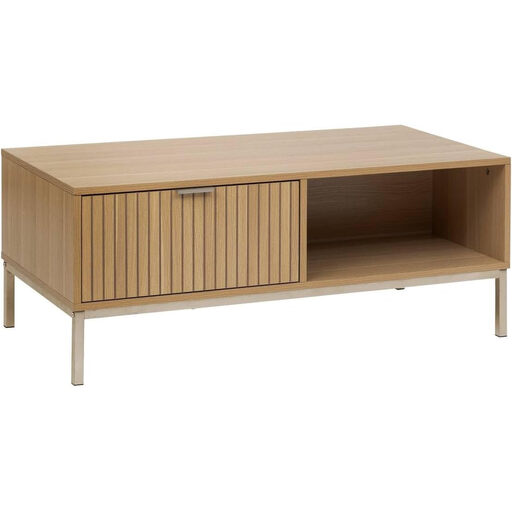
Why it suits this profile: This coffee table measures a familiar 100 x 50 x 40 cm and combines a wood-effect finish with a lower shelf and drawer for books, magazines or decorations.
The dimensions and maximum load of 40 kg are listed. This lets you compare the table with your available space and intended use, rather than judging it on appearance alone.
100 x 50 cm, storage space, steel legs and an FSC statement in the product information.
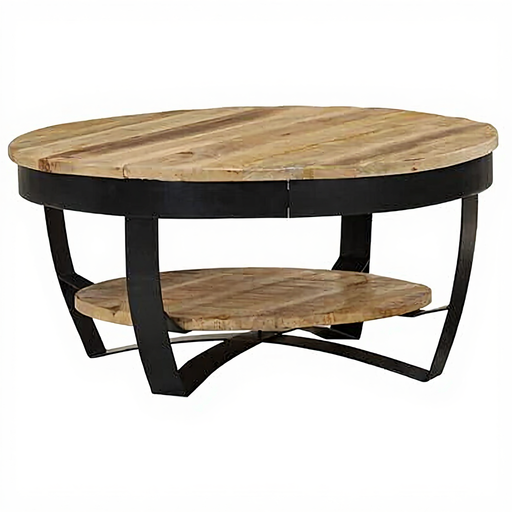
Why it suits this profile: This compact table is designed for anyone who values solid, raw mango wood and an industrial look. Measuring 65 x 65 x 32 cm, it suits a small seating area or can be used as a side table.
The materials are clearly described as solid raw mango wood with a powder-coated steel base. You can therefore expect some variation in colour and grain.
Solid mango wood, a steel base and an extra shelf for storage.
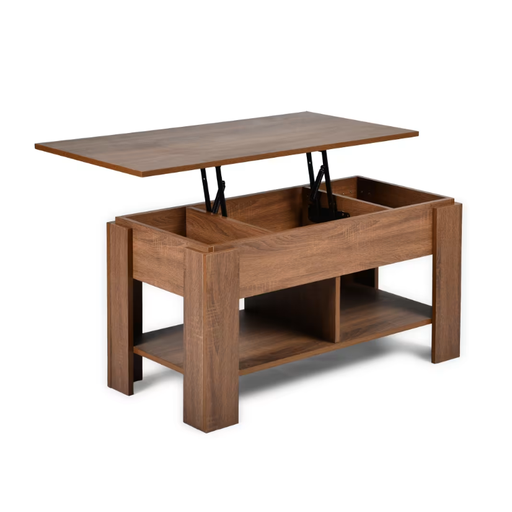
Why it suits this profile: The adjustable height of 48 to 63 cm makes this coffee table suitable for working, eating or storing things from the sofa. That can be useful in a flat or home office.
The storage is clearly described: two open compartments and one concealed compartment. Check the hinges during assembly and keep fingers clear of the moving tabletop.
Lift-top adjustable from 48–63 cm, two open shelves and one enclosed storage compartment.
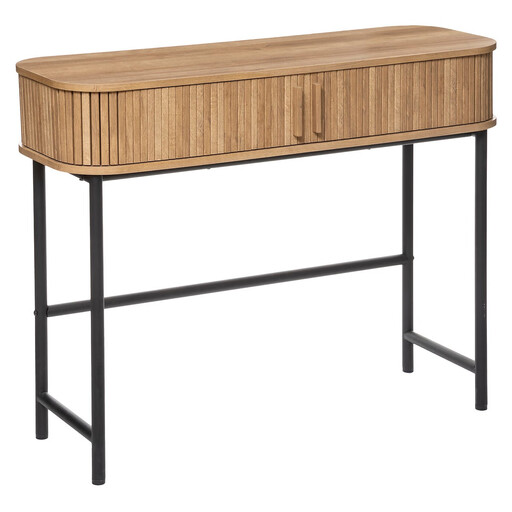
Why it suits this profile: At 35 cm deep, this sideboard takes up relatively little floor space. Its two sliding doors are practical when hinged doors would get in the way of a doorway or another piece of furniture.
The product information gives the exact dimensions and a maximum load of 10 kg per shelf. This helps you choose suitable items to store, such as crockery, books or home accessories.
100 x 35 x 80.5 cm, two sliding doors, shelf or shelves and enclosed storage.
For a modern living room, light wood tones, metal and simple lines often work well together. Industrial-style living room furniture tends to feature darker frames, brown wood-effect finishes and robust shapes. A sideboard with sliding doors can also suit a country or Scandinavian interior, depending on its colour and leg style.
Try not to buy every piece of furniture in exactly the same shade. A mix of wooden furniture with one metal accent can look more cohesive than a complete set of different wood-effect finishes. When shopping online, always check the colour description, as “natural”, “oak-effect” and “rustic brown” can mean different things to different manufacturers.
We’ve put together a complete, up-to-date list of products that meet these strict selection criteria and the applicable European safety requirements.
It depends on your seating area and the space you need to move around. Measure the distance between the sofa and TV unit, leaving enough room to move comfortably. Then compare the table’s length and width with the available floor space. A round coffee table can be useful if you want to avoid sharp corners.
There’s no one material that works equally well in every home. Solid wood has natural variations, while MDF, chipboard and veneer often provide a more uniform finish. Metal is a popular choice for frames and legs. Always check the care instructions, weight capacity and exact material description.
Choose furniture that combines several functions, such as a coffee table with storage, a slim sideboard or a multi-tier console table. Sliding doors can save space compared with hinged doors. Measure the depth beforehand and check that drawers, doors and flaps can open fully.
