
Vandaag of morgen in huis

Kwaliteit gegarandeerd

Welkomstaanbiedingen ontgrendelen: GRATIS bezorging | Tot 80% korting | Gratis 30 dagen JoyPlus-proefperiode
Download de app
Redecorating your living room seems simple until a coffee table turns out to be too large, a bookcase wobbles or a TV unit does not provide enough room for cables and equipment. Living room furniture is therefore about more than just colour and style. Dimensions, load capacity, materials and assembly all determine whether a piece of furniture works well in practice.
Pay particular attention to these common pitfalls:
Do not just measure the spot where the furniture will stand; measure the surrounding space too. With a coffee table, leave enough room to walk between the table, sofa and cabinet. For a TV unit, also check:
A compact TV unit can be practical in a flat, while a wider wall unit offers more storage space in a spacious living room.
Many affordable living room furniture pieces use chipboard, MDF, wood-effect panels and metal frames. This is not automatically a disadvantage, but the construction must suit how you intend to use the furniture. Always check:
For example, the stated load capacity of the white JOYFURNOS bookcase is 5 kg per shelf. This is suitable for books, plants and lightweight decorations, but heavy ring binders require a different arrangement. The JOYFURNOS industrial bookcase states a maximum load capacity of 50 kg for the unit and has a steel frame with X-shaped bars.
A tall bookcase or wall unit should stand securely. Products with an anti-tip kit can be attached to the wall. Use this feature in accordance with the assembly instructions, particularly in households with children or pets.
Also check whether:
An open cabinet is useful for books and decorations, but leaves items on display. A storage cabinet with doors keeps the living room looking tidier and reduces dust on stored items.
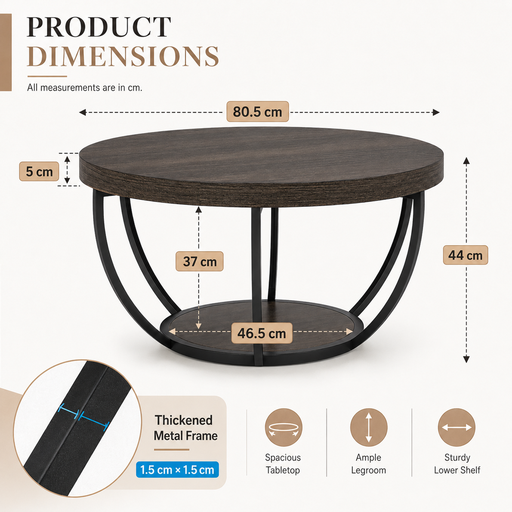
Why it suits this profile: This round coffee table combines an 80 x 80 cm top with a second tier measuring 46 x 46 cm. This provides space for drinks, magazines and decorations without the need for an additional side table.
The two tiers make the available storage space clear from the outset. However, check that the diameter fits the space around the sofa.
Round top, two storage tiers, 5 cm thick engineered-wood top and metal base.
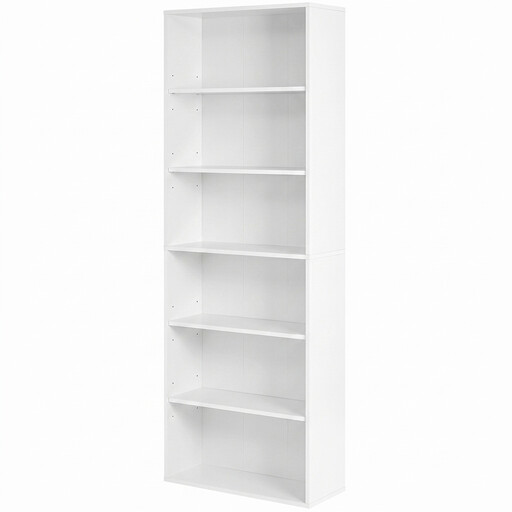
Why it suits this profile: The white Scandinavian furniture style and vertical layout work well in a home office, living room or dining room with limited floor space.
The stated shelf load of 5 kg discourages choosing the cabinet based on appearance alone. Secure the cabinet with the supplied anti-tip kit.
Dimensions of 24 x 60 x 178.5 cm, six open compartments and four adjustable internal shelves.
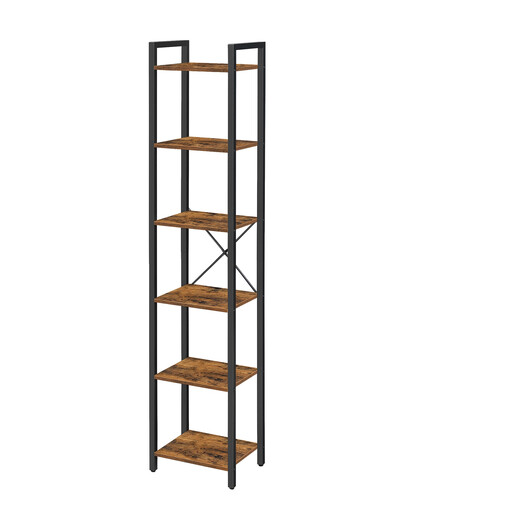
Why it suits this profile: This narrow industrial-style piece makes use of vertical space and is designed for books, decorations and belongings in a tight corner of the living room, bedroom or study.
The specifications mention a steel frame, X-shaped bars, adjustable feet and an anti-tip kit. This means stability and positioning can be considered in advance.
Dimensions of 30 x 40 x 187.5 cm, six tiers and a stated maximum load capacity of 50 kg.
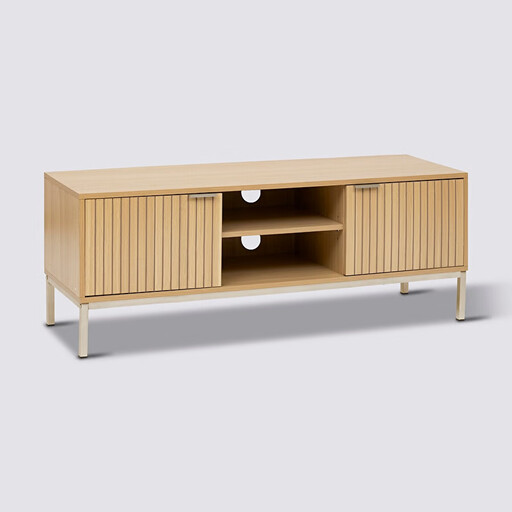
Why it suits this profile: This TV unit offers a well-proportioned format for a television area and combines enclosed storage with cable routing at the back.
The dimensions, shelf space and cable holes are clear from the outset. Before buying, check whether a width of 120 cm is sufficient for your television.
Enclosed cabinet with double doors, cable management, soft-close hinges and a stated maximum load of 60 kg.
We have compiled a complete, up-to-date list of products that fully meet these strict selection criteria and the applicable European safety regulations.
Choose a layout that suits what you use every day. An open cabinet works well for books, plants and decorations that you are happy to keep on display. For paperwork, cables, toys or household items, a storage cabinet with doors is more practical. A wall unit makes use of vertical space, while a low piece of furniture can make the room feel more visually tranquil.
When combining modern, industrial or Scandinavian furniture, look for recurring materials and colours. For example, a metal frame could be echoed in a side table, TV unit and bookcase. This creates a cohesive look without requiring all the furniture to come from the same range.
Ideally, leave enough room to walk between the sofa, table and other furniture. The space required depends on the room layout and how it is used. If necessary, mark out the dimensions with masking tape before ordering. This will help you see whether a round table or rectangular model is the better fit.
An open cabinet is suitable for items you want to display. A storage cabinet with doors is more practical for things you would prefer to keep out of sight. With both types, check the load capacity, depth and whether they can be secured to the wall.
Place heavy items at the bottom, position the cabinet on a level surface and use the supplied anti-tip kit where available. Follow the assembly instructions and check that the fixings are suitable for your type of wall.
