
当日/次日达

品质保障

开启新人专享福利: 全场免邮 | 低至 2 折 | 免费试用 30 天 JoyPlus 会员
下载 Joybuy
A lithium-ion battery may seem straightforward to choose at first glance: check the voltage, compare the capacity and go for the most affordable option. In practice, problems often only become apparent after purchase. The battery may not fit the tool, provide insufficient power or prove less suitable for long-term storage than expected.
The main pitfalls are:
The voltage must match the device or battery platform. For power tools, always check:
A Makita BL1415N 14.4V battery belongs to a different platform from a Makita XGT battery. Even within the same brand, batteries are not always interchangeable. The Makita XGT 40V Max series is described in product information as 40V Max, while the technical specification for the 2.0Ah model states a voltage of 36V. Therefore, check both the platform name and the model number.
A Kärcher machine requires a Kärcher 36V battery specifically designed for the Kärcher 36V platform. A universal Li-ion battery without clearly stated platform compatibility is generally not a safe choice for tools.
Ampere-hours (Ah) indicate the capacity at a given voltage. To compare batteries with different voltages fairly, watt-hours (Wh) are more practical:
Wh = volts × Ah
A 36V, 2.0Ah battery provides approximately 72Wh. This is the stated value for the Makita XGT 40V Max Li-Ion Battery - 2.0Ah. A 25,600mAh power bank uses a different nominal voltage from a power-tool battery. Therefore, do not compare these figures directly.
Actual runtime also depends on the device, load, temperature and battery condition. A battery with a higher Ah rating may run for longer, but it is often heavier and may take longer to charge.
Check which charging power and charger are permitted. A fast charger can reduce charging time, but only when the battery and charger are designed for this purpose. According to the product information, the Makita XGT 2.0Ah can be fully charged in approximately 22 minutes when used with the DC40RA charger. This is not a general charging time for every lithium-ion battery.
When buying, also look out for:
For a LiFePO4 12V 100Ah battery used in a motorhome, boat or solar installation, charging voltage, maximum charging current, discharge current and series or parallel connection are also important. Such a battery is not automatically suitable as a replacement for every lead-acid battery or other Li-ion battery.
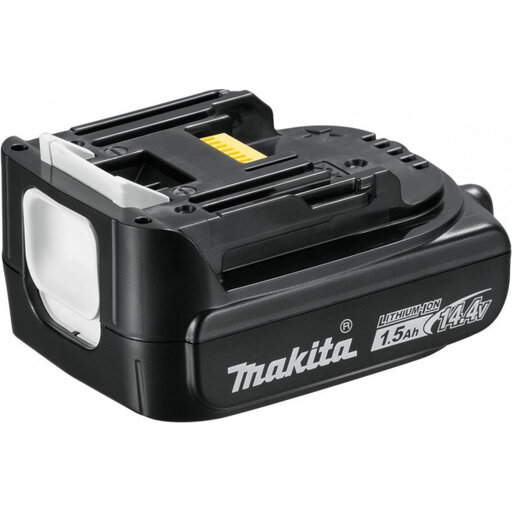
Why it suits this profile: A compact battery for owners of compatible Makita tools who do not need a higher capacity for shorter jobs.
The BL1415N model number and 14.4V voltage make compatibility easier to check than with a generic battery.
1.5Ah capacity, locking mechanism and quick-release system; the stated charging time is 15 minutes.
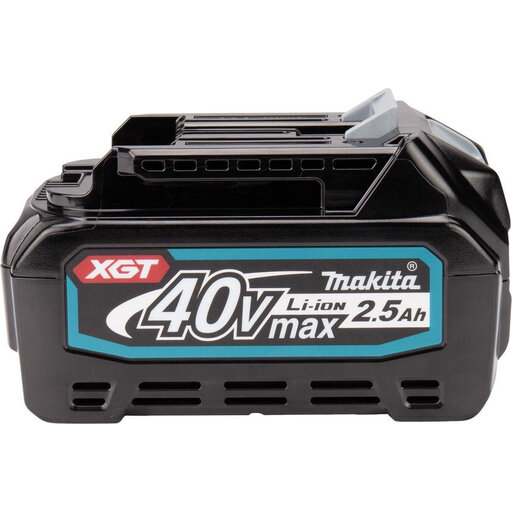
Why it suits this profile: For more intensive use within the Makita XGT platform, with a focus on protection and robust construction.
The product information states platform compatibility, an LED indicator and protection against overcharging, over-discharging and overheating.
2.5Ah capacity, IP56 rating according to the product description and approximately 28 minutes’ charging time with the DC40RA charger.
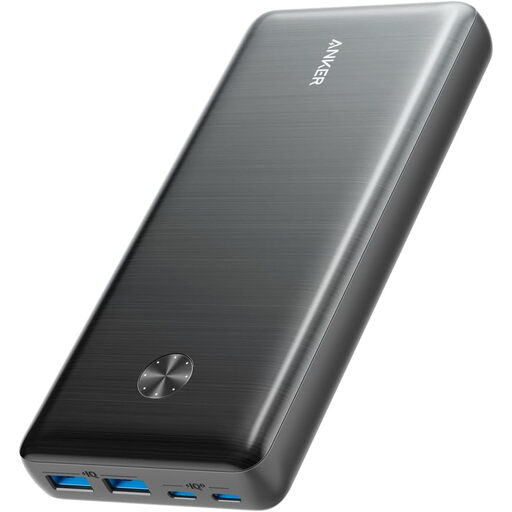
Why it suits this profile: Handy for laptops, tablets and phones on the go, for example when travelling, studying or working away from the office.
The capacity and maximum output power of 87W are listed separately. A separate charger is not included.
25,600mAh, USB Power Delivery up to 87W and support for MacBook, Dell XPS, iPad and iPhone, among others.
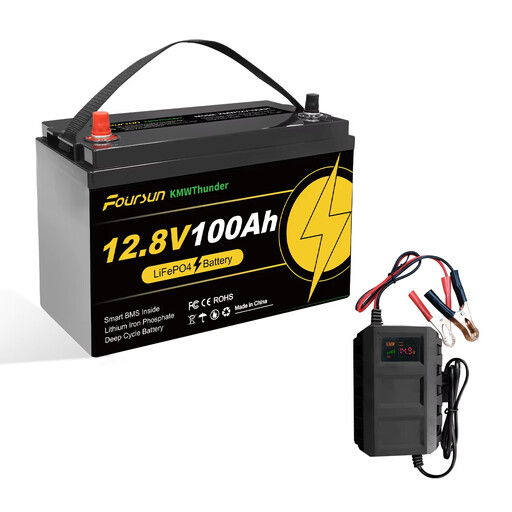
Why it suits this profile: Designed for use in motorhomes, while camping, on boats, in off-grid solar installations and for emergency power supplies.
The specifications state charging and discharge currents, IP67, a BMS and the conditions for series or parallel connection.
12V, 100Ah, 1,280Wh, built-in BMS protection and charger included; dimensions are 332 × 172 × 220mm.
We have put together a complete, up-to-date list of products that fully meet these strict selection criteria and the applicable European safety regulations.
Use this checklist before completing your purchase:
For example, a Yarbo battery is designed for the Yarbo modular system. According to the product information, it is a 38.4Ah NCM Li-ion smart power pack with wireless charging, BMS protection and a specified temperature range. This makes it particularly relevant to users of that specific autonomous system, rather than as a general replacement for a tool battery.
Service life depends on charging cycles, temperature, load and storage. High ambient temperatures and storing the battery completely empty for prolonged periods can affect its capacity. Follow the manufacturer’s instructions and use the designated charger.
This depends on the battery type, installation and charging components. Check the BMS protection, charging voltage, fuses, cable thickness, ventilation and mounting. A LiFePO4 battery has different charging requirements from a lead-acid battery; if you are unsure about the installation, have it assessed by a qualified installer.
A rechargeable battery is a general term for a rechargeable energy source. A power bank usually contains a Li-ion battery with USB outputs for mobile devices. A tool battery, on the other hand, has a specific connection, electronics and communication with the machine and charger. Do not use these systems interchangeably.
