
Vandaag of morgen in huis

Kwaliteit gegarandeerd

Welkomstaanbiedingen ontgrendelen: GRATIS bezorging | Tot 80% korting | Gratis 30 dagen JoyPlus-proefperiode
Download de app
Listerine mouthwash can be a practical addition to brushing and cleaning between your teeth. However, choosing the right product involves more than simply picking up a bottle with minty packaging. Variants differ in alcohol content, fluoride, flavour, volume and usage instructions. If you focus only on temporary fresh breath or a big discount, you could end up buying a formula that is less suitable for everyday use.
An intense burning sensation does not automatically mean that a mouthwash removes more plaque. The flavour experience is influenced by ingredients such as menthol, essential oils and, where applicable, alcohol. A mild mouthwash may therefore be more suitable for someone who wants to use the product consistently.
Always check the variant name, ingredients list and directions for use. Listerine Mild and Mint and Extra Mild, for example, are designed to offer a milder mint experience, while Cool Mint generally has a noticeably fresher and stronger flavour profile.
Packaging may feature terms such as “24-hour protection”, “99.9% of bacteria” or “10-in-1”. This information should be considered in the right context. It may refer to the brand’s own research, laboratory conditions or use according to a specific protocol.
According to Listerine’s own research or product information, certain variants may help reduce plaque, freshen breath or support daily oral care. They are not a replacement for brushing, interdental brushes, flossing or a dental check-up. If in doubt, read the full product information rather than relying only on the front of the bottle.
A 500 ml bottle may seem like good value, but if you use 20 ml twice a day, you get through around 40 ml per day. In theory, one bottle will then last approximately twelve to thirteen days. A mouthwash multipack is particularly practical if you enjoy the flavour and use the product regularly.
Also check the shelf-life information on the packaging. The stated use-by date and information about use after opening may vary from one product to another.
If you are looking for an alcohol-free formula, check this explicitly in the product details. Alcohol-free mouthwash is not the same as a product with a mild flavour. Some mild mint variants are alcohol-free, while other products with the same mint association do contain alcohol.
The Joybuy range lists Listerine Mouthwash - Extra Mild 500 ml as alcohol-free. The product information also states that it contains sodium fluoride with 220 ppm F. Listerine Essentials Cool Mint 500 ml and Total Care variants, on the other hand, are listed as containing alcohol. Always check the label, as formulas and packaging may vary between markets.
A fluoride mouthwash contains a fluoride compound which, according to the product information, may be intended to support teeth and help protect against cavities. The product specifications provided list sodium fluoride at approximately 220 ppm F for several Listerine variants.
Do you mainly want to compare mouthwash for plaque, mouthwash for bad breath or mouthwash for healthy gums? Look at both the stated function and the ingredients. Brand terms such as “Total Care” refer to several stated benefits, but do not automatically make the formula suitable for every user.
A 250 ml bottle is useful for trying a product for the first time, keeping at a second address or taking on holiday. A 500 ml bottle is more suitable for everyday use at home. With a 3-pack or another multipack, the price per millilitre is important. Calculate it by dividing the total price by the total volume.
Many products in this selection advise rinsing with 20 ml, approximately four teaspoons, for 30 seconds before spitting it out. Some products may have different instructions. Always follow the wording on the packaging. Mouthwash is not intended to be swallowed.
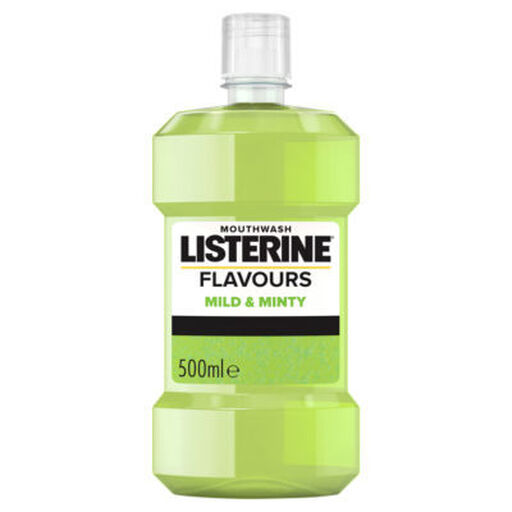
Why it suits this profile: The 500 ml bottle offers a straightforward starting point for everyday use. The Mild and Mint variant is intended for consumers looking for a less intense mint experience.
The variant name makes the flavour choice clearer than a general claim about freshness alone. The product information recommends using 20 ml and rinsing for 30 seconds.
500 ml volume; sodium fluoride listed at 220 ppm F; suitable as an addition to daily oral care according to the label.

Why it suits this profile: This 250 ml bottle is suitable for anyone who wants to compare several product functions in one mouthwash and try a smaller volume first.
The stated benefits are linked to the product description. The formula contains fluoride and alcohol, so this is not the right choice for anyone specifically looking for alcohol-free mouthwash.
250 ml volume; fluoride listed at 220 ppm F; product description states several functions for daily oral care.
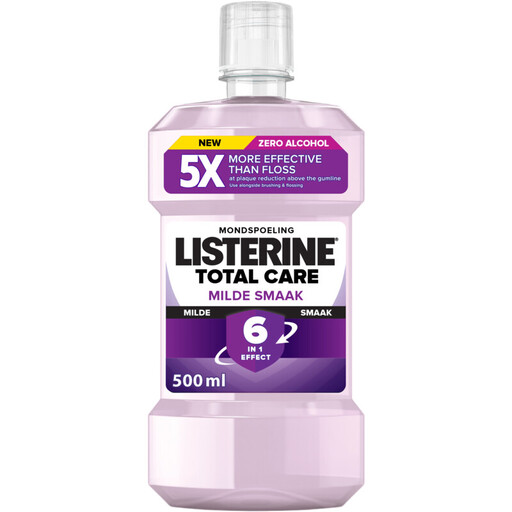
Why it suits this profile: The alcohol-free formula and mild mint variant are a good match for users looking for a gentler mouthwash for regular use.
The product details explicitly state that it is alcohol-free. This prevents you from relying solely on the words “mild” or “mint”.
500 ml volume; alcohol-free according to the product details; sodium fluoride listed in the ingredients list.
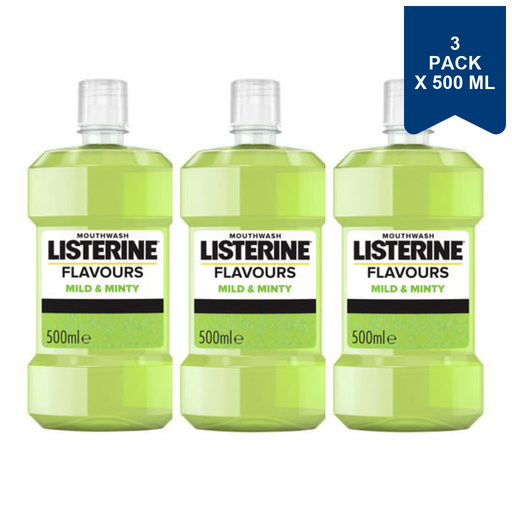
Why it suits this profile: A multipack is useful for households where several people use mouthwash every day or where you want to order new bottles less frequently.
The milder flavour reduces the risk of leaving a stockpile unused because the taste is too strong. However, check that the total volume and shelf life suit your rate of use.
Three 500 ml bottles; Mild and Mint flavour; product information recommends using it twice a day.
We have put together a complete, up-to-date list of products that fully meet these strict selection criteria and the applicable European safety regulations.
Not every variant is alcohol-free. Listerine Extra Mild 500 ml is listed as alcohol-free in the product details. Fresh Burst, Cool Mint and several Total Care products state that the formula contains alcohol. Always check the ingredients and product specifications for the exact bottle you are buying.
Many Listerine products recommend using them twice a day, usually after brushing. The recommended amount and rinsing time may vary. Follow the label and do not use more than directed.
At 20 ml per rinse and twice-daily use, 500 ml will theoretically last for around 12 days. In a household with several users, a bottle will naturally run out more quickly. A 3-pack may then be more practical, but first compare the price per litre and check the shelf-life information.
