
Vandaag of morgen in huis

Kwaliteit gegarandeerd

Welkomstaanbiedingen ontgrendelen: GRATIS bezorging | Tot 80% korting | Gratis 30 dagen JoyPlus-proefperiode
Download de app
Liquid laundry detergent might seem simple to choose, but the differences between variants are practically significant. A bottle that promises many washes can appear good value, while a high dosage per wash pushes up the cost per load. Likewise, a detergent for coloured laundry isn't automatically suitable for white fabrics, black clothing or materials such as wool and silk.
As a Joybuy Product Recommendation Officer, I therefore focus on verifiable data: the number of washes, the stated fabric types, the dosage, the temperature range and information about fragrances or dyes. That way, you avoid paying mostly for marketing claims.
A 1.5-litre bottle looks more appealing than a 950 ml bottle. Yet you should really look at the stated number of washes and the recommended dosage. At Home Color, for example, claims 42 washes from 1.5 litres, while OMO Color claims 19 washes from 950 ml. The price per wash is a better basis for comparison than just the bottle price.
What's more, don't use more detergent than the label advises. A larger amount doesn't automatically make your clothes cleaner and can mean you need extra rinses.
A universal detergent can be practical for cotton, synthetic fabrics and mixed loads. That doesn't mean it's suitable for every garment. Always check the care label. OMO Color, for instance, states that the product is not intended for wool and silk.
For black clothing, a black detergent can make more sense than a universal one. For white laundry, choose a white detergent. A colour detergent is designed for coloured fabrics and, according to the product information, typically contains no ingredients specifically intended for white washing.
Words like "colour protection", "hygienically clean", "natural ingredients" or "for sensitive skin" should be checked against the product information. According to the product description for Dreft Regular, the formula includes colour protection, a concentrated composition and a bottle made from 99% recycled plastic. These are product specifications or brand claims, not a guarantee for every wash or skin experience.
Neutral Color states, according to the product specification, 0% perfume and 0% dyes, plus a hypoallergenic and dermatologically tested formula. If you react sensitively to fragrances, you can take this information into account, but you should always check the full label and ingredients yourself.
Match the detergent to the clothes you wash most often:
Also look out for exceptions. One product may be suitable for machine washing and hand washing, while another is intended only for the washing machine.
Compare the volume with the number of washes. You can calculate it as follows:
price per wash = purchase price ÷ stated number of washes
With a concentrated detergent, the dosage is often lower, but the exact amount depends on the load size, level of soiling and water hardness. The product information for At Home Color mentions 35 ml for a normal load. For larger or heavily soiled loads, the dosage should be adjusted according to the label.
A dosing cap or pouring spout helps to limit waste. Don't pour liquid detergent directly onto delicate fabrics unless the label instructs you to.
A low-temperature detergent can suit wash programmes at 20 or 30 degrees. At Home Color states a temperature range of 20 to 60 °C. OMO Color is mentioned in the product description for short programmes and low temperatures.
For stain removal, several factors come into play: the type of stain, how long the stain has been in the fabric, the temperature and the wash time. A product claim that a detergent removes stains comes from the brand's product description and should not be read as a guaranteed result for every stain.
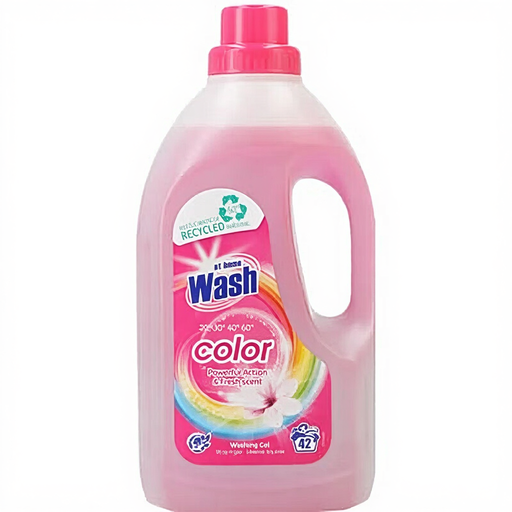
Why this fits the profile: The bottle states 1.5 litres and up to 42 washes. That makes it easy to compare the amount per wash.
The number of washes is clearly stated. The recommended dosage of 35 ml for a normal load helps prevent overdosing.
For coloured laundry; suitable for machine and hand washing; stated for 20 to 60 °C.
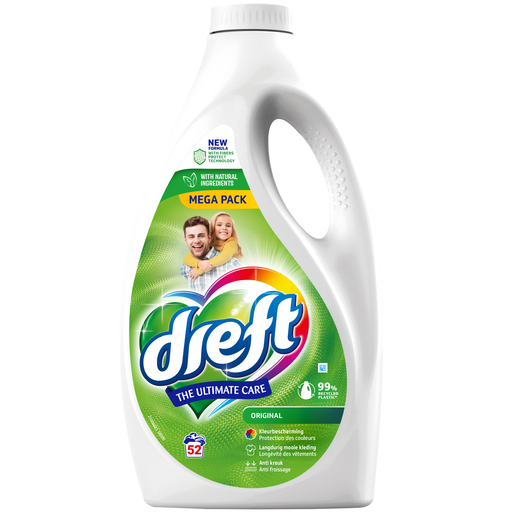
Why this fits the profile: The product information mentions a concentrated formula, 52 washes and suitability for coloured and white laundry.
The stated 52 washes give you more certainty than just the volume of the packaging.
52 stated washes; concentrated formula; product information mentions 99% recycled plastic for the bottle.
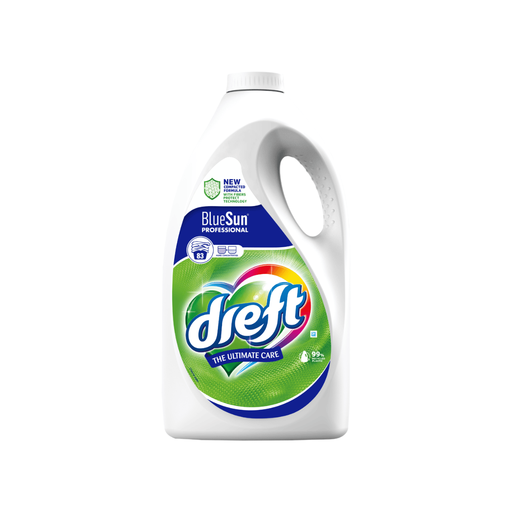
Why this fits the profile: With 83 stated washes, this is a practical choice for households that regularly run large loads of laundry.
The number of washes is clearly stated. Programmes at 30, 40 and 60 degrees are also indicated.
83 washes; suitable for 30, 40 and 60 °C; intended for coloured and white laundry according to the product description.
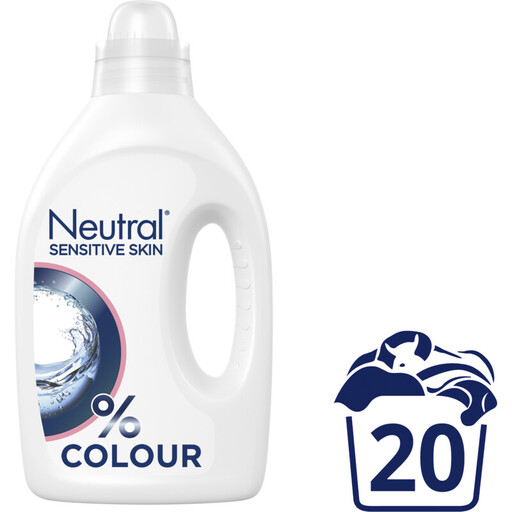
Why this fits the profile: According to the product information, this colour detergent contains 0% perfume and 0% dyes and is intended for sensitive skin.
The information about perfume and dyes is clearly stated. That stops you from choosing a fragranced product when you want to avoid one.
1 litre for 20 washes; 0% perfume; 0% dyes; dermatologically tested according to the product information.
We've put together a full, up-to-date list of products that fully meet these strict selection criteria and current European safety regulations.
That depends on the formula and the label. Some products explicitly state suitability from 20 or 30 °C. Also check the programme you've selected and the maintenance instructions for your washing machine.
Follow the expiry or usage information on the packaging. Store the detergent in a cool, dry place and keep it tightly closed. A change in smell, colour or consistency could be a reason not to use the product any more.
Not automatically. Compare the purchase price with the stated number of washes and the recommended dosage. A concentrated formula may need less liquid per wash, but the price per wash ultimately determines the cost.
