
Household ironing small loads
You want to smooth out a few linen tea towels without having to store a large appliance. The Consumentenbond says a standard steam iron is a good fit if you don’t do much ironing or have limited storage space.


If you only iron a few linen tea towels now and then, a standard steam iron is usually the more compact choice. For larger, regular ironing sessions, a steam generator’s larger tank can be more practical. The Consumentenbond also recommends considering storage space and the amount of laundry you have. Check the care label and compare the steam settings, maintenance requirements and space needed. Higher quoted steam figures alone are no proof of better results on your tea towels.
You want to smooth out a few linen tea towels without having to store a large appliance. The Consumentenbond says a standard steam iron is a good fit if you don’t do much ironing or have limited storage space.
You also iron other laundry in longer sessions and want to refill the water less often. A steam generator has a separate tank, but remember to allow room for the base too, as the Consumentenbond points out.
You want to reduce limescale problems and stains on clean tea towels. The Consumentenbond notes that limescale features don’t eliminate the need for maintenance, so always follow the instructions for your chosen model.
Best for: small loads, limited storage space or a single appliance that’s easy to put away.
Trade-off: the tank is built into the iron, which can feel heavier while you’re ironing and may need refilling more often.
Best for: larger, regular ironing sessions where refilling less often matters.
Trade-off: the separate tank and base need more storage space. Too much steam can also leave the fabric and ironing board wet.
The breakdown below covers consumers choosing an iron for linen tea towels at home, with each consumer grouped according to their main buying concern.
| Buying concern | What to look for | Who does this matter to? |
|---|---|---|
| Smoothing linen | Check whether you can adjust or switch off the steam, and use the steam boost only when needed. | If I want to smooth linen without making the tea towel or ironing board too wet, I look for adjustable steam and the option to finish ironing without steam. Around 40% of consumers prioritise getting linen smooth. |
| Short sessions and storage | Compare the dimensions, ease of handling and tank capacity. A small tank may mean more frequent refills during a longer ironing session. | When I have a few tea towels to iron and little cupboard space, I want to be able to put the appliance away easily after use. Around 30% of consumers prioritise compact storage and short ironing sessions. |
| Long ironing sessions | Compare the tank capacity and the weight of the iron with the space needed for the complete generator. | If I’m ironing other laundry one item after another too, I want fewer interruptions to refill the water. Around 20% of consumers prioritise making long sessions easier. |
| Limescale, stains and maintenance | Check the descaling method and the water instructions for the specific model. See whether the system uses consumable parts. | I want to prevent limescale or dirt from affecting my clean tea towels, and prefer to follow clear maintenance advice. Around 10% of consumers give maintenance and stain prevention top priority. |
Always follow the care label on the specific tea towel. For a slightly damp, ironable fabric, the Consumentenbond recommends steaming first, then finishing without steam. This helps prevent excess steam from making the fabric and ironing board unnecessarily wet.
A steam boost is different from the normal continuous steam output. Too much steam can leave the tea towel and ironing board wet.
Compare the steam boost and continuous steam output separately. Also check whether you can adjust or switch off the steam to finish ironing without it.
The larger tank is most useful during long sessions, while the complete generator takes up more space.
Think about how much you iron at a time and where you can set up and store the appliance.
A generator may also need a suitable, stable ironing board.
A limescale feature can slow the build-up of limescale, but it doesn’t remove the need to maintain the iron.
Before buying, read the descaling instructions for the specific model and check whether the system uses replaceable parts.
The features listed apply to the specific models described, not automatically to every product from that brand.
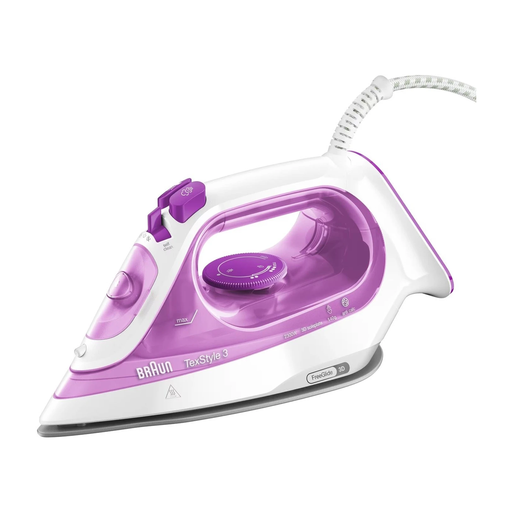
The TexStyle SI 3030 is a standard steam iron with a manual thermostat and a 270 ml tank.
Tefal sells standard steam irons and steam generators. The Ultimate Pure FV9851 is a standard iron with a limescale filter.
Philips offers standard steam irons and steam generators. The PSG3000/20 is a generator for anyone who has space for a separate base during larger ironing sessions.
This selection includes standard steam irons for smaller loads and steam generators for longer sessions.
 No image available
Suited to larger ironing sessions when you’d like a separate tank; allow space for the base.
Power: 2400 W. Tank: 1,4 l. Steam boost: 350 g.
 No image available
Suited to short ironing sessions when you want to adjust the steam for linen; follow the care label on the fabric.
Continuous steam: 40 g/min. Steam boost: 180 g. Tank: 300 ml.
 No image available
Suited to larger ironing sessions; the separate base needs more storage space than a standard iron.
Tank: 1800 ml. The product is listed with a Calc Clear system.
 No image available
Suited to smaller ironing sessions when you want to store a single appliance compactly; the tank is built into the iron.
Tank: 270 ml. The model has a self-cleaning system; follow the maintenance instructions.
 No image available
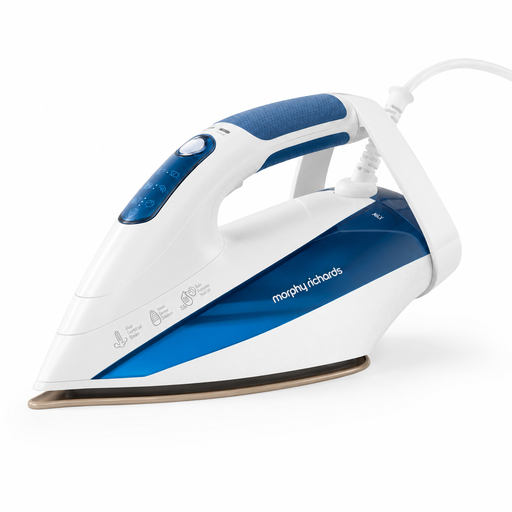
Suited to anyone looking for a standard iron with several steam settings; check the manual for maintenance instructions.
Power: 2400–2800 W. Continuous steam: 50 g/min. Tank: 350 ml. Six steam settings and a self-cleaning function.
Follow the care label on the specific tea towel, rather than relying only on the word ‘linen’. The Consumentenbond lists different maximum temperatures, including 110 °C, 150 °C and 200 °C. Never exceed the maximum shown on the label.
Use an appropriate amount of steam on a slightly damp tea towel that the care label says can be ironed, then finish without steam. The Consumentenbond warns that continually adding more steam can also make the ironing board wet.
Follow your model’s instructions for water and descaling. The Consumentenbond says Dutch tap water is generally suitable, but recommends following the instructions for your specific model. Don’t use perfumed ironing water or other additives.
No. A mention on a retailer’s website is not, by itself, an independent safety test or confirmation of the specific item. According to the Dutch Government’s Ondernemersplein, electrical appliances placed on the Dutch market must meet the applicable European requirements. After an assessment, the manufacturer must affix a CE marking and draw up an EU Declaration of Conformity.
For online distance purchases from a business, you generally have 14 days to change your mind, and the seller must inform you of this. The Dutch Government also explains that any manufacturer’s warranty is in addition to your statutory rights if a product is faulty. Before ordering, check who the seller is and what returns information applies to that offer.