A steam generator is well worth considering if you’re ironing a pile of heavily creased linen tea towels after a weekend away: its larger water tank can mean fewer pauses to refill, but the base takes up more space. For just a few towels or limited storage space, a standard steam iron may be a better fit, as the Consumers’ Association also explains. Use adjustable steam on linen, then finish without steam if needed so the towel can dry.
Who is this relevant for?
If you iron a pile of linen
You want to iron several heavily creased tea towels in one go after a weekend away, with as few breaks as possible to refill the water tank. The Consumers’ Association points to a larger water tank as a practical benefit when you have a lot of ironing to do.
If you have limited storage space
You only iron a few tea towels and need to store your iron and ironing board neatly. The Consumers’ Association explains that a steam generator’s larger base needs more room.
If you want to keep maintenance to a minimum
You want to know in advance how to manage limescale, damp towels and any ongoing costs. The Consumers’ Association stresses that an anti-scale system doesn’t eliminate the need for maintenance.
What should you look for when buying?
Steam generator
Choose this if: you often iron a pile of heavily creased linen tea towels in one go and have room for the base.
The trade-off: a larger tank can mean fewer pauses to refill, but the base takes up more space and too much steam can leave the towel and ironing board damp.
Standard steam iron
Choose this if: you only have a few towels to iron or limited storage space.
The trade-off: it’s more compact, but you may need to refill its smaller tank sooner during a longer ironing session.
| What to consider |
What to look for when buying |
Who should prioritise this? |
| Creases and steam control |
Check whether the steam output is adjustable. Compare continuous steam in g/min separately from the steam boost, as these are different stated figures. |
If you want to smooth out heavily creased tea towels without getting them too wet, look for control over the steam. Around 36% of consumers prioritise smoothing linen. |
| Refilling while ironing a pile |
Check the tank capacity in litres and whether you can refill it while the iron is in use. Also make sure the whole base fits securely on your ironing board. |
If you iron several towels in a row after a weekend away, you may particularly want fewer breaks to refill. Around 29% of consumers prioritise being able to keep ironing without refilling. |
| Space and purchase cost |
Measure your storage space and check the dimensions and weight of the base. Also consider whether you usually iron a few towels or a larger pile. |
If you’re short on space or only iron a few towels, a larger base may be impractical. Around 21% of consumers give the most weight to space or purchase cost. |
| Limescale and dampness |
Read the descaling instructions for the exact model and check whether it has replaceable cartridges. Also see whether you can turn down the steam. |
If you want to keep maintenance to a minimum and store the towel dry, look at the descaling requirements and steam settings. Around 14% of consumers give these considerations the highest priority. |
Buying pitfalls
-
Comparing only the maximum steam boost
Steam boost and continuous steam are different figures. Too much steam can leave linen and the ironing board damp.
Check the continuous steam output and see whether you can adjust the steam. You can iron linen with steam first, then finish without steam.
-
Placing the base on an ironing board that’s too small
A steam generator may be too large or heavy for a standard ironing board, making the whole appliance unstable.
Before buying, compare the dimensions and weight of the base with the available surface area and your storage space.
You may need another stable surface or a suitable ironing board.
-
Assuming anti-scale means maintenance-free
An anti-scale system can slow limescale build-up, but it doesn’t automatically remove the need for maintenance.
Read the instructions for the exact model and check whether you need to clean or replace any parts.
Models with replaceable cartridges may involve ongoing costs.
Brands to consider
Philips
Philips offers models including the 3000 Series PSG3000/20 and PerfectCare 7000 PSG7200/20. Specifications vary by model.
- Philips lists continuous steam of 120 g/min for the PSG3000/20 and a removable 1,5-litre tank for the PSG7200/20.
- Check the temperature controls and descaling process for each model; features of the 7000 Series don’t automatically apply to the 3000 Series.
Tefal
The Express Essential SV6115E0 is a model worth comparing if refill options and tank capacity matter to you.
- According to Tefal, this model has a 1,4-litre tank that can be refilled during use and continuous steam of 120 g/min.
- Tefal’s own claims about ironing time and results don’t tell you how much faster your linen tea towels will be ready.
Braun
The CareStyle 7 Pro IS7286BK is worth a look if you want to compare stated steam output and settings.
- Braun lists continuous steam of 190 g/min and several settings for the IS7286BK.
- These specifications and ergonomic claims apply to the IS7286BK and don’t prove how well it performs on linen tea towels.
Laurastar
The Lift Xtra 1980 is a steam generator for anyone who wants to iron or steam other types of fabric as well as linen tea towels.
- This model is an option for consumers looking for something suitable for more than just tea towels.
- Laurastar’s claims about effectiveness and hygiene don’t demonstrate any added benefit specifically for linen tea towels.
Steam generators at Joybuy
These steam generators are options to compare for ironing linen tea towels. The NVWA states that CE marking is required for electrical products sold on the Dutch market; check the marking and product information for the specific appliance.
 No image available
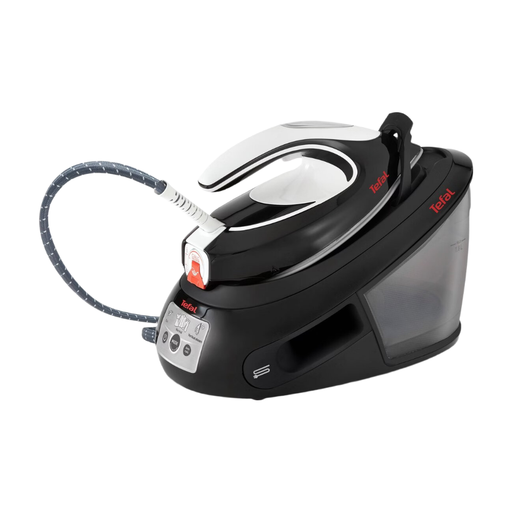
Tefal SV8055 Express Anti-Calc steam generator
A model worth comparing if you’re looking for a steam generator for several linen towels.
Stated pressure: 6,5 bar.
View at Joybuy
 No image available
Philips 3000 Series PSG3000/20
An option to compare if you’re weighing up the stated tank capacity and steam boost when ironing a pile of towels.
2400 W; steam boost 350 g; water tank 1,4 litres.
View at Joybuy
 No image available
Philips PerfectCare Compact Essential GC6842/30, pink
A steam generator described as compact, worth including in your comparison if storage space is a consideration.
Steam boost 360 g; water tank 1,3 litres.
View at Joybuy
 No image available
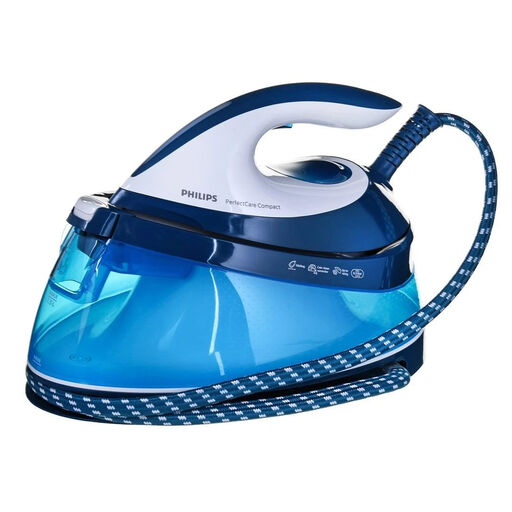
Philips GC7840/20 PerfectCare
A model to compare if you also want to consider the stated tank capacity when ironing towels one after another.
2400 W; steam boost 400 g; water tank 1,5 litres.
View at Joybuy
 No image available
Morphy Richards EasySteam+ MUH-ISE4B
An option to compare if you want to weigh up the tank capacity and stated steam figures side by side.
2400 W; steam output 70 g; steam boost 120 g; pressure 6 bar.
Removable 1,8-litre water tank; ECO mode; anti-scale feature; automatic shut-off.
View at Joybuy
Frequently asked questions
How can you iron linen tea towels without putting them away damp?
Check the care label first. For linen that can be ironed, the Consumers’ Association explains that heat and moisture help relax the fibres: iron with steam, then without steam until the towel is dry. Turn down the steam if the towel or ironing board gets too wet.
Can you use a steam generator on your existing ironing board?
It depends on the dimensions and weight of the base, and whether there’s a stable, suitable space for it on your ironing board. Compare these details before buying; a steam generator may be too large or heavy for a standard ironing board.
What water should you use, and how often should you descale?
Follow the manual for the exact model for guidance on water and descaling. The Consumers’ Association recommends checking the instructions if your water hardness differs or you use softened water; Philips has different descaling procedures for different series.
Is CE marking required for a steam generator sold in the Netherlands?
Yes. The NVWA states that CE marking is required for electrical products sold on the Dutch market. Check the marking and product information for the specific appliance; a product listing alone doesn’t prove that an individual item meets the requirement.


