
Occasional scarf ironer
You want to freshen up a couple of scarves after a weekend away, then put your appliance away easily. The Consumentenbond describes a standard steam iron as an option for people who do little ironing.


For a couple of linen scarves after a weekend away, a standard steam iron is usually the more compact option. A steam generator is worth considering if you regularly iron larger loads or tackle stubborn creases, as the Consumentenbond points out. Always follow the care label on the specific scarf: GINETEX symbols may specify a lower temperature, ironing without steam or no ironing at all. Before buying, also check the mains voltage and applicable conformity information for the exact model.
You want to freshen up a couple of scarves after a weekend away, then put your appliance away easily. The Consumentenbond describes a standard steam iron as an option for people who do little ironing.
You also iron other linen items or larger loads, and want to tackle stubborn creases without having to refill the water tank often. The Consumentenbond discusses a steam generator as an option for people who do a lot of ironing; Westen Mode recommends ironing linen while the fabric is still slightly damp.
Your scarves have different weaves or finishes, and you want to check the permitted care instructions for each item. GINETEX care symbols distinguish between factors including temperature and ironing with or without steam.
Start with the scarf’s care label. Then decide whether you mainly have a small, quick ironing job or regularly tackle more clothes and stubborn creases.
A good fit if: you only iron one or a few scarves after a trip, have limited storage space and the care label allows ironing.
Bear in mind: it has a smaller water tank and generally produces less steam than a steam generator.
A good fit if: you regularly iron larger loads or tackle stubborn creases as well as scarves, and have room for the base unit.
Bear in mind: it takes up more space and may need a suitable ironing board; the manufacturer’s steam figures are not measurements taken on your scarf.
| What to consider | What should you check? | Who is this most relevant to? |
|---|---|---|
| Stubborn creases | Compare continuous steam output with the steam boost; these are different specifications. | If your main aim after a trip is to tackle stubborn creases, steam output is an important factor in your choice. Around 36% of consumers say smoothing out these creases is their top priority. |
| Scarf care | Read the care label and check that the permitted treatment allows steam and the temperature you want to use. | If you have scarves made from different weaves or with different finishes, you’ll want to follow the care label for each one. Around 29% of consumers put fabric safety first. |
| Size and storage | Check how much space the base unit takes up and whether your ironing board can support it. | For a small ironing job after a weekend away, an appliance that’s easy to put away may be important. Around 21% of consumers give compactness top priority. |
| Descaling | Read the care instructions for the exact model and consider whether the required steps suit the way you use it. | If you use the appliance regularly, you’ll want to know what maintenance it needs. Around 14% of consumers say easy maintenance is their top priority. |
If you do very little ironing, a standard steam iron may be a more compact alternative. The Consumentenbond highlights the difference between doing little ironing and tackling larger loads with stubborn creases.
First, work out how much other ironing you do regularly.
A steam generator needs extra storage space and may require a suitable ironing board.
Steam boost and continuous steam output are separate product specifications; one figure doesn’t tell you what the other is.
Compare like-for-like specifications, and don’t treat the manufacturer’s figures as measurements taken on your linen scarf.
The name of the fibre alone doesn’t tell you what temperature or amount of steam is permitted for a particular scarf. Using an unsuitable setting could damage the fabric.
Before ironing, check the permitted temperature and whether steam is allowed, as shown on the care label.
The 3000 Series PSG3000/20 and PerfectCare 7000 PSG7300/70 are examples to consider when comparing specifications and steam features across models.
The Express Essential SV6115 is a model to consider if you want to compare steam generators with a vertical steaming function.
The CareStyle 5 IS5249BK is a model to compare if you’re looking for a steam generator for regular ironing.
These steam generators are options for anyone who irons other items or tackles stubborn creases as well as the occasional scarf. Check the care label and, before buying, review the mains voltage and applicable conformity information for the exact model. Follow the model-specific maintenance instructions.
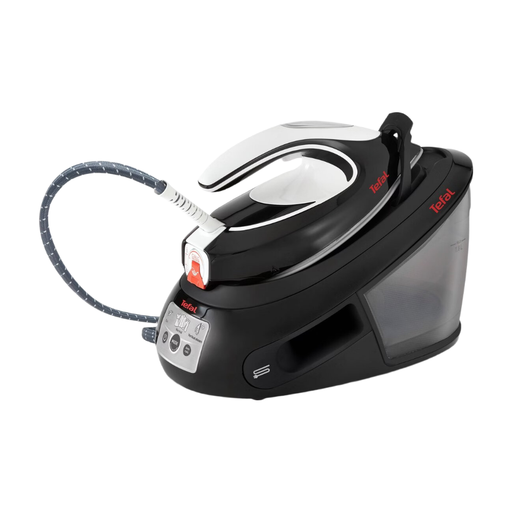 No image available
Designed for people who regularly iron and want to compare continuous steam output with a steam boost.
The product information lists continuous steam output of 120 g/min, a 450 g/min steam boost, automatic temperature and steam settings, and a scale collector.
 No image available
An option to compare if you iron several garments in a row as well as scarves.
Philips lists continuous steam output of 120 g/min, a 350 g steam boost and a removable 1,4 l tank.
 No image available
An option if you want to compare a steam generator with OptimalTEMP and vertical steaming.
The product information lists a 1,3 l tank, continuous steam output of 120 g/min and a 360 g steam boost.
 No image available
An option to consider if you want to compare continuous steam output and maintenance features for regular ironing.
The product information lists continuous steam output of 120 g/min, a 380 g/min steam boost and a Calc Clear anti-scale system.
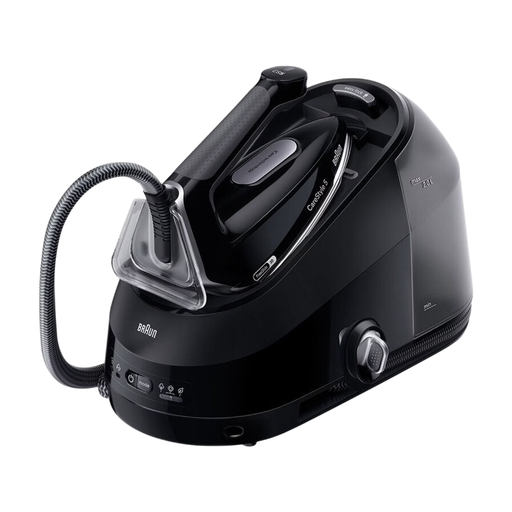 No image available
An option for anyone weighing up tank size and steam output for larger ironing sessions.
Braun lists steam output of up to 150 g/min, a 510 g/min steam shot, a 2 l tank and iCare temperature control.
No. Follow the care label on the specific scarf. GINETEX distinguishes between different maximum ironing temperatures, ironing without steam and a prohibition on ironing, so don’t choose how to care for it based on the fibre name alone.
Follow the manual for the exact model. Philips says that limescale in its steam generators can cause brown stains, brown water and leaks; the descaling process varies between series.
According to ACM ConsuWijzer, for a standard online consumer purchase you generally have a statutory cooling-off period of up to 14 days after delivery. Check the applicable exceptions and returns policy; the cooling-off period is separate from your rights if a product is faulty or not as described.
No. According to ACM ConsuWijzer, your statutory guarantee depends on what you could reasonably expect from the product; a manufacturer’s guarantee period does not replace that right.
For electrical equipment covered by the applicable rules, the manufacturer must meet the requirements in force, including affixing the CE marking and drawing up an EU declaration of conformity, according to the Dutch government. For the low-voltage rules, the European Commission gives a range of 50–1.000 V AC and 75–1.500 V DC. A product listing on its own does not confirm that a specific model meets all applicable requirements.