For a few linen scarves that the care label says can be ironed, a standard steam iron is the most obvious choice. A clothes steamer is better suited to a quick refresh: the Consumers’ Association notes that an iron generally gives a smoother finish, although that comparison was not specifically about linen scarves. A steam generator may be a good fit if you also have a large pile of ironing to get through, but it usually takes up more space and costs more to buy.
Which option is right for you?
If you iron just a few scarves
If you only want to smooth out a few scarves after storing them and have limited storage space, a standard steam iron is worth considering. The Consumers’ Association says an iron is suitable if you don’t do much ironing or have little space.
If you iron a whole season’s laundry at once
If you also iron larger quantities of clothes with stubborn creases, a steam generator may be better suited to the job. Bear in mind how much space the appliance takes up.
If you mainly want a quick refresh
A clothes steamer is a good choice if you want to freshen up a scarf quickly and are happy with a less smooth finish. The Consumers’ Association notes that an iron generally gives a smoother finish than a clothes steamer.
What should you look for when choosing?
Steam iron
Choose this if: you want to press a few scarves flat and the care label allows ironing with direct contact.
The trade-off: the built-in water tank is usually smaller than a steam generator’s, so you may need to refill it sooner during longer ironing sessions.
Steam generator
Choose this if: you also have a large pile of laundry with stubborn creases to tackle when changing over your seasonal wardrobe.
The trade-off: its larger capacity usually means it needs more storage space and costs more to buy.
Clothes steamer
Choose this if: quickly removing creases or freshening up a scarf matters more to you than pressing it completely flat.
The trade-off: according to the Consumers’ Association, an iron generally gives a smoother finish. The comparison cited was about clothing fabrics, not specifically linen scarves.
| What to consider |
What to check before buying |
Who is this important to? |
| Care label instructions |
Check the ironing symbol and any restrictions on using steam. |
I don’t want to rely on the fibre name alone; I want to follow the care label on my scarf. Around 36% of consumers prioritise fabric care. |
| A smooth, flat finish |
Check whether direct-contact ironing is allowed and whether the appliance has an iron soleplate. |
I want to get stored creases as flat as possible. Around 29% of consumers mainly want a smooth, pressed finish. |
| A small, occasional job |
Compare the dimensions and water tank, and consider whether you want to use an ironing board. |
I want to avoid needing much space to set up or store an appliance for a few scarves. Around 21% of consumers prioritise compactness and occasional use. |
| Longer ironing sessions and maintenance |
Compare the water tank capacity and read the maintenance instructions for the exact model. |
I want to tackle plenty of other ironing as well as scarves, and know what maintenance is involved. Around 14% of consumers prioritise capacity and maintenance. |
Common buying mistakes
-
Choosing a linen setting without reading the care label
The fibre name alone does not tell you which ironing treatment a particular scarf can withstand. GINETEX advises setting the maximum temperature solely according to the care label.
Check the ironing symbol before setting the temperature or steam.
-
Expecting a clothes steamer to press fabric crisp and flat
A clothes steamer is mainly for freshening up; according to the Consumers’ Association, an iron generally gives a smoother finish. The comparison cited did not test linen scarves.
Decide in advance whether you want to freshen up the scarf or press out storage creases as much as possible, then choose an appliance that suits your needs.
For ironing with direct contact, you may also need an iron and an ironing board.
-
Looking only at the stated steam output
The amount of ironing, water tank and maintenance requirements vary by appliance type and model. A stated steam output alone does not guarantee a particular result on your scarf.
Consider how you’ll use the appliance as a whole, and follow the maintenance instructions for the exact model.
A smaller water tank may need refilling more often during a longer ironing session; a steam generator also usually needs more storage space.
-
Assuming a similar model name means the specifications are identical
Tefal lists a 270 ml water tank for the Tefal Easygliss Plus FV5736, while the Joybuy product listing states 200 ml.
Before buying, check the exact version and the specifications that apply to it.
Brands to consider
Tefal
Tefal offers both standard steam irons and clothes steamers, so you can compare pressing fabric flat with freshening it up vertically.
- For the Easygliss Plus FV5736E0, Tefal lists a continuous steam output of 45 g/min, a steam boost of 220 g/min and a 270 ml water tank.
- These are manufacturer’s specifications, not the result of an independent test on linen scarves. Tefal states that the Pure POP DT2024E1 is designed for vertical use and has a 70 ml water tank.
Braun
The TexStyle 9 SI9188EBK is an example of a steam iron with a precision tip and iCare setting, which may suit you if you need to work around narrow edges.
- Braun lists a precision tip, anti-drip system and automatic shut-off for this model.
- The care instructions on the scarf’s label still determine which ironing treatment is permitted.
Philips
The PerfectCare 7000 PSG7200/20 is a steam generator for anyone who gets through a large pile of ironing in one session.
- Philips lists a 1.5-litre water tank and steam output of up to 160 g/min for this model.
- These are manufacturer’s specifications; remember to factor in the space a steam generator takes up when making your choice.
Rowenta
Rowenta provides model-specific parts information for anyone who wants to consider maintenance and repairs.
- Rowenta’s parts information includes anti-scale and repair components for certain models.
- Parts listed for one model are not necessarily available for every Rowenta iron.
Irons at Joybuy
The products below are irons for pressing with direct contact. Use them only if the scarf’s care label allows ironing. Also check the details and conformity documentation for the exact version.
 Image unavailable
Tefal Easygliss Plus FV5736 steam iron
May suit you if the care label allows ironing with direct contact and you want to set the temperature and steam manually.
The product description mentions a soleplate, continuous steam and a steam boost. Check the water tank capacity for the exact version.
View at Joybuy
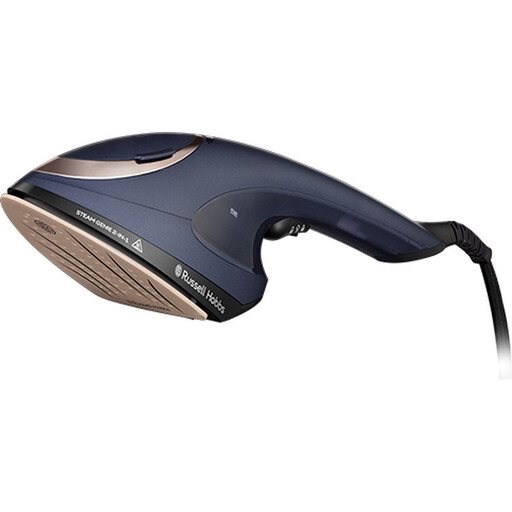 Image unavailable
Russell Hobbs Steam Genie 2in1 (28370-56) steam iron
May suit a short ironing session if the care label allows ironing with direct contact and you’re looking for a compact appliance.
The product description mentions a heated soleplate, compact design and cord storage.
View at Joybuy
 Image unavailable
Xiaomi handheld steam iron BHR9034EU
May suit smaller ironing jobs if the care label allows ironing with direct contact and you’re looking for a portable option.
The product description mentions dry and steam ironing, manual temperature control and a weight of 0.77 kg.
View at Joybuy
 Image unavailable
Philips 1000 Series DST1030/20 steam iron, 2000 W
May suit you if the care label allows you to use a soleplate on your scarf and you want to set the temperature.
The product description mentions a temperature control dial, a narrow soleplate tip, a steam setting and a steam boost.
View at Joybuy
 Image unavailable
Braun FreeStyle 5 SI5037 steam iron
May suit you if the care label allows ironing with direct contact and you want to work precisely around narrow edges.
The product description mentions a precision tip, anti-drip system and automatic shut-off.
View at Joybuy
Frequently asked questions
Can I press every linen scarf on the highest setting?
No. The care label for the specific scarf determines the maximum permitted treatment; the fibre name alone isn’t enough. GINETEX advises setting the maximum ironing temperature solely according to the label.
How should I maintain my ironing appliance after changing over my seasonal wardrobe?
Follow the maintenance instructions for the exact model. Descaling methods vary by appliance, and the Consumers’ Association advises following the user manual.
What can I do if an iron I bought online doesn’t work properly?
If the product is faulty, contact the seller about your statutory rights. The Dutch government states that the Netherlands has no fixed statutory guarantee period; what you can reasonably expect from a product depends, among other things, on the product and how it is used. If your online purchase is covered by the relevant consumer rules, you will generally also have a 14-day cooling-off period.
What product safety requirements apply to an electric iron in the Netherlands?
Electrical appliances sold on the Dutch market must meet the applicable European requirements. Business.gov.nl states that, when an appliance meets these requirements, the manufacturer must affix the required CE marking and draw up an EU Declaration of Conformity.


